
Case studies
Dr Purba Mukherjee - EPSRC Open Fellowship
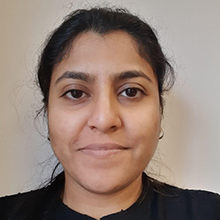
Title: EPSRC Open Fellowship – Development of programmable nanomachines towards the enzymatic synthesis of peptide oligonucleotide conjugates
My journey to York...
In early 2020, I began my independent career as an Assistant Professor at IISER Kolkata. However, for family reasons, I soon sought a transition to the UK. Transitioning to a fellowship in the UK presented a unique hurdle: my ten years of US-based training made me 'too senior' for many traditional UK entry-level fellowships. By working closely with the Department of Chemistry at York, I identified the EPSRC Open Fellowship as a viable route. After a successful internal panel interview at York, I moved forward with my application. My path was non-traditional. While my scenario is specific, the takeaway is universal: don’t develop your career goals and research ideas in a vacuum. Talk to everyone. You’ll be surprised how often a casual conversation can turn a 'seed' of an idea into something you never thought feasible!
The application process...
Applying for a fellowship in a country you haven't yet lived in is a daunting task! I found it incredibly challenging to make informed decisions about manpower, multi-year budgeting and facilities needed while still working at my previous post in India. I was constantly supported in this by the YSBL administrative staff and my future colleagues at York. They stepped in, using Zoom to walk me through the nuances of the UK system. Today, the department has a dedicated research and development coordinator to streamline this for new applicants and should be able to help you make choices in the early stages. Because my work on peptide-oligonucleotide conjugates is inherently interdisciplinary, understanding the synergy between York’s Chemistry and Biology resources was key to a successful proposal. If your research bridges different fields, I highly encourage you to investigate what is possible across departments—it adds a layer of 'wow factor' to your proposal that can be rewarding. Be prepared for a marathon, not a sprint; my journey with EPSRC took over a year and a half from start to finish. Following the submission of a rebuttal to reviewer comments, I was invited to an online interview. I am incredibly grateful for the generous support and coaching of current and former fellows at York. Having never navigated this specific interview format before, the mock sessions and guidance from those who had been in my shoes made all the difference in my preparation.
My two cents...
You’ll see from the stories on this page that there isn't just one 'right' way to apply. Many factors, including the occasional failure, are simply out of your hands. My advice is to dive in early and treat the process as a learning curve. Perhaps most crucially, securing honest, critical feedback on your early drafts is essential to refining your proposal. You are still the best defender of your science but seeing it through a reader’s eyes helps you hone your message. Fellowships are a competitive landscape that are best navigated by reaching out to those who’ve been through it before – you can learn just as much from an unsuccessful application as a successful one.
Dr Jon Agirre - Royal Society University Research Fellowship
Title: Methods for building meaningful atomic models of carbohydrates
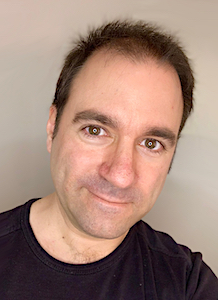
Fellowship: Royal Society Olga Kennard Research Fellowship – a University Research Fellowship dedicated to X-ray crystallography.
Rationale behind my application: I had come to York in 2013 to do a postdoc on carbohydrate model building with Keith Wilson and Kathryn Cowtan, and during those two years I developed substantial independence, starting to work on my own ideas. These fitted nicely within the remit of the project, which was funded by the BBSRC. I was lucky to be selected for a talk at the 2014 International Union of Crystallography congress in Montreal (Canada), as that essentially kickstarted my public profile as a method developer – I had done my PhD in structural virology, and it was very much lab-based. After Montreal, I started getting invitations for giving talks and writing reviews, something that might be considered unusual for a postdoc. At the same time, my portfolio of ideas started to grow well beyond the scope of any postdoctoral position. Therefore, the need to secure independent funding came as a logical next step. I am a creative person by nature, and this usually leads me to expand my research in many unanticipated ways. And I also happen to be autistic, which means that some of my ideas are a bit out of the box, and I tend to pursue them relentlessly. Therefore, the best way for me to avoid frustration was to secure funding with as much flexibility as possible. The Royal Society provided exactly that.
The application process: The process was lengthy but uncomplicated. The Society's application forms were very easy to fill. The project, centrepiece of the application, needed to fit into 3 pages. And while this was not a problem for me, formulating the lay summary of the project was indeed tough. Essentially, a member of the public should be able to understand your lay summary. The YSBL administrator helped me with mine. The interview happened in Carlton House Terrace in London, but I was not there because I was expecting my second child. I did a video interview, which seemed to be a first. The discussion was steered by two technical reports, which I found constructive. I was notified of the (positive) outcome a month after my April interview.
My life as an independent fellow in the Department of Chemistry: I was promised a funded PhD studentship as part of my welcome package, and this has proven useful. The Royal Society's fellowships do not cover salaries of PhD students or big equipment, but they do advertise special calls for fellows where you might be able to secure additional grants. I currently have two of these: one that pays the stipend of one of my outstanding students, and another one that funds our experimental work with the electron cryo-microscope. While I have never been formally asked to teach, I have seized some of the great opportunities available in the Department and beyond. I have been able to design a whole module and provide workshops for others. I consider that my experience so far has equipped me with the skills I need for the next stage in my career, and the Department of Chemistry has been a big part of that.
Dr Pete Edwards - Marie Skłodowska Curie Reintegration Individual Fellowship
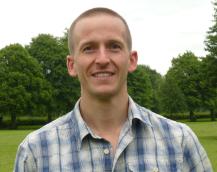
After finishing my PhD in Leeds in 2011 I moved to the U.S.A. to take up a postdoc position in the Chemical Sciences division at the National Oceanic and Atmospheric Administration in Boulder, Colorado. This provided me with valuable experience working in a world leading institution outside of Europe. Moving back to the U.K. in early 2014 I used this unique experience, and the contacts I had made in the U.S.A., as a selling point when applying for independent fellowships.
During the summer of 2014 I applied for 3 different independent fellowships (NERC, Royal Society and Marie Skłodowska Curie), using similar project ideas that complimented yet aligned with current research strengths in the Wolfson Atmospheric Chemistry Laboratories at York. This was a busy period but I learnt a lot about writing grant applications and developing project ideas.
Of these three fellowships, the NERC and Royal Society applications were unsuccessful, although I did receive very useful and detailed feedback from the NERC review panel. The Marie Skłodowska Curie Reintegration Individual Fellowship application, however, was successful. These fellowships are especially designed to help European researchers working outside of the EU return, and bring with them the skills and experience they gained.
My advice when applying for fellowships is to do your research on the available schemes, and try and think about how your skills and / or project align with the funder’s strategy. Obviously a good track record and project idea are essential, but as with all these things a large factor is luck. Consider submitting similar project ideas to multiple fellowship schemes (providing the funders allow this), as although this doesn’t reduce the workload as much as you’d like it does improve your chances of success.
I would also recommend starting the application process early to give you as much opportunity as possible to get colleagues to read and comment on your application. I would also suggest getting people outside of your field to read your application and provide feedback, as it is highly unlikely that it will be an expert in your field that reviews your proposal. The feedback I got from people across the Department of Chemistry at the University of York, and from friends in the U.S.A., was immensely helpful.
Finally I would say that even if an application isn’t successful, it is still a very useful process to go through and always ask the funder for feedback on a failed application so you can improve next time.
Dr Sarah Moller - NERC Knowledge Exchange Fellowship
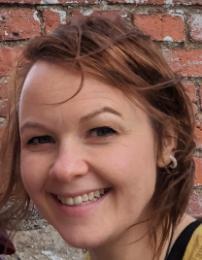
Title: Maximising the impact of NERC research: facilitating knowledge exchange between the UK atmospheric science research community and Defra
Background: NERC KE Fellows commit between 20% and 80% to a work plan which they design themselves which will generate impact from NERC-funded research. Fellowships are open to researchers at any stage in their career and last between one and three years.
Rationale behind my application: Before applying for this fellowship I had been working with the Department for Environment, Food and Rural Affairs (Defra) for 2 years managing their Independent Air Quality Expert Group (AQEG) and operating as a formal link between Defra and NERC’s National Centre for Atmospheric Science (NCAS). Through this work I observed a number of areas where time could usefully be invested to produce better links between Defra, the end-users of research, NERC, the research funders, and NERC scientists. A colleague pointed out the NERC Open KE Fellowship call announcement; this seemed like the ideal way to progress the ideas I had and to make the most of the opportunities presented through my joint post in Defra and NCAS, which would soon be coming to an end.
Application: This was the first fellowship I applied for and I did not know what was expected or how to approach the application process. I read all the guidance and even though there was a large amount of information provided I still didn’t have a clear idea of how to go about writing a proposal like this, particularly as the only proposal writing experience I had was for a small outreach grant. It was really helpful to have a number of people willing to look at the first draft of my case for support and give me feedback.
Getting multiple opinions and different points of view (from professors, lecturers/senior researchers, and other post-docs) on what I had drafted was so useful in developing the final proposal. Talking to people who had applied for fellowships before also helped (in fact the tip to send my proposal to a few different people came from this). It was particularly useful to talk to someone who had applied to a similar NERC fellowship scheme before, and I was extremely lucky in that they were happy to send me copies of their proposal, discuss their interview experience and pass on their top tips for applying. This insight made it far less time consuming to write my proposal as I had an example of how to structure it and what to include where. I drafted the letters of support (with some help from my research group leader; it’s difficult to write a glowing recommendation for yourself) to make it easier and less time consuming for those providing them.
Although I found this very difficult it meant that while people edited the letters, they contained all the crucial information. I ended up with three very strong letters of support from senior personnel in NCAS, Defra and AQEG, all the key stakeholders, and I think this also was important in making my proposal successful. I think the key thing in developing a good proposal was that I had a very clear idea of what I wanted to achieve, how I was proposing to do it, why it was so important, and who I needed to be involved; I was also very lucky to have close links with the end-users I wanted to engage and so had the opportunity to (briefly) discuss my proposal with them and get their feedback and support.