
YSBL scientists uncover molecular trigger behind antibiotic resistance spread
Posted on Wednesday 15 July 2026
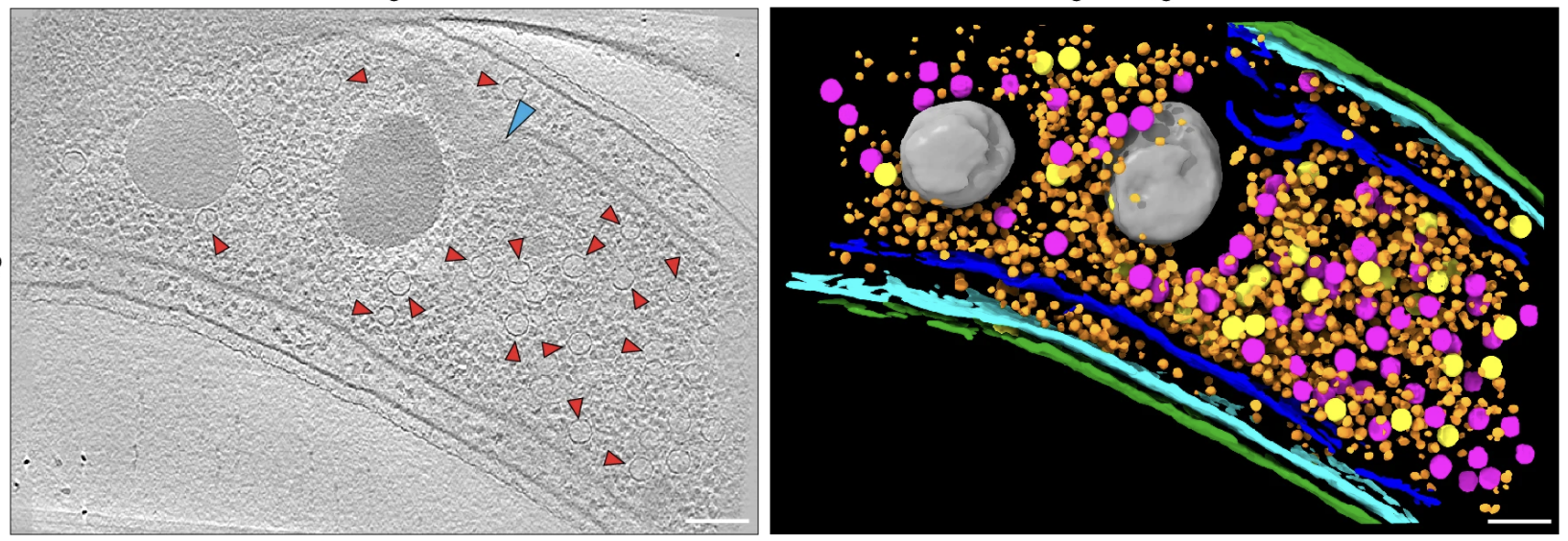
A landmark collaborative study, just published in Nature Microbiology, has uncovered an unexpected biochemical twist in how bacteria share survival traits, including antimicrobial resistance.
The study focused on ‘gene transfer agents’, which are ancient, domesticated viral particles which act as cellular couriers to distribute DNA between bacteria. The team identified a critical three-gene control hub, named LypABC, which structurally resembles immune defense systems from more complex organisms. Remarkably, instead of using this system for their own defence, bacteria have co-opted this machinery to orchestrate their own regulated cell lysis (bursting open) to release these DNA-packed couriers, that can be transferred to other bacteria.
Crucially, these processes were visualized using the powerful cryogenic electron microscope housed in the York Structural Biology Laboratory (YSBL). Unveiling the microbiology and structural biology behind LypABC-mediated lysis opens new opportunities for understanding gene transfer agents and how they spread important genetic instructions, including antibiotic resistance
The structural work was contributed by Chemistry’s Dr Pavol Bárdy, a Henry Wellcome Fellow in YSBL and Mai Nguyen, a PhD student funded by an international student Wild scholarship. The study was led by Dr Emma Bank and Professor Tung Le at the John Innes Centre with a number of other collaborators.
Notes to editors:
The work is published in Nature Microbiology and has also been summarised by a write up in Cell Chemical Biology