
York Chemistry Team Wins 2026 RSC Horizon Prize for Inorganic Chemistry
Posted on Wednesday 17 June 2026
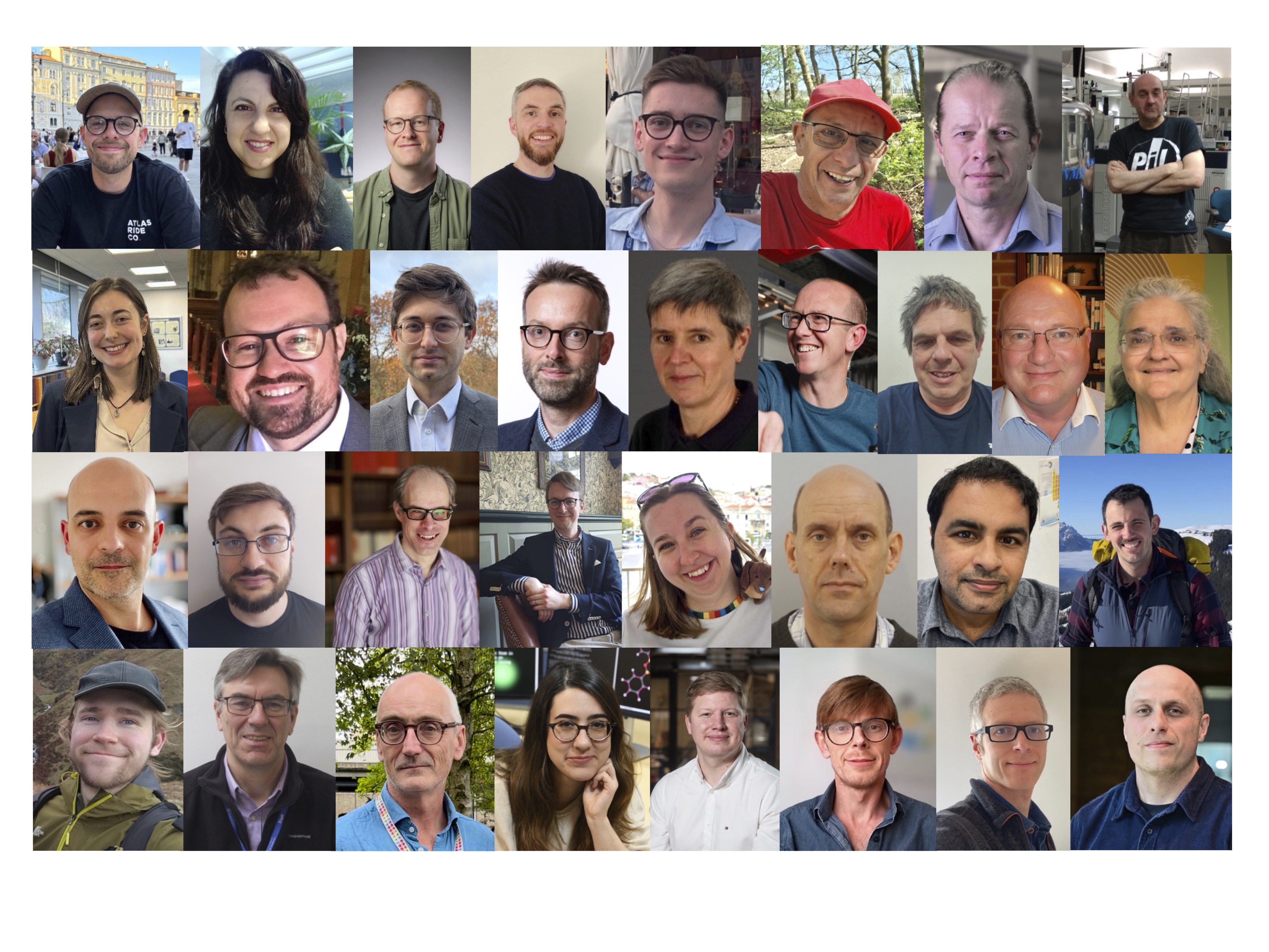
Collaborative teams, led by Andrew Weller (University of York) and Stuart Macgregor (University of St Andrews), working with groups from Southampton, Diamond Light Source and Australia (ANSTO), have developed Solid-state Molecular OrganoMetallic (SMOM) chemistry, a methodology that offers a new way for chemists to approach the synthesis, stabilisation, and catalytic use of highly reactive transition metal complexes.
Traditionally, organometallic chemistry is performed in solution. However, solvents can cause problems by competing with weak ligands (such as alkanes), triggering decomposition, or causing complexes to aggregate. “Team SMOM” lead by Weller (an experimental synthetic chemist) and Macgregor (a computational chemist) have developed methods that bypass solvents entirely by using Single-Crystal to Single-Crystal (SC-SC) solid-gas reactivity: “if the problem is the solvent then the solution is to remove the solution!”.
Conducting complex organometallic reactions entirely within the crystalline solid state, by exposing precursor crystals to reactive gases, means that the SMOM approach can be used to isolate and characterise exceptionally reactive and weakly bound organometallic complexes that would immediately decompose or have ligands displaced in solution. The SMOM Team have also demonstrated that these crystalline materials can be used as catalysts, such as the highly efficient conversion of ethene to propene through a triple cascade of SMOM-catalysts. Because the active catalyst in each case is a well-defined molecular complex encapsulated within a lattice, the approach potentially offers the precision of a single-site homogeneous catalyst, but with the practical, spatial separation advantages of a heterogeneous catalyst.
Team-member Dr Samantha Furfari (now Senior Lecturer at University of New South Wales, Australia) comments: “The SMOM approach has enabled a much deeper understanding of σ‑alkane complexes and, as a result, the mechanisms of C–H bond activation. This insight is crucial for the rational design of metal complexes capable of activating methane and converting what is currently a waste product into something more valuable. Over many years, work from the team has demonstrated how the microenvironment can both stabilise alkane ligands and induce regioselectivity in alkane binding, closely mimicking the behaviour observed in enzymatic systems.”
Notes to editors:
RSC Horizon prizes are awarded to groups, teams and collaborations who are opening up new directions and possibilities in their field through ground-breaking scientific developments.
For a recent tutorial review on SMOM see: Dalton Trans., 2026, 55, 6649-6666