
Thanzi secures landmark grant to expand research across Namibia and Zambia
Posted on Wednesday 27 May 2026
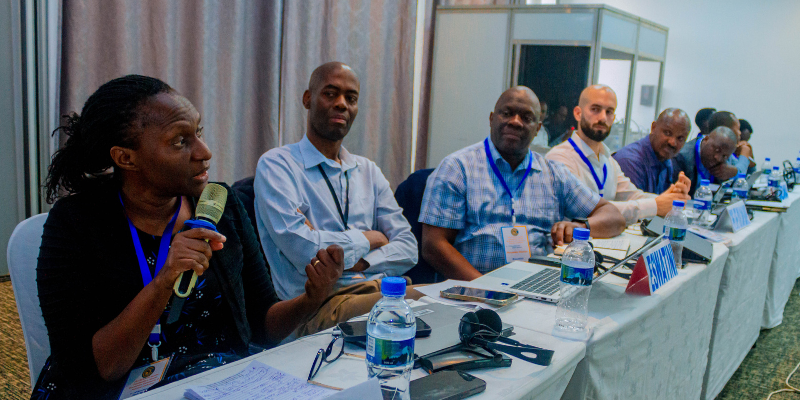
The Centre for Health Economics (CHE) has been awarded a major new research grant for its Thanzi Programme. The project, titled Thanzi Konse (Health Everywhere) is funded by The Life You Can Save (TLYCS), a charity evaluator that raises funds for organisations fighting against extreme poverty.
Impact across Africa
Thanzi Konse builds on the work of the broader Thanzi Programme, which supports health system strengthening and health economics capacity development in several African countries (Eswatini, Gambia, Ghana, Malawi, Senegal, Uganda, Zimbabwe).
This new phase of work extends that impact into Namibia and Zambia. The work involves close collaboration with key regional partners, including the Ministry of Health and Social Services (Namibia), the Ministry of Health (Zambia), the University of Namibia, the University of Zambia, and the ECSA Health Community (East, Central and Southern Africa).
Together, these partnerships ensure that research is embedded within national decision-making processes and responsive to local needs.
Strengthening universal health coverage in Namibia
A central focus of the grant is supporting Namibia’s transition towards Universal Health Coverage (UHC). The government has defined an Essential Health Services Package (EHSP), setting out the services every Namibian should access.
However, defining a package is only the first step. The Thanzi Konse project will assess what is realistically achievable within current constraints, such as limited budgets, workforce shortages, and infrastructure gaps, and identify practical pathways to expand access over time.
Key outputs will include:
- a decision support tool: helping policymakers identify system bottlenecks and where targeted investment could most improve health outcomes and financial protection for the ~85% of Namibians (~3 million people) who rely on public healthcare.
- examining Namibia’s health financing system and medical aid schemes such as the Public Service Employees Medical Aid Scheme (PSEMAS), which currently account for a disproportionate share of health spending: the analysis will assess public subsidies to private insurance, compare spending with the public system, and explore implications for equity, efficiency, and UHC. By making these dynamics visible, the research will inform more effective and equitable resource allocation, with the potential to strengthen public health services.
- addressing geographic inequalities in care: Namibia’s low population density creates significant delivery challenges, particularly in rural areas. The work resulting from this project will explore how resources can be distributed more fairly across regions, including whether allocation formulas better reflect differences in population need and delivery costs.
Capacity building in Zambia
In Zambia, Thanzi Konse will support institutionalisation of the early-stage development of the Health Technology Assessment (HTA) capacity in Zambia.
By engaging with government stakeholders, the team will identify where analytical tools, evidence, and institutional support can strengthen health workforce planning; priority-setting and resource allocation; and health financing decision-making.
The aim is to co-develop a roadmap for future capacity building, including the establishment of a Health Economics & Policy Unit/HTA-Unit, drawing on successful models already established through the Thanzi Programme in other countries.
Regional collaboration through ECSA
The project will continue to support the ECSA Health Economics Community of Practice, a regional platform for collaboration and knowledge exchange across Eastern, Central, and Southern Africa.
This includes plans to host an in-person meeting in 2026, bringing together policymakers and researchers to share lessons on health financing reform, priority-setting, and universal health coverage implementation.
A growing global health partnership
This grant marks an important moment for CHE, the University of York and the Thanzi Programme. It not only broadens the reach of Thanzi’s work but also deepens long-term institutional partnerships between the UK and African governments and universities.
With more than a decade of work supporting health priority-setting in low- and middle-income countries, CHE’s Thanzi Programme has become widely recognised for its practical contribution to health system strengthening. This new grant builds on that track record and reinforces the University of York and Thanzi Programme’s role as a global leader in applied health economics.