
Visualisation of human telomeric complexes by cryo-EM
Seminar
Dr Kelly Nguyen (MRC Laboratory of Molecular Biology) presents her work on using structural biology to investigate telomere biology, ultimately used for therapeutic studies targeting cancers and ageing
This event has now finished.
Event date
Friday 10 May 2024, 1pm to 2pm
Location
Dianna Bowles Lecture Theatre, B/K/018, Biology Building, Campus West, University of York (Map)
Audience
Open to alumni, staff, students (postgraduate researchers, taught postgraduates, undergraduates)
Admission
Free admission, booking not required
Event details
Abstract
Telomeres are nucleoprotein structures located at the ends of eukaryotic chromosomes. Telomeres play key roles in maintaining genome integrity by protecting the chromosome ends from aberrant DNA repair. Telomere dysfunction results in a wide range of human diseases including cancer and ageing. Due to the inherent incomplete genome replication, telomeres gradually shorten with successive cell divisions. In the past years, our research has focused on human telomerase, the enzyme that compensates for telomere shortening by adding telomeric DNA to the chromosome ends. Here I will discuss our recent progress on the elucidation of the structures and mechanisms of human telomerase and telomeric complexes using cryo-EM.
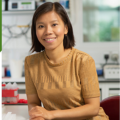
About the speaker
Dr Kelly Nguyen
Kelly obtained her Ph.B (Honours) degree in Chemistry from the Australian National University (Australia). She completed her PhD under the supervision of Dr Kiyoshi Nagai at the MRC-LMB where she focused on structural studies of large spliceosomal complexes. She was a Miller Research Fellow at UC Berkeley hosted by Professors Kathleen Collins and Eva Nogales. She returned to the MRC-LMB to establish her own lab in 2019.
She was awarded University Medal from ANU, RNA Society Scaringe Award, Biochemical Society Early Career Award, Suffrage Award, Eppendorf Young European Investigator Award, EMBO Young Investigator Award and the Colworth Medal.