
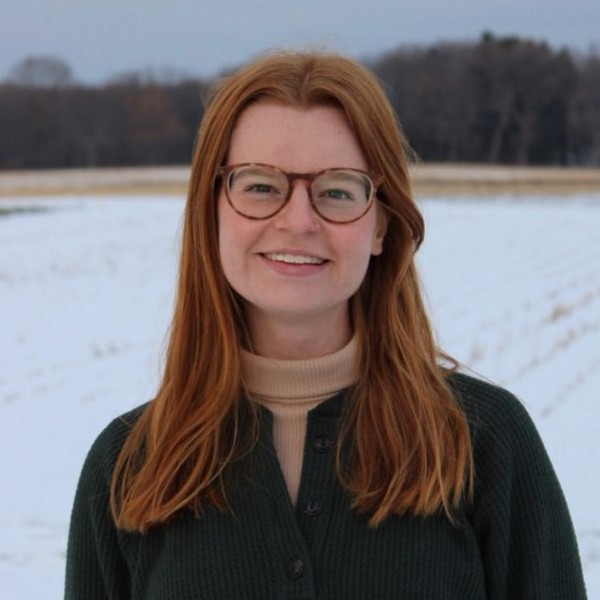
Katherine Hulting
Postdoctoral Research Associate, Leverhulme Centre for Anthropocene Biodiversity
Global biodiversity change in the Anthropocene
Biography
I am an ecologist interested in understanding the impacts of anthropogenic landscape changes on ecological communities and the methods used to restore them. During my PhD at W.K. Kellogg Biological Station and Michigan State University, I worked in a habitat corridor experiment to research how connectivity loss affects species interactions and long-term community change, using plant and insect communities as a system. Throughout my PhD, I had the opportunity to engage in several collaborative synthesis projects focused on biodiversity change, which led me to this role at LCAB.
Research
My research at LCAB will focus on global change drivers of spatial beta diversity. Beta diversity, or differences in species composition among communities, is key for linking our understanding of biodiversity across scales, but it is challenging to detect general relationships between beta diversity and global change factors. My work will aim to clarify these relationships by quantifying how anthropogenic global changes, such as land use change or climate change, drive changes in beta diversity over time through species gains and losses in local communities. This research will contribute to our understanding of biodiversity change across space and time, which informs conservation in a time of global change.
Publication Highlights
Hulting, K.A., Smith, T.A.H. & Haddad, N.M. (2026). Habitat fragmentation affects plant-arthropod interactions through connectivity loss and edge effects. Ecology 107: e70322.
Hulting, K.A., Brudvig, L.A., Damschen, E.I., Levey, D.J., Resasco, J., Tewksbury, J.J. & Haddad, N.M. (2025) Habitat edges decrease plant reproductive output in fragmented landscapes. Journal of Ecology 113: 531-541.
Hulting, K.A., Kemmerling, L.R., Griffin, S.R., Webb, J., Brown, A.K. & Haddad, N.M. (2024) Seed-based restoration practices and floral resources increase multi-trophic interactions. Journal of Applied Ecology 61: 859-868.