
Nature(s) in Narrative Conference
Posted on Thursday 16 July 2026
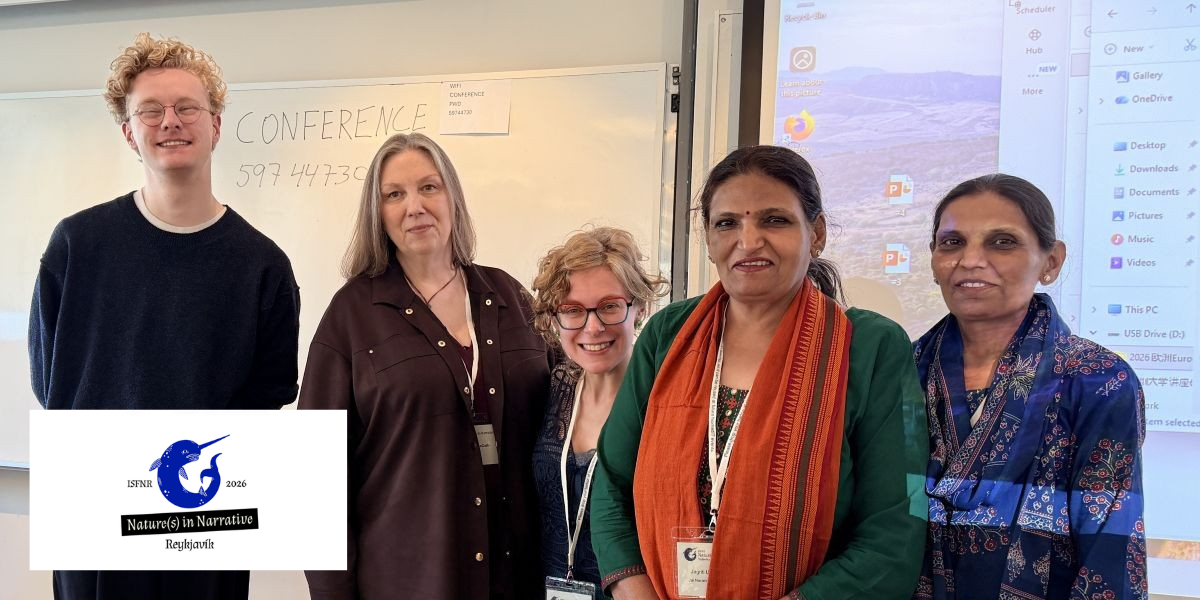
This year’s conference addressed the theme ‘Nature(s) in Narrative’, and saw delegates gather from all over the world to discuss various aspects of nature in folk narrative in a rich program which saw 74 panels held over the course of four days.
Tracey chaired and presented her research as part of a panel on ‘Narrative Ecologies: Folklore, Fiction, and Cultural Response to Climate Change.’ This international interdisciplinary panel brought together researchers from North America, Chile, the Netherlands, India, Ireland, Norway and China to reflect on nature/culture entanglements and how narrative traditions adapt and respond to climate change. The interdisciplinary breadth of the panellists meant that a variety of cultural forms were addressed from climate fiction, children’s literature, spiritual tradition, myth, legend, performance and ecological grief.
Tracey presented research she undertook for her masters thesis, and discussed different environmentalist messages contained in Irish legends about the Glas Gaibheach - the cow of abundance in Irish folk tradition. In her presentation she contextualised the meaning of the legends in relation to human/bovine entanglements in Irish tradition, analysed the relationship of the stories to particular landmarks in Ireland, and discussed contemporary reinterpretations of the legends where the abuse of the cow is understood as an allegory for environmental exploitation. Some of these aspects of the legendry have been discussed in an article recently published by Tracey in the journal Folk Life, entitled ‘She’s our cow you know:’ stories of the Glas Ghaibhneach: local lore, migratory legend.’1
The conference was a timely gathering for folklorists who are carrying out ecological enquiries into folk tradition and provided an excellent opportunity to present our findings and learn from the methodological approaches of other scholars. As folkloristics responds to the posthuman turn currently sweeping across the humanities, this conference offered a valuable opportunity to critically discuss how folkloristics can respond to this theoretical reorientation, and how it may continue to develop into the future.
References
1 Tracey Hayes ‘She’s our cow you know:’ stories of the Glas Ghaibhneach: local lore, migratory legend,’ Folk Life 64, no.1 (2026): 45-65, https://doi.org/10.1080/04308778.2026.2634547.