
The Good Anthropocene
Posted on Thursday 22 October 2026
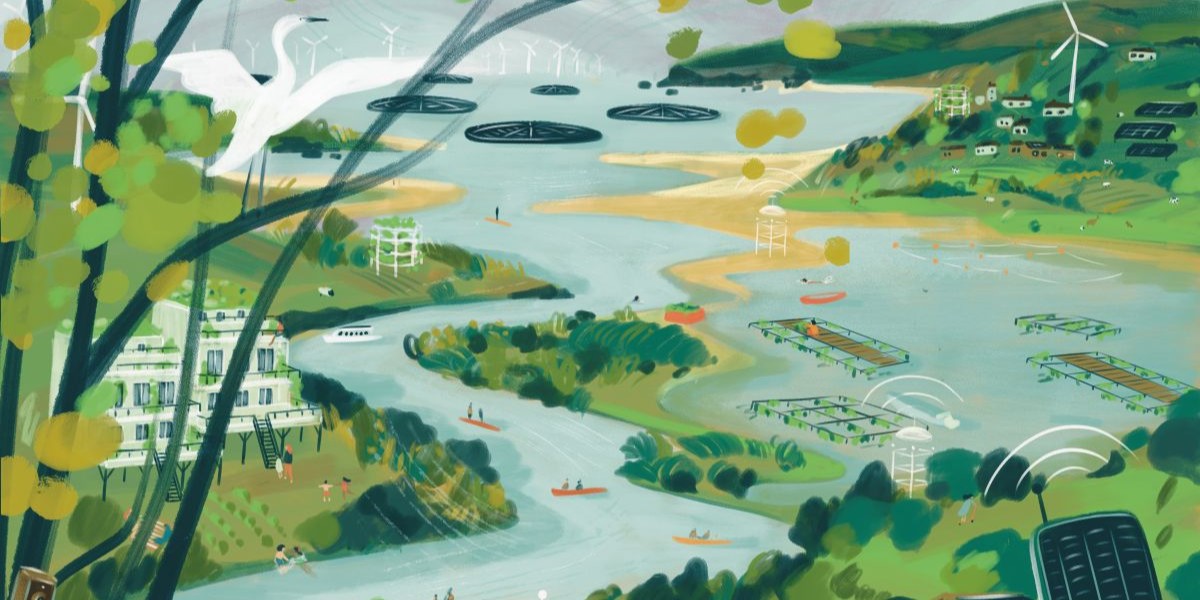
A new report co-authored by researchers from LCAB and WWF highlights how local communities across the UK imagine positive, sustainable, and resilient futures for the places where they live and work.
The Good Anthropocene report was produced by researchers at the University’s Leverhulme Centre for Anthropocene Biodiversity, in partnership with leading global environmental charity WWF.
The landmark report draws on insights from workshops held with residents and partner organisations in WWF’s three ‘Wholescape’ areas: Pembrokeshire in Wales, Norfolk in England, and the Firth of Forth in Scotland.
As part of the study, participants were asked to envision hopeful futures for their local landscapes, contributing to stories brought to life through original artwork. The resulting reflections present a rich blend of futuristic technology and traditional practices, offering a hopeful roadmap for human and environmental flourishing. The workshops were convened by Dr Alison Dyke of LCAB and the Stockholm Environment Institute York (SEIY), with Joanne Morris, also of SEIY. Across all three regions, communities described futures where innovation harmoniously coexists with tradition. Alison wove their stories into narratives of the future observed from more than human perspectives. Artist Jasmine Hortop visualised these stories in a series of artworks.
- Pembrokeshire: Residents imagined floating renewable energy generation and advanced environmental monitoring technology alongside sea allotments, climate-adapted farming, and a revitalised connection to local cultural heritage, including the Welsh language and seasonal community celebrations.
- Norfolk: In response to rising sea levels, participants depicted a wetter landscape with climate-adapted buildings constructed on higher ground and islands. Visions included vertical farming to maximize space and sustainable seafood harvested from restored marine habitats.
- Firth of Forth: Communities imagined re-established oyster reefs supporting thriving lobster and herring fisheries. Restored coastlines with boardwalks and coastal parks were highlighted as key to improving public health, building community while providing natural defenses against storm surges and rising tides.
Across the workshops, participants described future societies that felt more secure, less precarious, and guided by a more sustainable pace of life with more connection to nature.
In a further workshop in York, facilitated by Professor Ioan Fazy, participants from LCAB, WWF and the Wholescapes explored the barriers to systemic change, and identified pathways to desirable futures through systemic thinking, optimism, agency and stewardship. “Seeds” of a good future - initiatives already underway that could be scaled up or applied elsewhere - were also identified in the report.
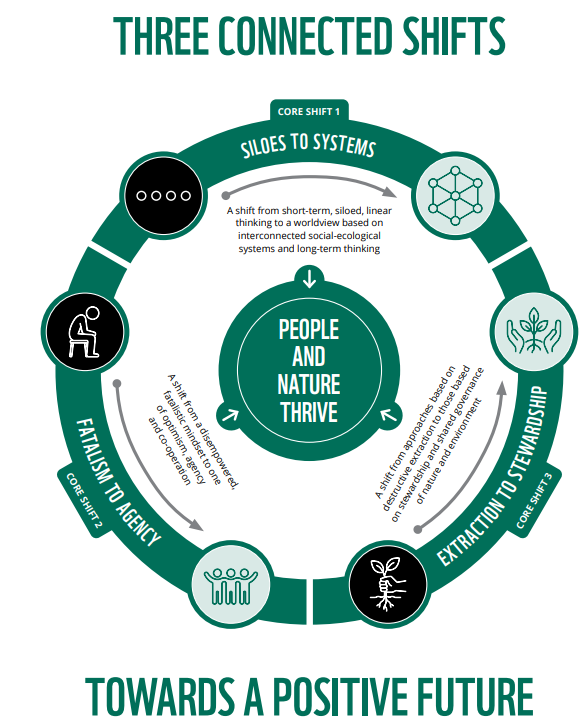
The Good Anthropocene project builds on the findings of the 2026 Living Planet Report, which focuses on the 'Science of Hope'. That report demonstrates how positive environmental change is achievable when backed by clear goals, actionable pathways, agency, and resilience - citing conservation successes such as recovering populations of tigers, green sea turtles, and bluefin tuna.
The project also underlines the power of 'positive tipping points', where small, incremental changes aggregate until a system shifts into a self-reinforcing positive trajectory. A prime example is the global energy system, where solar power has become the cheapest source of new electricity in most countries, with global solar capacity doubling every three years.
Professor Lindsey Gillson, Director of the Leverhulme Centre for Anthropocene Biodiversity, said: "The Anthropocene is a time of enormous change and unprecedented human influence. We have choices we can make about the kind of Anthropocene we shape for ourselves and future generations.
"Working with WWF in their Wholescapes, we have explored what good futures might look like, in ways that consider people's priorities, values and the things they care about in their locality.
“We hope that this process and the Good Anthropocene report will inspire people to think optimistically about the future and feel a sense of agency and stewardship where they live."