

MSc Cognitive Neuroscience
Develop your understanding of the brain mechanisms that underpin human behaviour
Year of entry: 2026 (September)
Cognitive neuroscience examines the biological processes that help us to understand complex mental functions such as memory, language, emotion, perception, attention and consciousness.
While psychology focuses on understanding the structure of the mind through behavioural experiments, neuroscience provides a window on how these processes occur in the brain.
Our course gives you unique access to the York Neuroimaging Centre (YNiC) where you'll have opportunities for hands-on experience of functional magnetic resonance imaging (fMRI), magnetoencephalography (MEG), electroencephalography (EEG) and transcranial magnetic stimulation (TMS). You'll learn how to design, analyse and evaluate neuroimaging experiments, and see how they contribute to our understanding of brain mechanisms.
Provided by the Department of Psychology, the course also pulls in expertise from other areas of the University, such as the Hull York Medical School.
Course content
Our course is made up of 180 credits, consisting of taught modules and a substantial empirical project.
By placing neuroimaging in the wider context of cognitive neuroscientific research, our modules introduce you to the principles and design of neuroimaging, and the specialist methods required for the analysis of data gathered from experiments.
Your research project will enable you to participate in the design and implementation of a piece of pure or applied research in cognitive neuroscience. You'll receive hands-on training in advanced brain imaging methods - some of which are being developed at York.
Modules
Core modules
- Principles of Cognitive Neuroscience
- Research Design and Statistics
- Introduction to Programming
- Data Analysis in Neuroimaging
Option modules
You will study two option modules. Examples can be found below. Some option module combinations may not be possible. The options available to you will be confirmed after you begin your course.
- Mind and Brain
- Body Representations
- Neuroimaging of Vision
- Bilingualism and Cognition
- The Psychology of Number, Developmental Disorders and Mathematics Anxiety
- Cognitive Neuroscience of Attention
- Memory and the Brain
- Animal Cognition and Communication
- Perception of Actions and Human Behaviour
- Face Perception
Our modules may change to reflect the latest academic thinking and expertise of our staff, and in line with Department/School academic planning.
Dissertation
As part of this MSc you will be given the opportunity to undertake a novel piece of empirical work, in a range of project areas. Projects will be supervised by an academic member of staff.
Different projects are available each year, but examples of recent MSc students' projects include:
- Using fMRI to investigate the processing of emotional and social cues
- Representation of semantic knowledge in the brain
- Disruption of visual cortex in patients with macular degeneration and brain mechanisms underpinning language understanding, face processing, number processing or anxiety and risky behaviour
- Using MEG and TMS to investigate brain mechanisms of memory for words and pictures
- Connectivity patterns between brain regions and auditory perception
Some of these projects are methodological in nature, in that they study analytical strategies for brain research, or aim to develop the use of new imaging methods.
Learning outcomes
Every course at York is built on a distinctive set of learning outcomes. These will give you a clear understanding of what you will be able to accomplish at the end of the course and help you explain what you can offer employers. Our academics identify the knowledge, skills, and experiences you'll need upon graduation and then design the course to get you there.
Learning outcomes for this course
- Knowledge: Demonstrate a deep and systematic understanding of how cognitive processes can be explained in terms of their underlying brain processes and how modern neuroimaging techniques (such as MRI, MEG, EEG and TMS) can be used to understand the properties of the human mind.
- Critical Evaluation: Critically evaluate theories within and beyond the field of cognitive neuroscience, using empirical evidence to support their reasoning and arguments.
- Analysis of Data: Demonstrate a systematic knowledge of how advanced research paradigms, research methods in neuroscience and advanced statistical analysis can be used to explain mental processes and behaviour.
- Research Skills: Identify and evaluate relevant scientific evidence from the range of methodologies used in cognitive neuroscience and thus solve complex problems using evidence-based and scientific reasoning, to identify and pose new research questions, to devise new methods to address them and to consider alternative approaches to their solutions and evaluate these.
- Solve Complex Problems: Design, conduct and interpret systematic, scientifically rigorous and ethically sound studies, using a combination of advanced quantitative methods, programming and statistics, supported by state-of-the-art software, in the context of methodologies used in cognitive neuroscience.
- Communication: Communicate complex concepts effectively using written, oral and graphical means appropriate to the discipline, adapting the content and presentation style to make it appropriate to diverse audiences.
- Management Skills: Demonstrate that they are able to work autonomously in planning and implementing tasks at a professional level, making decisions based upon complex and uncertain information, take responsibility for their own learning and professional development, and work effectively as a member of a team.
Fees and funding
Annual tuition fees for 2026/27
| Study mode | UK (home) | International and EU |
|---|---|---|
| Full-time (1 year) | £13,900 | £32,900 |
Fees information
UK (home) or international fees? The level of fee that you will be asked to pay depends on whether you're classed as a UK (home) or international student. Check your fee status.
Find out more information about tuition fees and how to pay them.
Additional costs
We don't anticipate there being any additional costs associated with this course as all text books are available in the Library or via the Virtual Learning Environment (VLE). Depending on how you work you may wish to print out notes; costs for this will vary depending on your methods of working.
Funding information
Discover your funding options to help with tuition fees and living costs.
We'll confirm more funding opportunities for students joining us in 2026/27 throughout the year.
If you've successfully completed an undergraduate degree at York you could be eligible for a 10% Masters fee discount.
Funding opportunities
Chevening Scholarships
We are pleased to work with Chevening Scholars to offer funding for our Masters programmes. Chevening Scholarships provide one year of fully-funded postgraduate study in the UK for international (including EU) students. The scholarships are open to early and mid-career professionals who have the potential to become future leaders.
Teaching and assessment
You’ll work with world‐leading academics who’ll challenge you to think independently and excel in all that you do. Our approach to teaching will provide you with the knowledge, opportunities, and support you need to grow and succeed in a global workplace.
Teaching format
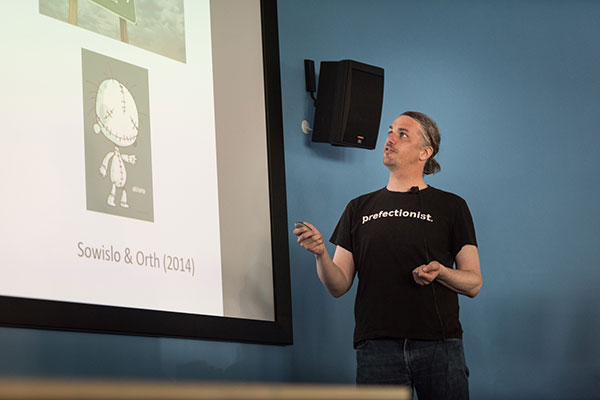
You'll be taught through lectures, seminars, practicals and group work by academic experts within the Department of Psychology as well as external experts from other academic institutions. As the course progresses, you'll have greater independence with the emphasis being on choice, specialisation, and independent study, all supported by supervisors.
Seminars focus on small group work, discussions and presentations. You will gain knowledge in all aspects of research, from designing and carrying out experiments to analysing, critically evaluating and interpreting results. This experience will equip you with valuable skills that you will apply in your final empirical project.
Through the Virtual Learning Environment, you will have access to teaching materials, including lecture slides and recordings, practical demonstrations and supporting materials.
Facilities
Our Department is purpose-built with superb teaching facilities.
Lectures will take place in state-of-the-art lecture theatres equipped with multiple screens for presentations, audio amplification and lecture recording facilities.
You'll have access to our multimodal Action Perception Laboratory, an EEG Lab, TMS Lab, Sleep Lab and the York Neuroimaging Centre which is equipped with two MRI scanners and a MEG scanner.
Teaching location
The Department of Psychology is located on Campus West.
Most lectures, tutorials, seminars, practical work, staff offices and laboratories are in our psychology building. Some of your teaching will take place here and some at the York Neuroimaging Centre (YNiC) in the Biocentre, York Science Park.
About our campus
Our beautiful green campus offers a student-friendly setting in which to live and study, within easy reach of the action in the city centre. It's easy to get around campus - everything is within walking or pedalling distance, or you can always use the fast and frequent bus service.
Assessment and feedback
Modules are assessed through essays, practical reports, statistics and programming exercises, exams and a dissertation and poster presentation based on the Empirical Project

Careers and skills
This MSc will enhance your transferable skills as well as the skills required for careers in a range of industries. For example, you’ll learn a variety of research and clinical methods that can be applied to childhood development and its disorders; as well as carrying out extensive independent research. Many of our graduates go on to complete PhDs, typically in psychology, cognitive neuroscience or related fields adjacent to healthcare and medicine. Others go on to pursue careers in research, clinical psychology, and a range of professions involving understanding human behaviour, computing, data science and statistics.
The Department's Employability Coordinator works closely with the University Careers Service, which offers our students an additional range of career and recruitment events, skills sessions and one-to-one advice.
This MSc does not confer Graduate Basis for Membership of the British Psychological Society (BPS). Graduate Basis for Membership is required for entry to doctoral training in clinical and educational psychology in the UK, as well as some professional psychological careers. You may already hold Graduate Basis for Membership (for example, from a BPS-accredited undergraduate degree), in which case this MSc could enhance your applications to jobs or doctoral courses that require it. If you don't have Graduate Basis for Membership then you may be interested in our MSc Psychology in Education conversion course.
See the BPS website for more information about professional pathways in psychology (bps.org.uk).
Career opportunities
- University lecturer
- Cognitive neuroscience researcher
- Data scientist
- Research officer (statistics)
Transferable skills
- Critical thinking
- Critical evaluation
- Time management
- Reasoning
- Analysis
- Problem-solving
- Pragmatism
- Teamwork

Turn ambition into achievement with our expert guidance and connections. From your first day here to life after graduation, we'll help you find your career advantage.
Entry requirements
| Qualification | Typical offer |
|---|---|
| Undergraduate degree | 2:2 or equivalent in Psychology, Neuroscience, Biology or a relevant discipline. We will be looking for evidence of strong marks in relevant modules including: biological psychology, neuroanatomy, neuroscience related modules, and research methods and statistics |
| Other international qualifications | Equivalent qualifications from your country |
English language
If English isn't your first language you may need to provide evidence of your English language ability. We accept the following qualifications:
| Qualification | Minimum requirement |
|---|---|
| IELTS (Academic and Indicator) | 6.5, minimum 6.0 in each component |
| Cambridge CEFR | B2 First: 176, with 169 in each component |
| Oxford ELLT | 7, minimum of 6 in each component |
| Oxford Test of English Advanced | 136, minimum 126 in each component |
| Duolingo | 120, minimum 105 in all other components |
| LanguageCert SELT | B2 with 33/50 in each component |
| LanguageCert Academic | 70 with a minimum of 65 in each component |
| Kaplan Test of English Language | 478-509, with 444-477 in all other components |
| Skills for English | B2: Merit overall, with Pass with Merit in each component |
| PTE Academic | 61, minimum 55 in each component |
| TOEFL | 87, minimum 21 in each component |
| Trinity ISE III | Merit in all requirements |
For more information see our postgraduate English language requirements.
If you haven't met our English language requirements
You may be eligible for one of our pre-sessional English language courses. These courses will provide you with the level of English needed to meet the conditions of your offer.
The length of course you need to take depends on your current English language test scores and how much you need to improve to reach our English language requirements.
After you've accepted your offer to study at York, we'll confirm which pre-sessional course you should apply to via You@York.
Next steps
Contact us
Get in touch if you have any questions

Discover York

We offer a range of campus accommodation to suit you and your budget, from economy to premium.

Explore campus and city life and hear what our current students have to say about living here.

Lively, full of culture and beautiful, York is regularly voted one of the best places to live and visit in the UK.

Find out more about York. Chat to staff and students and take the tour, on campus or online.