Protected areas critical to conserving marine life in international waters
Posted on Tuesday 17 March 2020
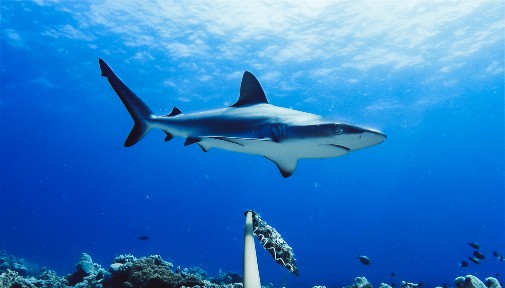
The research, led by the University of York, found that the key human activities and threats to marine life in international waters come from climate change, land-based pollution, fishing, shipping and, increasingly, mineral mining.
The study found that MPAs - conservation zones at sea where environmentally damaging activities (like certain types of fishing) are restricted - were the only consistently effective option to mitigate impacts from fishing, shipping and mining, and can partially help to reduce the impact of climate change.
Law of the Sea
The high seas are the region of the ocean beyond national jurisdiction. They cover 61 per cent of the oceans and are governed under the United Nations Convention on the Law of the Sea.
The organisations charged with delivering management of the high seas have so far largely failed to protect marine life, the authors of the study say.
Callum Roberts, a co-author and Professor of Marine Conservation at the University of York said: “Highly and fully protected MPAs are essential to safeguard vulnerable habitats and wildlife in the high seas and promote ecosystem resilience in a fast-changing world. Without them, the future looks bleak for some of the ocean’s most charismatic creatures, including sharks, turtles and marine mammals.”
Vulnerable habitats
Over the past two years countries have gathered at the UN Headquarters in New York to negotiate the terms of a new high seas treaty aimed at improving high seas management and protection.
The researchers are calling for the new UN treaty to enable creation of highly and fully protected MPAs to safeguard vulnerable habitats and wildlife and promote ecosystem resilience.
Bethan O’Leary, Research Associate in the Department of Environment and Geography at the University of York and lead author of the study, said: “The new UN treaty negotiations offer a once-in-a-generation opportunity to end mismanagement of the high seas and fulfil the obligations in the Law of the Sea to protect vulnerable marine wildlife and fish stocks.
Vital
“MPAs are a powerful foundation for reformed management, but must be complemented by strong rules in surrounding areas, such as fishing gear restrictions. Environmental impact assessments to address cumulative impacts of human activities are also a vital element in the negotiations.”
Liz Karan, director of The Pew Charitable Trusts’ Protecting Ocean Life on the High Seas project, which supported this research, added: “The U.N. talks to protect the high seas are taking place at a critical time. Next month, representatives from over 190 governments will meet at the U.N. in New York to finalize the text of a treaty that will provide a legal mechanism to establish marine protected areas in international waters. And in another international forum, the Convention on Biological Diversity, governments are starting to call for protecting and conserving at least 30 percent of the ocean—and sustainable management of the whole ocean—by 2030.”