UK call on all nations to safeguard world’s oceans
Posted on Tuesday 25 September 2018
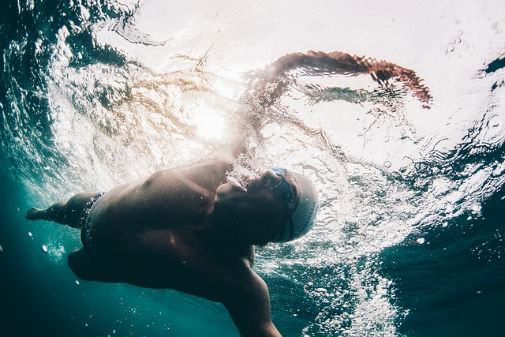
Endurance swimmer and campaigner Lewis Pugh. Pic credit: Kelvin Trautman
Scientists said it is a necessary step to protect endangered species and recover overfished stocks.
Less than 10% of the world's seas are currently designated as marine protected areas (MPAs), which can conserve sea life and habitats from damaging activities such as mining and destructive fishing.
However, Professor Callum Roberts and his team at York have now provided the scientific underpinning for a new ocean protection target – 30% by 2030.
Damaged habitats
Studies by the University of York’s Department of Environment and Geography over two decades has shown marine protected areas to be highly effective at rebuilding depleted ocean life and recovering damaged habitats. But it has also shown that the 10% target is insufficient.
Professor Callum Roberts, who led the research said: “The science is clear. We need to protect at least 30% of the ocean in strongly and fully protected areas to safeguard threatened and endangered species and recover overfished stocks.”
Fellow York academic, Dr Beth O’Leary, lead author of the study that found the 10% protection target to be inadequate, added: “ This announcement is a game-changer.”
“Life in the sea is under increasing stress, especially from climate change. Protected areas will give wildlife and people more time to adapt to rapid changes. The UK will be the first major economy to back more ambitious protection, setting a bold example for other countries to follow.”
Dr Julie Hawkins, part of the York research team, added: “Protecting more ocean will boost prospects for fisheries.
“Protected areas can increase fish stocks several times over, often in the space of a decade, spilling fish and their young into fishing grounds. By fishing less, it is possible to catch more at less expense from more prolific stocks.”
Lewis Pugh
Earlier this summer, Lewis Pugh, endurance swimmer and UN Patron of the Oceans, swam the English Channel from Land’s End to Dover in 49 days, the first time this feat has ever been accomplished.
He undertook the challenge to draw attention to ocean decline and to urge the UK government to adopt this higher ocean protection target of 30% by 2030.
He said: “All of life on Earth depends on a healthy ocean, whether we realise it or not. It is gratifying to see the UK back this ambitious, science-based conservation goal that would transform ocean health for the benefit of our own and future generations.”
The UK has also made a major ‘Blue Belt’ commitment to protection of its sea, including in its overseas territories.
Consultation
Currently there are nearly 300 marine protected areas around Britain, with 41 more under consultation by the government. In the overseas territories, over 1.5 million square kilometres have been protected from fishing and other damaging activities, with more planned.
The Chagos Islands of British Indian Ocean Territory have been protected since 2010, and the Pitcairn Islands of the Pacific, where Fletcher Christian fled after the Mutiny on the Bounty, protected since 2016.
Further information
- Professor Roberts authored the award-winning The Unnatural History of the Sea and was series scientific advisor for the BBC television’s flagship Blue Planet II. As well as being a WWF UK Ambassador, he is on the Board of Blue Marine Foundation. He has been a Pew Fellow in Marine Conservation since 2000 and was a visiting Professor at Harvard University in 2001.
- Effective coverage targets for ocean protection