Sugar structure: not as sweet as it seems
Posted on Monday 20 April 2015
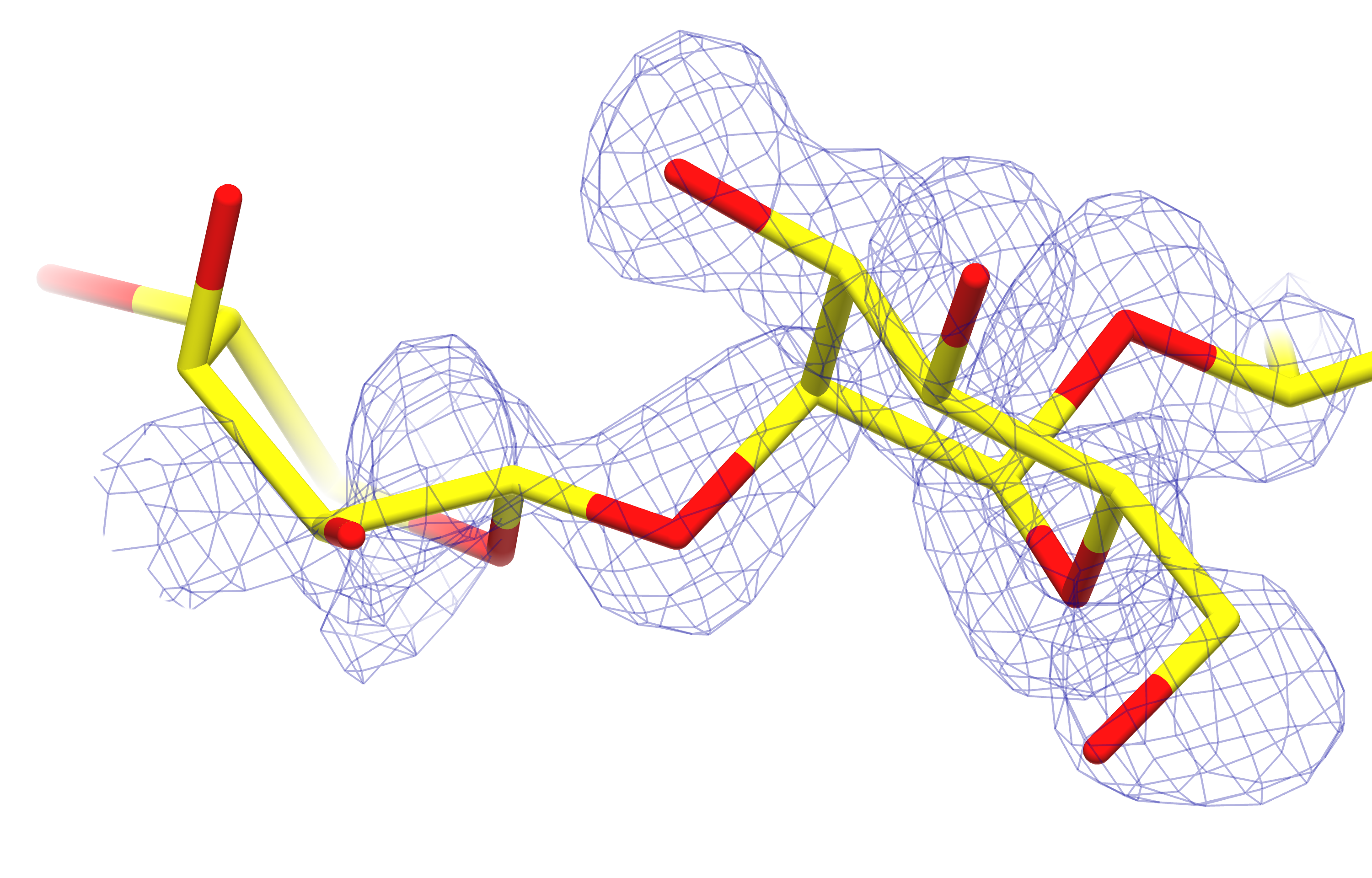
Carbohydrates, commonly known as sugars, are complex biological molecules linked to many fundamental cellular processes in living organisms. They are, for instance, essential to the function of the antibodies our immune systems use to identify and combat bacteria and viruses. However, new research by scientists at the York Structural Biology Laboratory (YSBL) in the University’s Department of Chemistry, published in Nature Chemical Biology, reveals that much of the deposited data on carbohydrate structures may be flawed.
Structural studies of large biological molecules such as proteins and glycoproteins (molecules combining carbohydrate and protein elements, also known as glycans) are crucially important in determining how these molecules function. Scientists use techniques such as X-ray crystallography to determine their molecular structure, and the resulting data is deposited in the worldwide Protein Data Bank (PDB) to inform further study.
Reporting the correct structures of glycans is increasingly important for approval of new drugs by regulatory bodies such as the US Food and Drug Administration. The intensifying focus on the pharmaceutical and therapeutic potential of glycoproteins is driving a rise in new protocols and techniques for their production, which is in turn increasing the rate of deposition of new carbohydrate-containing protein structures in the Protein Data Bank. This means a much wider range of data on carbohydrate structures is now available for statistical analysis.
A team at YSBL, comprising Dr Jon Agirre, Professor Gideon Davies, Professor Keith Wilson, and Dr Kevin Cowtan, has analysed the conformation and fit to experimental data of a subset of the deposited carbohydrates: N-glycan-forming D-pyranosides (chosen because they are all expected to be in the same naturally-favoured low-energy conformation, making the identification of anomalies easier). The analysis was carried out using software which Dr Agirre developed.
The study, funded by the Biotechnology and Biological Sciences Research Council (BBSRC) concludes that nearly two-thirds of N-glycan d-pyranosides show a poor fit to the experimental data.
Dr Agirre says: “64 percent of all N-glycan d-pyranosides show a correlation to density of less than 0.8, reflecting a poor fit to the experimental data. Indeed, 12 percent show a correlation smaller than 0.5. On top of that, about 25 percent of the studied sugars are in energetically improbable conformations; these are almost certainly wrong.”
Professor Davies adds: “This creates a vicious circle: publication and deposition of incorrect structures informs subsequent statistical analyses that suggest the deposited structures are normal.”
The researchers say that the development of improved strategies, practices and computational tools, in protein study in the 1980s, has not been reflected in the study of carbohydrates. They call for improved protocols for these key biological molecules too, and say the need is becoming more urgent because of the increasing focus on glycobiology in pharmaceutical research and development.
Further information
- To read the paper Carbohydrate anomalies in the PDB,published in Nature Chemical Biology, visit:http://www.nature.com/nchembio/journal/v11/n5/pdf/nchembio.1798.pdf
- Research was funded by the Biotechnology and Biological Sciences Research Council grant BB/K008153/1
- For more information on the York Structural Biology Laboratory, visit: http://www.york.ac.uk/chemistry/research/ysbl/
- The software developed for performing the analysis (Privateer) has been published by Computational Collaborative Project 4 (CCP4). For more information on the program, visit: http://www.ccp4.ac.uk/html/privateer.html
- A high-resolution image accompanying the story can be downloaded from: http://www-users.york.ac.uk/~ja905/images/Figure_press_release.png