High rise raptor residence for University of York campus
Posted on Tuesday 15 April 2014
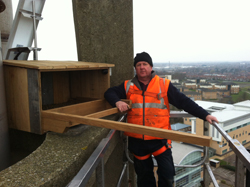
The new high rise box and perch have been installed on the metal chimney – the highest point on the University’s Heslington West site - as part of on-going efforts to increase the diversity of wildlife on the 500-acre campus.
Over 150 bat, owl and bird boxes have also been installed in woodland areas across the Heslington West and East sites.
University of York Estates Manager Gordon Eastham said: “We know there are Peregrine Falcons around the city and they were spotted over the Heslington East campus last year. They tend to nest on high buildings and structures so we thought the boiler room chimney could be a good vantage point for them.
“The campus is a beautiful green space which is proving increasingly attractive to wildlife, insects and native plant species – and we are keen to encourage and support that growing biodiversity.”
Extensive landscaping and planting work on the Heslington East campus is attracting birds such as Little Ringed Plovers, Skylarks, Lapwings and Oyster Catchers, while on the more established landscapes of Heslington West over 20 different types of wildfowl have been spotted on the campus lake.
The University campus was awarded a Green Flag for the first time last year by the Keep Britain Tidy charity in recognition of the quality of its landscaped green areas.
Further information
- Find out more about the abundance of wildlife on the University of York campus www.york.ac.uk/about/sustainability/biodiversity/
- Peregrine Falcons are making a comeback in the UK with numbers increasing fourfold since the 1960s when the population was devastated by the effects of pesticides. One of the fastest animals on earth, Peregrines are often found on wild crags or cliffs although increasing numbers are colonising cities where prominent buildings provide a perfect cliff top alternative.