Teaching and assessment
You’ll work with world‐leading academics who’ll challenge you to think independently and excel in all that you do. Our approach to teaching will provide you with the knowledge, opportunities, and support you need to grow and succeed in a global workplace.
Teaching format
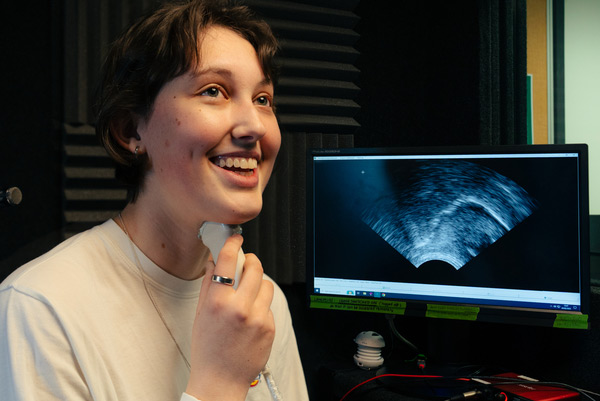
The best way to learn linguistics is to do linguistics. This is why the course involves a mix of lectures, seminars, workshops and practical training. We'll support your learning with weekly exercises, individual and group work as well as in-class practicals. Research training opportunities will abound through the year, on a variety of topics, ranging from technical software training in phonetic analysis to academic writing seminars. Research skills training will be embedded in your course and provided throughout the academic year.
All modules offer developmental (formative) assessments that don't contribute to your final mark. These provide a chance to practice your skills and gain useful feedback on your progress and understanding, before you take the final assessments. A member of staff will act as your supervisor throughout the degree, to help guide your studies and monitor progress. You'll be also be assigned a dissertation supervisor when you write your dissertation.
Facilities
All of our modules have Virtual Learning Environment (VLE) websites where all crucial materials—reading lists, handouts, discussion boards—are accessible.
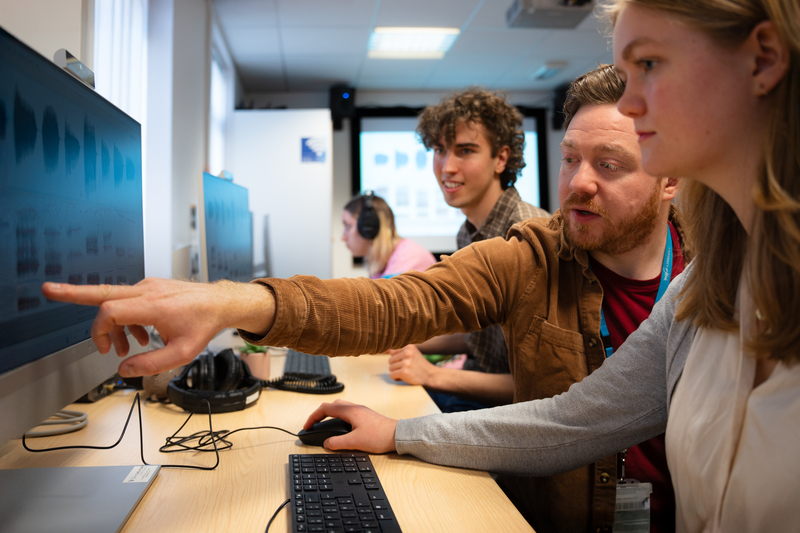
We have our own departmental e-Lab for the teaching and study time of our students. Here you will have access to a variety of resources, including specialist linguistics software, corpora of different varieties, and online language-learning materials.
Teaching location
You will be based in the Department of Language and Linguistic Science on Campus West. Some of your contact hours will be in or close to Vanbrugh College, and all of your teaching will be on Campus West.
About our campus
Our beautiful green campus offers a student-friendly setting in which to live and study, within easy reach of the action in the city centre. It's easy to get around campus - everything is within walking or pedalling distance, or you can always use the fast and frequent bus service.
Assessment and feedback
A range of summative and formative assessment formats are used, including exercises, essays and exams. You'll also be offered exercises and assignments which do not contribute to your final grade that will give you useful feedback on your progression.
You will complete a research dissertation of up to 12,000 words. You'll also complete exercises and assignments which do not contribute to your final grade that will give you useful feedback on your progression.