Mark Woodward (1).jpg)
Community Engaged Learning (CEL)
Key achievements
About CEL
“Learning is the process whereby knowledge is created through the transformation of experience” (Kolb, 1984, p. 38).
Community Engaged Learning (CEL) is a bridge between theory and practice. It enables students to collaborate with community partners to explore and address real world challenges. CEL promotes the University’s strategy to be a University for Public Good, encouraging us to make connections between people, place and research to support sustainable communities.
CEL is a pedagogical approach stemming from service learning in the US, with the aim to create a transformational learning experience. It promotes the sharing of knowledge, skills and expertise between the community and university, where activities are co-produced and reciprocal. It requires a well-supported learning environment for the students, to give context, knowledge and support for reflection to bridge theory and practice.
This type of learning equips students with the skills and experience to contribute to society, now and in the future. It promotes leadership skills in whichever field a student chooses to enter and supports an empowering and ethical educational experience.
Our principles
- Co-produced - opportunities must be designed with community partners with a tangible outcome to deliver.
- Mutually beneficial - opportunities must be genuine, with the potential to bring value or capacity to the partner organisation and offer an enriching and achievable outcome for the students.
- Clear expectations - partners, University staff and students need to be clear on what is expected at all stages.
- Creativity - there must be some scope within the brief for students to take ownership of the project.
- Evaluated - we expect all opportunities to be able to be evaluated, and support us to continually improve our work with students and communities.
The students brought a totally fresh perspective to the project, creating a totally new idea that made use of modern technologies and ways of interacting, but in a simple and easy-to-access manner.
Heritage partner
Support for staff
If you are interested in integrating community engaged learning into your teaching, the CEL team can support you to connect with partners, design projects and give guidance on student training and reflective practice.
We can also provide comprehensive support to ensure projects follow best practice and meet health and safety and compliance requirements.
Activities at York
The CEL team at York work collaboratively across the three faculties at York to support the integration of ‘live’ community projects or placements into modules. Examples of modules include:
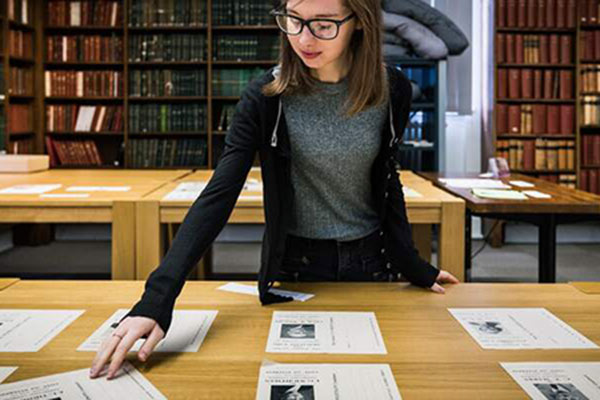
Department of History Public History Projects: A core UG2 module in the department of History, with student teams producing resources to support public understanding of the past.
ESAY Sustainability Clinic: Interdisciplinary student teams tackle projects to address environmental sustainability.
Department of Sociology Questioning Digital Cultures: A core UG2 module exploring key debates in digital culture and and practically build knowledge through the delivery of a project.
Department of Maths Communicating Mathematics in Education: Students undertake a placement supporting mathematical education.
Department of Psychology Community Action Projects: Student teams work collaboratively with local charities to help them to capture and analyse evidence of their impact in the community.
This project has improved my confidence in reaching out to businesses as well as to students from different years. My ability to present research and time management have improved massively. The confidence I have gained has made future working opportunities appear less daunting.
Emilia, 1st Year History of Art student, participated in Food & The City volunteering project.
Previous projects
Learn more about some of the projects students have delivered in recent years