Skip to content Accessibility statement

Sleep lab

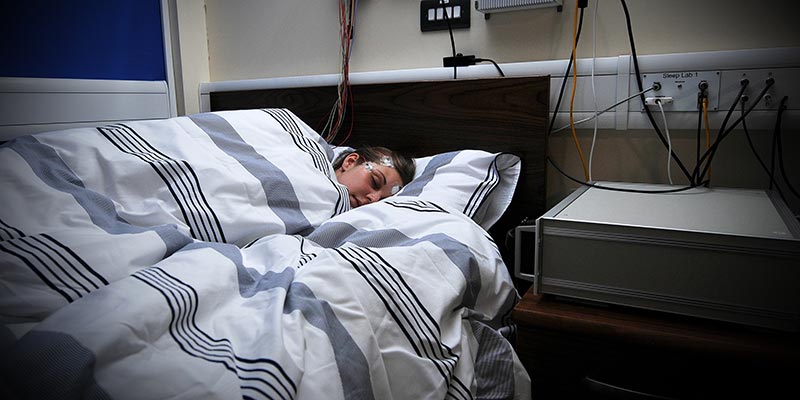
Our state-of-the-art, three-bedroom sleep laboratory provides a dedicated research space for studying human sleep with polysomnography (PSG). 

PSG monitors many of the body’s functions that change between wakefulness and sleep, including brain activity, eye movements, cardiac rhythms, respiratory airflow and skeletal muscle activation. 

Research conducted in our sleep lab has provided important insights into the neurobiological mechanisms by which sleep supports cognition and mental health.

Our projects

Investigating changes in the EEG signal that accompany reactivation events, focusing on sleep spindles and slow oscillations.
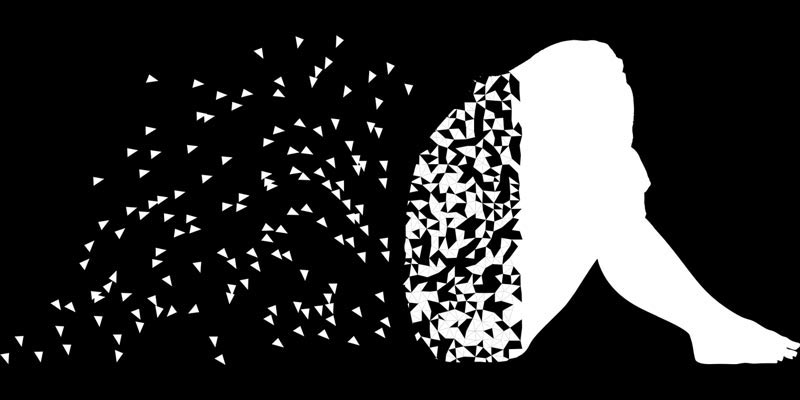
Combining fMRI, EEG and neurophysiology to investigate how sleep disturbances impact on people’s ability to suppress unwanted memories.

Using behavioural testing and EEG to uncover how sleep affects the way we comprehend language.
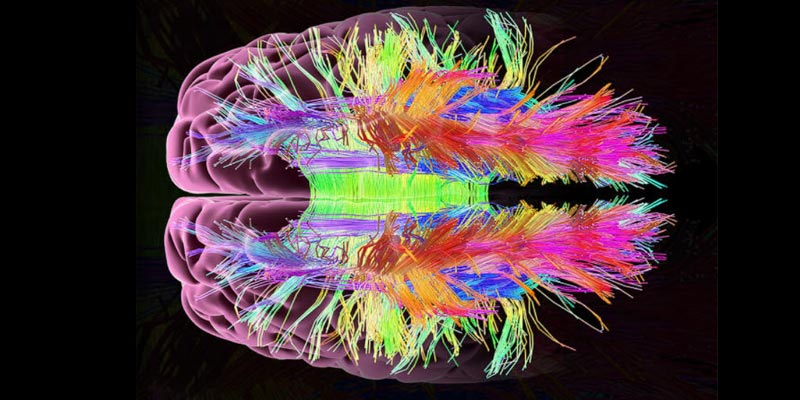
Examining whether children aged 10 to 12 years can outperform adults' consolidation of newly learned words over a nap.