Skip to content Accessibility statement

Nuclear Disarmament and the Treaty on the Prohibition of Nuclear Weapons Project

Welcome to the Nuclear Disarmament and the Treaty on the Prohibition of Nuclear Weapons.

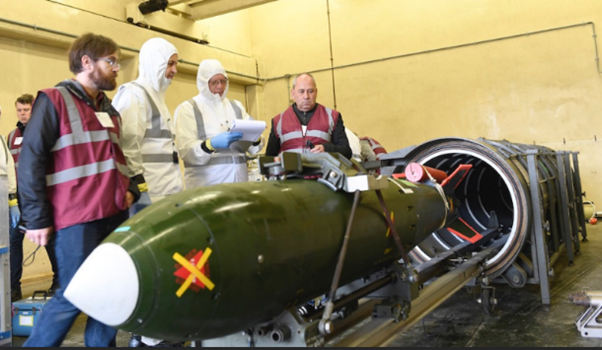
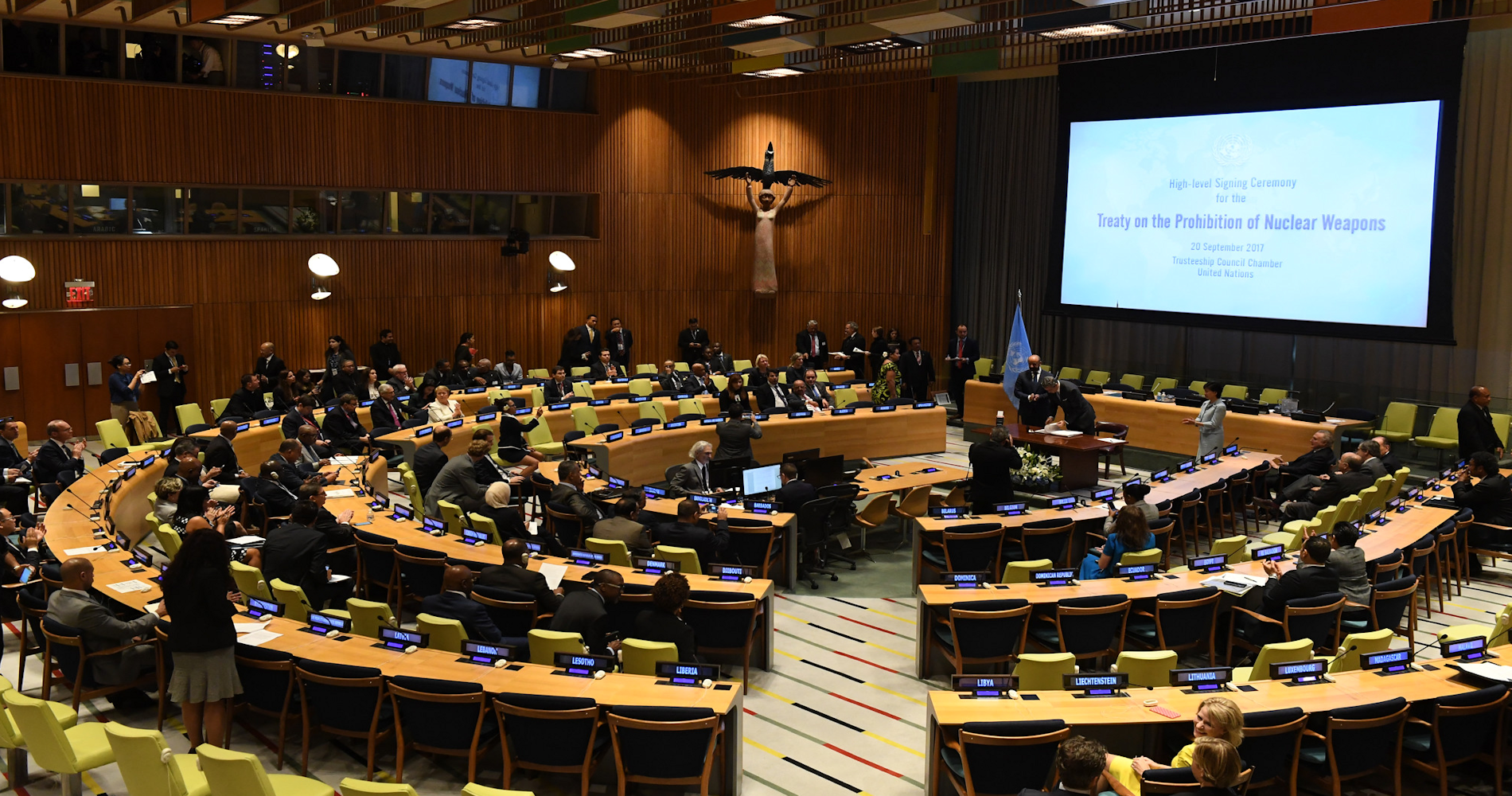
The purpose of this project is to examine what the verifiable and irreversible elimination of a nuclear weapons programme could entail under the 2017 Treaty on the Prohibition of Nuclear Weapons (TPNW).

The States Parties to the TPNW held their first Meeting of States Parties (MSP) in  2022 where it established a working group on Article 4 of the treaty, which sets out the process by which a nuclear-armed state would join the treaty. The working group was chaired by New Zealand and Mexico from the first MSP 1MSP (2022) to the second MSP (2023) and by New Zealand and Malaysia from second MSP to the third MSP (2025).

Article 4(2) of treaty says that any state seeking to join the treaty that currently possesses nuclear weapons must “immediately remove them from operational status, and destroy them as soon as possible but not later than a deadline to be determined by the first meeting of States Parties, in accordance with a legally binding, time-bound plan for the verified and irreversible elimination of that State Party’s nuclear-weapon programme, including the elimination or irreversible conversion of all nuclear weapons-related facilities”

Article 4(1) says that any state had nuclear weapons after 7 July 2017 (when the negotiation of the Treaty was concluded) but has since relinquished them must  “cooperate with the competent international authority designated pursuant to paragraph 6 of this Article for the purpose of verifying the irreversible elimination of its nuclear-weapon programme”.

This raises the following questions:

  1. What does it mean for the elimination of nuclear weapons to be ‘verifiable’ and how could this be achieved?
  2.  What does it mean for the elimination of nuclear weapons to be irreversible' and how could this be achieved?
  3. What counts as a ‘nuclear weapons programme’?
  4. What does it mean for a state to ‘cooperate’ in this context?
  5. What form(s) could a ‘competent international authority’ take?

These questions are not addressed in the treaty text and require detailed elaboration. In 2024 the Government of New Zealand/Aotearoa commissioned Professor Nick Ritchie

to produce a set of reports to unpack these questions drawing on existing research and scholarship research.

“The permanent risk of devastating nuclear violence means we must continue to work hard on the difficult challenge of eliminating nuclear weapons from world politics. The TPNW is an important step in this process and the academic community has a crucial role to play in supporting the diplomatic community and civil society organisations through policy-relevant research, analysis and engagement”.

Professor Nick Ritchie, Project lead

Policy Focused Research Outputs

The project resulted in a series of reports for the Article 4 Working Group and wider TPNW community:

The work was presented to the third MSP at the United Nations in New York in March 2025 and will be presented in full at the 2026 TPNW Review Conference.
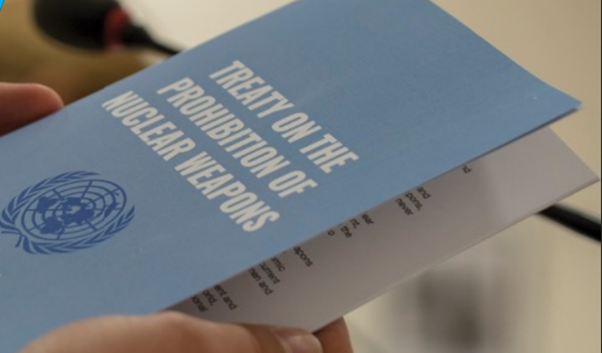
Implementing Article 4 of the TPNW. A Summary of Five Reports on Scope, Verification, Irreversibility, Institutions, and Cooperation Professor Nick Ritchie
What is a ‘Nuclear Weapons Programme’? Professor Nick Ritchie
How Can the Elimination of Nuclear Weapons be Verified? Professor Nick Ritchie
How Can the Elimination of Nuclear Weapons be Irreversible? Professor Nick Ritchie
Institutional Arrangements for the Treaty on the Prohibition of Nuclear Weapons Dr Tom Shea and Professor Nick Ritchie
The Treaty on the Prohibition of Nuclear Weapons and the Notion of ‘Cooperation’ in International Law Dr Marnie Lloydd

Further research on the Treaty on the Prohibition of Nuclear Weapons

Professor Ritchie also curates a database of journal articles, books, book chapters and NGO reports related to the Treaty on the Prohibition of Nuclear Weapons.