
Born in Bradford Centre for Social Change at York - Funded Projects
Born in Bradford Centre for Social Change at York is proud to fund eleven research projects, exploring a range of topics including health, youth, community, wellbeing and social outcomes.
Developed in collaboration with partners across Bradford, the projects build on BiB's unique datasets to generate evidence that can drive real policy change.
2025 Cohort
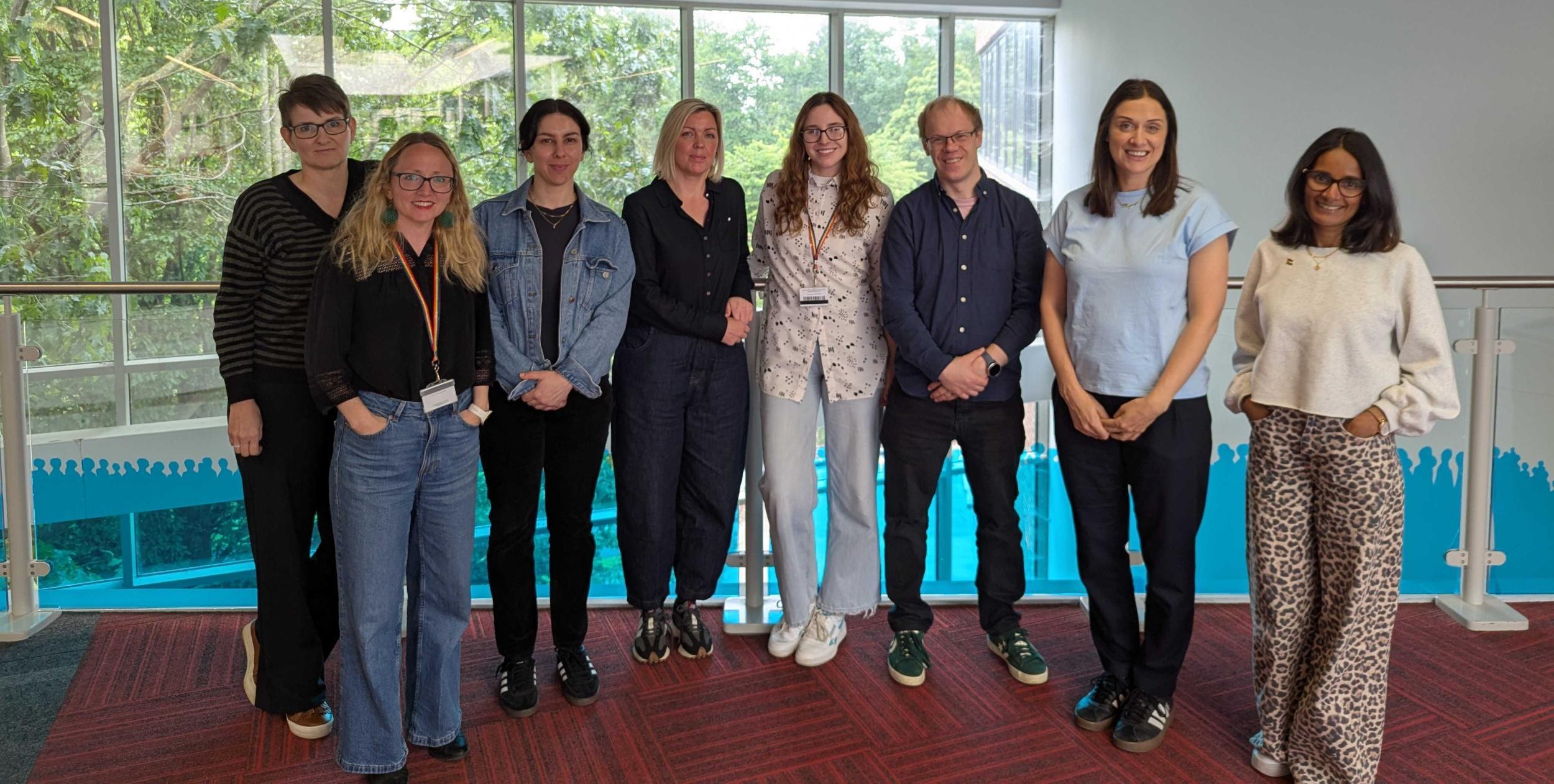
Aniela Wenham - Placed-based youth poverty: Negotiating social security and labour market transitions.
Aim: Through a comparative place-based lens, the research in this project will draw attention to how young people experience poverty and the social security system in markedly different ways to the adult population, and how this experience is further influenced by a range of socio-economic drivers. Foregrounding the perspectives and experiences of young people (16-25), the project will focus upon two communities; a rural coastal area experiencing social and economic deprivation (Scarborough) and a large post industrial urban city experiencing multiple and complex forms of social and economic deprivation (City of Bradford).
Objective: On a local level, Bradford policy-makers will gain a data-informed understanding of how young people experience poverty and the social security system in their city. Through a comparison of data gathered through research with young people in Bradford, to a coastal town context (Scarborough) the project will crucially contextualise how young people's experiences of poverty and the social security system are shaped by place-based dynamics which are particular to Bradford. On a national level, the comparison between Scarborough and Bradford will inform policy-makers about national variations in young people's experiences of the social security system, and the importance of place in shaping these factors.
Approach: The project will conduct qualitative participatory research with a small group of young people in both Bradford and Scarborough involving semi-structured in-depth interviews with young people across the two localities. Researchers will then hold participatory workshops with young people focusing on articulating a ‘vision of a hopeful future’ that will make a persuasive case for change. The project will also produce two briefing reports on key findings and hold a policy and practice roundtable with welfare advisors, local policy makers, youth workers and charitable organisations that support young people in their local communities. Focusing on the local level, this roundtable will disseminate key findings but also explore how local initiatives and policies link together and address local challenges. Within the context of local government re-organisation, this will help inform combined authorities decision making and policy action.
Adam Formby - Supporting Young People's Transitions into Adulthood in Bradford
Aim: To deepen understanding of how young people in Bradford navigate the transition to adulthood post-16, and to use this understanding to strengthen the systems of support around them. Bradford has the highest NEET rate in West Yorkshire among 16–18-year-olds, and two in five children in the district grow up in poverty with lasting impacts on wages, mental health, and future aspirations. By analysing new Age of Wonder data on the 16+ cohort and engaging young people directly in the process, the project aims to ensure that future services and policy are shaped by young people's own accounts of inequality and opportunity, rather than assumptions made on their behalf.
Objective: The project will deliver evidence-informed policy recommendations while building lasting infrastructure between research, council services, and the Age of Wonder dataset. Its key objectives include identifying skill and knowledge gaps around life skills, financial literacy, and career planning, and co-producing a set of policies and services with young people themselves. Ultimately, the project aims to establish a sustained pathway between Age of Wonder data and the City of Bradford Council's Education and Skills team, so that findings feed directly into service provision and future survey design.
Approach: Working alongside the BiB Age of Wonder team and the Council's Education and Skills Partnerships and Intelligence team, the project combines secondary analysis of pilot 16+ survey data with a series of workshops in which young people reflect on their own experiences of inequality and help shape future survey questions. This collaborative evidence, alongside policy-focused reports and journal articles, will be used as an impact tool to bring young people's perspectives directly into service reform, steering groups, and regional and national youth policy debate.
Vanita Sundaram - Understanding Racially Minoritised Girls' Experiences of Sexual Harassment in Bradford
Aim: To generate the first place-based evidence on how racially minoritised girls and young women (13–18) in Bradford experience sexual harassment online and in their communities, and to translate this evidence into meaningful action. Despite over 90% of UK girls reporting harassment at school, racially minoritised girls face intensified and racialised forms of abuse while being less likely to be believed or supported when they disclose it. The project addresses this gap by combining survey analysis with longitudinal qualitative research, ensuring racially minoritised girls' own accounts rather than generic prevalence data drive understanding of the problem and its impact on their safety and wellbeing.
Objective: The project will deliver academic, policy, and community impact by publishing peer-reviewed research alongside a white paper for local authorities, education policymakers, and PSHE teacher networks in Bradford. Its key objectives include building a robust evidence base on racialised sexual harassment, co-producing practical recommendations with those affected, and equipping schools and local services with the tools to respond more effectively to disclosures.
Approach: Working alongside Bradford Healthy Minds Apprentices and specialist "by and for" organisations, the project convenes discrete stakeholder panels of racially minoritised girls, teachers, and sexual violence and mental health specialists as co-production partners throughout the research. Together, they will shape the study design and translate findings into recommendations for change. This evidence, alongside a youth-facing infographic and a white paper launch event, will be used as an impact tool to bring girls' experiences.
Kelli Kennedy – Co-producing Bradford’s Just Transition to Net Zero
Aim: To co-produce an equitable net zero strategy for Bradford by integrating the voices of marginalized communities directly into the Council's Climate Action Plan. By embedding the Born in Bradford Co-production and Peer Research (CoPPeR) infrastructure into the existing climate framework, the project aims to ensure that sustainability policies do not disproportionately penalize or exclude vulnerable populations, particularly those living in the Bowling & Barkerend and Tong wards of Bradford. The project also seeks to support a cultural and structural shift from traditional "top-down" policymaking to a co-produced model by using creative media, such as animation, to humanise climate data and make it more accessible and meaningful for decision-makers.
Objective: The project will deliver tangible local and national policy impacts while expanding the district's co-production infrastructure. Its key objectives include building residents' climate literacy and research skills, trialling creative participatory research methods, and co-producing robust evidence. Ultimately, the project aims to establish a long-term framework for integrating community voices into future Council net zero grant applications and regional policymaking.
Approach: Working alongside the Bradford Council Sustainability Team, the project pairs local climate community researchers with experienced CoPPeR peer researchers as "co-animators." Together, they will utilise CoPPeR's established co-production toolkit to design and produce an engaging "Climate Stories" animation. This creative output, alongside targeted policy briefs, will be used as an impact tool to bring frontline community experiences directly to local, regional, and national decision-makers.
*This project was enabled by the Born in Bradford Centre for Social Change at York, with funding provided by University of York and with support from the Economic and Social Research Council Impact Acceleration Account 2023-2028 (grant reference ES/X00435X/1
Paul Cairns - Developing an AI Assistant to Support Access to and Analysis of BiB Data
Aim: To make Born in Bradford's data meaningfully accessible to researchers and external users by developing a proof-of-concept LLM that generates annotations for the BiB Data Dictionary. With over 25,000 variables across nearly 30,000 people, the sheer scale of BiB data makes it overwhelming for new researchers to locate relevant variables or understand how they relate to the study protocols that produced them. The project aims to accelerate this currently manual annotation process by fine-tuning an LLM on BiB research papers, so that the purpose and context behind each variable becomes far easier to find and interpret.
Objective: The project will deliver a working proof-of-concept alongside foundational infrastructure for AI-supported research on BiB data. Its key objectives include preparing a representative subset of BiB data and documentation for machine learning use, fine-tuning a foundation model on the BiB research corpus, and generating new Data Dictionary annotations for verification by domain experts. Ultimately, the project aims to lay the groundwork for a full AI-based BiB research assistant and demonstrate an approach that could extend to other major cohort datasets, such as Understanding Society or ALSPAC.
Approach: Working alongside BiB staff the project pairs technical development with domain expertise to ensure the model's outputs genuinely improve data accessibility. Together, they will fine-tune the LLM on BiB research papers and use it to generate draft annotations, before testing these with domain experts in a verification workshop. This output, alongside the underlying model made available for wider use, will provide a foundation for further AI-supported tools within BiB, helping researchers and external users access and analyse the data without needing to become BiB database experts themselves.
2026 Cohort
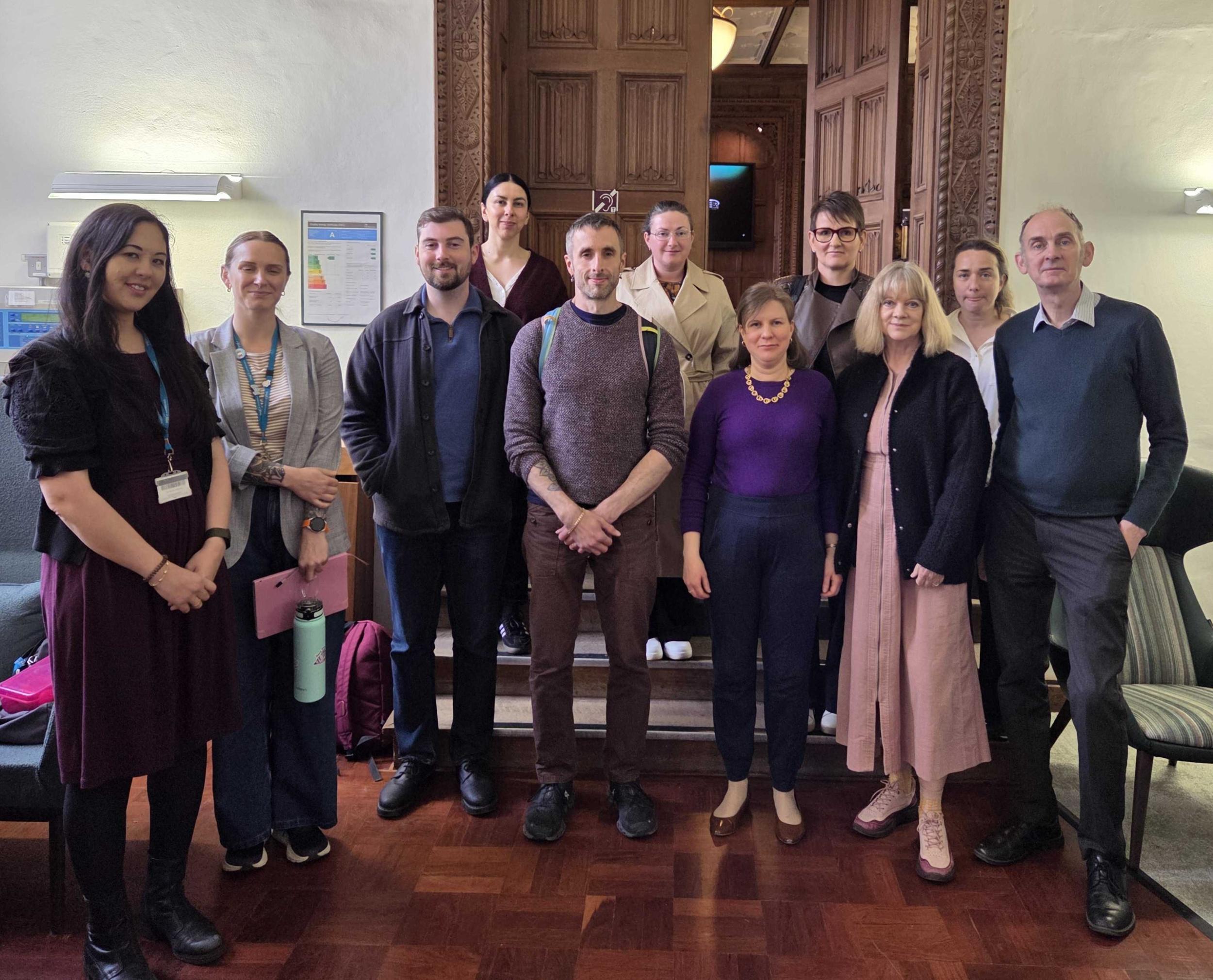
Pete Dale – Beats and Belonging in Bradford: DJing for Youth Wellbeing and Inclusion
Aim: Across the UK, disparities of class, income and geography have resulted in unequal access to musical opportunities. These issues are intensified in Bradford, 12th most-deprived local authority in England. Building on promising pilot evidence that DJ programmes can enhance young people’s wellbeing, confidence and engagement, this project tests a scalable model for integrating DJing into mainstream school music in Bradford, where embedding DJing in schools has strong potential to enhance wellbeing and identity support, redistribute musical capital, and culturally sustain pedagogy.
Objective: The project positions Bradford as a national and international leader in reimagining music education for the 21st century, addressing inequalities in access, relevance and progression. It will provide a scalable model for music hubs, multi-academy trusts and policymakers, alongside timely evidence for the Department for Education and the new National Centre for Arts and Music Education on how DJing can support more equitable music education. The project will impact Bradford schools, the young people of Bradford and the city itself.
Approach: Evaluation of outcomes will combine quantitative measures of health and wellbeing with qualitative interviews to explore music identities, sense of belonging and perceived skills and futures linked to DJing. Workshops led by experienced community DJ educators will establish a series of high-quality, youth-responsive sessions at the TFD centre and in three secondary schools followed by inset training for teachers and provision of DJ controllers to enable sustainability.
Kate Andersen – Childhood Matters: a co-produced exploration of how children's wellbeing is impacted by household social security receipt
Aim: Children have been particularly affected by a decade of UK austerity, with cuts to social security and increased sanction-backed work requirements placing significant pressures on households with dependent children. While extensive research documents the harms of these reforms for adults, little qualitative research has explored their specific impacts on children’s wellbeing. Existing evidence suggests that poverty and social security pressures can increase household tensions, reduce parents’ capacity to care, and lead children to protect parents from further emotional distress. This project will address this gap through a qualitative study co-produced with parents receiving social security. Findings will support Bradford Council’s child poverty objectives and inform strategies to reduce child poverty.
Objective: This project has the overall objective of investigating the impacts of the UK social security system on children's wellbeing through a qualitative study co-produced with an ‘Experts as Evidence’ panel of parents who receive social security. By filling the gap in the evidence base, this project will help meet Bradford Council's objectives of understanding child poverty and how best to tackle it and will look to inform the Labour Government's strategy for reducing child poverty by the end of the current parliament.
Approach: Co-production is at the core of the project and will be embedded throughout, from research design to dissemination. The project will be split into five phases: phase one will establish an Experts by Experience Panel comprising four parents from across Bradford in receipt of social security; phase two will involve deciding with the Expert Panel which aspects of the social security system to research and which qualitative methods to use, and co-designing specific objectives; phase three will entail conducting qualitative fieldwork with 15-20 parents in Bradford who receive social security. The Expert Panel will take a lead role in conducting the research; The fourth phase will entail analysing the data and co-designing local and national policy recommendations; and the fifth phase will involve co-producing and disseminating research outputs.
James Myers – Investigating the social gradient of adolescent loneliness in the Born in Bradford Age of Wonder Cohort
Aim: To understand why adolescent loneliness follows such a stark social gradient, and to build the evidence base needed to intervene. Loneliness in adolescence is rising alongside smartphone and internet use and carries lasting consequences for both mental and physical health, yet familial socioeconomic status and neighbourhood deprivation are known to shape who experiences it most. Drawing on the Age of Wonder cohort's rich demographic and socioeconomic data, the project aims to map the socioecological pathways, family, neighbourhood, school, identity, and digital life that connect deprivation to loneliness in Bradford's young people, ensuring the analysis is grounded in their own lived experience throughout.
Objective: The project will deliver a robust empirical foundation for future intervention research while strengthening the psychometric tools used to measure loneliness in a diverse population. Its key objectives include validating the loneliness scale for cultural and demographic sensitivity, statistically modelling how socioecological factors moderate the SES loneliness relationship, and building a stakeholder network to interpret and act on the findings. Ultimately, the project aims to provide the preliminary evidence needed to secure future NIHR funding for a feasibility study into preventative interventions.
Approach: Working alongside Involvement@York and youth ambassadors from groups such as the Young Dynamos, the project pairs statistical modelling with co-conceptualisation and co-interpretation workshops to ensure findings reflect the realities of Bradford youth. Together, they will refine the loneliness measures, map the social gradient through multilevel modelling, and bring young people, academics, school leaders, and clinicians together to make sense of what the data shows. This evidence, alongside knowledge exchange events at the Bradford Institute for Health Research and the Institute of Mental Health Research at York, will be used as an impact tool to bring young people's experiences of loneliness directly to local wellbeing strategies and national policy debate.
Evangelia (Lia) Chatzidiakou – Predicting indoor environmental health risks to support equitable retrofit policy in the UK
Aim: Building on a previous Born in Bradford family cohort study which installed pollution sensors in 320 homes across Bradford to measure the different air pollutants in homes, this pilot aims to inform policy for healthier and resilient buildings by developing better approaches to dealing with complex data. The project will deliver decision-support tools of tiered complexity, tailored to the needs of scientists, policymakers, housing associations, and building occupants, to inform energy efficiency and building management strategies.
Objective: This pilot project will generate transferable methods relevant to the UK’s ageing and diverse housing stock (which spans several centuries and is the oldest in Europe) in a changing climate that amplifies indoor environmental stressors. By demonstrating how climate, and data-driven modelling can be integrated, the project sets the foundation for the necessary evidence underpinning policy frameworks that ensure net-zero housing strategies deliver equitable and resilient outcomes across the UK.
Approach: In its initial phase, this pilot project will establish technical feasibility and identify clear, scalable pathways capable of delivering robust scientific evidence to underpin efficient environmental policy. In-kind support from the Born in Bradford team will facilitate links with policy makers, priority communities and influential actors (social housing providers, social housing resident-research involvement). The study will aim to strengthen communication between those directly affected by housing and energy outcomes and those with the authority to enact change, thereby increasing the likelihood that evidence leads to meaningful action.
Jennifer Sweetman & Amanda Perry – AGENSY: Assessing Gambling trends and Establishing a Network to Support Young people in Bradford
Aim: Bradford Council has an active Gambling Harm Prevention Working Group which has made efforts to raise awareness and provide support within the local community. Despite this, gambling for young people in Bradford remains a concern; primarily because such behaviour can have far-reaching impacts. Very little is known about the interaction between sociodemographic and economic characteristics with gambling behaviour. The project aims to provide a greater understanding of this, and the information will allow us to explore the co-development of an intervention to reduce harm related outcomes.
Objective: The AGENSY project is designed to complement and extend the existing and previous efforts which have been made within Bradford to raise awareness and reduce the risk of harmful gambling. For the local community this work will highlight the current prevalence and risk factors associated with gambling in adolescents living in Bradford. This work will support a larger funding application which will refine the development of the intervention and conduct a feasibility study to test implementation of the intervention (tailored specifically for adolescents and young people.) The intervention will aim to reduce the risk of harmful gambling during this transition into adulthood.
Approach: The 12-month AGENSY (Assessing Gambling trends and Establishing a Network to Support for Young people in Bradford) project will be delivered in two phases. Phase one will explore the Born In Bradford (BiB) dataset to produce a series of regression models. Phase 2 will develop a network and explore the co-development of an intervention using community consultations. The findings will lead to submission of an NIHR Research for Patient Benefit project (2027) to refine the intervention development and deliver a feasibility study to test implementation.
Laura Fox & Edmund Coleman-Fountain (co-leads) – Co-designing and piloting an Inclusive Evidencing Framework to support research inclusivity across BiB and the wider Bradford community
Aim: Learning-disabled (LD) voices are rarely heard in research and decision-making, particularly those who communicate non-traditionally. This omission affects knowledge production and policy design, limiting both the technical skills available to collect inclusive data and the dissemination of relevant findings. Taking a case-study approach to developing inclusive communication-centred methodologies, this project will co-design and pilot an Inclusive Evidencing Framework to support research inclusivity across BiB and the wider Bradford community.
Objective: The project will answer the following question: How can inclusive, communication-centred qualitative methods ensure learning-disabled young people’s voices shape knowledge production and decision-making in Bradford when applied to Post-16 SEND provision.
Approach: The project will:
- Work with Bradford Council Education (including Skills House) and BiB to audit and address their current data-gathering practices, ensuring that post-16 transition research and policy are shaped by young people with diverse communication modes, in Bradford and the surrounding areas.
- Co-produce an Inclusive Evidencing Framework through workshops that apply adapted ADLib tools to a real world transitions challenge.
- Translate project findings into a permanent resource through integrating methodological tools into the ADLib site, hosting transitions-specific evidencing frameworks on the ESRC Disability and Youth Transitions site, and delivering specialist training for BiB researchers to embed these inclusive approaches in future data-gathering.*
*This project was enabled by the Born in Bradford Centre for Social Change at York, with funding provided by University of York and with support from the Economic and Social Research Council Impact Acceleration Account 2023-2028 (grant reference ES/X00435X/1