New research reveals increasing surface meltwater in East Antarctica
Posted on Friday 4 July 2025
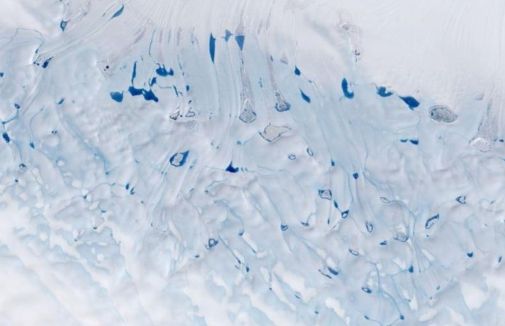
In an ambitious new study the researchers have produced the first Antarctic-wide, high-resolution monthly dataset of surface meltwater using satellite images.
The research raises questions about the future behaviour of the ice sheet because surface meltwater is predicted to become increasingly important for Antarctic mass-loss as atmospheric temperatures rise.
Meltwater ponding
The research, published in the journal Nature Climate Change, reveals a significant increase in the amount of meltwater ponding on the ice surface around the vast East Antarctic ice sheet, and more variability from one year to the next. This comprehensive study, utilising cloud computing to analyse more than 133,000 satellite images, highlights the growing influence of atmospheric warming on the continent's ice sheets.
The study shows that surface meltwater covered an average of 3732 km² - more than twice the area of Greater London - across Antarctica each melt season. While meltwater area varied significantly across the continent and between years, the research uncovered a concerning result: the ice sheet surface in East Antarctica may be becoming more susceptible to meltwater ponding.
Dr Pete Tuckett, from the University of York, explained that the research has significant potential to change the way policymakers see the Antarctic continent and underlines the speed of change in its ice sheets.
Future behaviour
He said: "Antarctica has traditionally been considered too cold for substantial amounts of surface melting to take place. Our study shows that not only does surface meltwater exist around large parts of the Antarctic margin, the amount of surface meltwater in East Antarctica is increasing”.
The Antarctic Ice Sheet contains enough water to raise global sea level by around 58 metres, and researchers are keen to understand what impact continued increases in global atmospheric temperature will have on the future behaviour of the ice sheet.
"The increasing area of surface meltwater in East Antarctica, without a corresponding increase in snow melt, indicates a potential shift in the ice sheet's surface properties, making it more prone to retaining meltwater in ponds."
Crucial knowledge
Ponded meltwater is a critical factor in ice sheet stability. It can lead to ice-shelf breakup through water-driven cracking, enhance localised melting, and influence the movement of ice on land (‘grounded ice’), potentially accelerating its flow towards the ocean.
Dr Tuckett added: “It is key that this new dataset is now combined with climate models, other satellite observations, and on-the-ground measurements to better understand the underlying causes of the increased meltwater ponding in East Antarctica and its potential future impacts on ice sheet stability and sea-levels.
"Understanding where and why surface meltwater is changing in Antarctica is crucial for predicting the continent's future contribution to our oceans. It’s a global story.”
Further information
The research was led by the University of York in collaboration with the University of Sheffield, the University of Leeds, the University of Liverpool, and the British Antarctic Survey.