Researchers uncover the secrets of “plant puberty”
Posted on Tuesday 20 August 2024
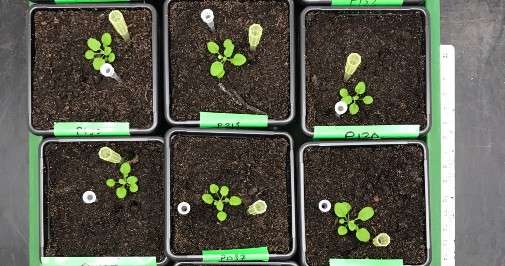
This developmental change called the vegetative-to-reproductive transition – happens over the course of a few days where they slow down their leaf growth and instead develop reproductive organs.
Nutritious food
This dramatic physical change is really important to farmers and consumers, because it starts the process of nutrients in the leaves being diverted into the reproductive organs of the plant and eventually into their fruits and grains. Well-timed plant development means more nutritious food.
Farmers have tried to breed crops to be as uniform as possible, but despite their efforts, just like in humans, puberty happens at different ages in different individual plants.
To investigate the factors that influence the timing of this transition, researchers from the University of York grew Arabidopsis thaliana – a kind of wild mustard most similar to Brassica crops like cabbage and broccoli – in conditions where the soil, temperature, humidity and light were as consistent as possible.
Researchers chose this species because it has been inbred over generations to create a nearly genetically identical pool of seeds.
Controlled conditions
Even in these highly controlled conditions, the plants started showing signs of the developmental transition on different days. When around half the plants had undergone the transition, the scientists measured the genetic activity of all the plants.
While the plants had the same chronological age, they were on different points along the path of plant “puberty”. The researchers identified specific genetic changes that correlated with the timing of this developmental change.
They also discovered that plants start the process of killing their leaves even before the scientists saw visible reproductive structures.
Genetic changes
Lead author of the study, Dr Daphne Ezer from the Department of Biology, said: “In some ways, plant and human growth is very similar: everyone experiences it in their own unique way.
“Our study uncovered specific genetic changes that could control the timing of plant developmental transition, paving the way for future improvements in crop uniformity and quality.”
“Remarkably, we also found that plants are starting to redirect nutrients from their leaves to their flowering structures even earlier than we anticipated. To supercharge the nutritional value of crops, farmers might need to pay attention to these hidden processes happening well before any visible signs of the vegetative-to-reproductive transition.”