Study uses Game of Thrones to advance understanding of face blindness
Posted on Tuesday 23 July 2024
Their findings provide new insights into prosopagnosia or face blindness, a condition that impairs facial recognition and affects approximately 1 in 50 people.
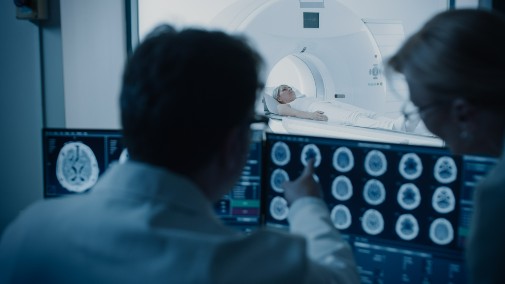
The researchers scanned the brains of over 70 study participants as they watched footage from the popular TV series. Half of the participants were familiar with the show’s famously complex lead characters and the other half had never seen the series.
When lead characters appeared on screen, MRI scans showed that in neurotypical participants who were familiar with the characters, brain activity increased in regions of the brain associated with non visual knowledge about the characters, such as who they are and what we know about them.
Visual brain
Interestingly, connections between the visual brain and these non-visual regions were also increased in people who were familiar with Game of Thrones. However, these waves of activity were significantly reduced in the group of neurotypical participants who had never watched the series.
To determine whether these regions are important for face recognition, the researchers then repeated the study in people with prosopagnosia. As with the previous group, half had watched Game of Thrones and half had never seen the series.
Consistent with their difficulty in recognising faces, the effect of familiarity was not found in the same regions of the brain found in neurotypical participants. The connections between the visual and non-visual regions were also reduced in face blindness.
Social anxiety
Senior author of the study, Professor Tim Andrews from the Department of Psychology, said: “We were really excited to see the results of our study as they suggest that our ability to recognise faces relies on what we know about people, not just what they look like.
"While it was believed that we recognise faces by learning their visual properties—such as features, configuration, and texture—our study indicates that it involves connecting a face with knowledge about the person, including their character traits, body language, our personal experiences with them, and our feelings towards them.
"Facial recognition is essential for daily life and social interactions. When people struggle with this, it can significantly impact their lives and relationships, often leading to mental health issues and social anxiety.
“Our research enhances the understanding of how prosopagnosia appears to be linked to reduced neural connections, making it challenging to associate faces with personal knowledge, which is crucial for recognition.”
Global appeal
The researchers chose to show participants footage from Game of Thrones because of its international appeal and the multitude of well-developed lead characters.
Lead author of the study and PhD student in the Department of Psychology, Kira Noad, said: “We chose to show participants footage from Game of Thrones because the series captivated people around the world with its strong characters and their deeply nuanced personalities.
“Many previous studies on the mechanisms in the brain behind facial recognition have been done in laboratory settings with 2D static images of faces. We aimed to create a study format that was more like real life, using video to show complex scenes with multiple people.
“We now need to carry out further studies to explore in more detail how activity across different regions of the brain allows us to recognise faces as well as what factors can disrupt this process.”


.jpg)