Study reveals our European ancestors ate seaweed and freshwater plants
Posted on Tuesday 17 October 2023
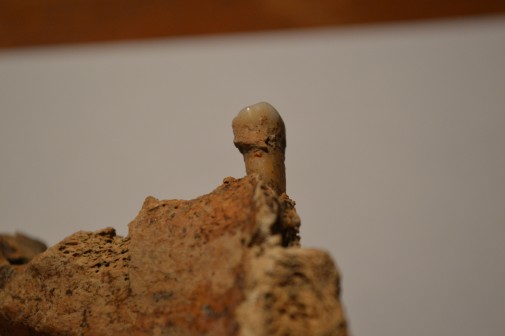
Researchers say they have found “definitive” archaeological evidence that seaweeds and other local freshwater plants were eaten in the Mesolithic, through the Neolithic transition to farming and into the Early Middle Ages, suggesting that these resources, now rarely eaten in Europe, only became marginal much more recently.
Historical accounts
The study, published in Nature Communications, reveals that while aquatic resources were exploited, the archaeological evidence for seaweed is only rarely recorded and is almost always considered in terms of non-edible uses like fuel, food wrappings or fertilisers.
Historical accounts report laws related to collection of seaweed in Iceland, Brittany and Ireland dating to the 10th Century, while sea kale is mentioned by Pliny as a sailor’s anti-scurvy remedy.
By the 18th Century seaweed was considered as famine food, and although seaweed and freshwater aquatic plants continue to be economically important in parts of Asia, both nutritionally and medicinally, there is little consumption in Europe.
The team, led by archaeologists from the universities of Glasgow and York, examined biomarkers extracted from dental calculus from 74 individuals from 28 archaeological sites across Europe, from north Scotland to southern Spain, which revealed “direct evidence for widespread consumption of seaweed and submerged aquatic and freshwater plants.”
Biomolecular evidence
Samples where biomolecular evidence survived revealed consumption of red, green or brown seaweeds, or freshwater aquatic plants, with one sample from Orkney also containing evidence for a Brassica, most likely sea kale.
There are approximately 10,000 different species of seaweeds in the world, however only 145 species are eaten today, principally in Asia.
The researchers hope that their study will highlight the potential for including more seaweeds and other local freshwater plants in our diets today - helping Europeans to become healthier and more sustainable.
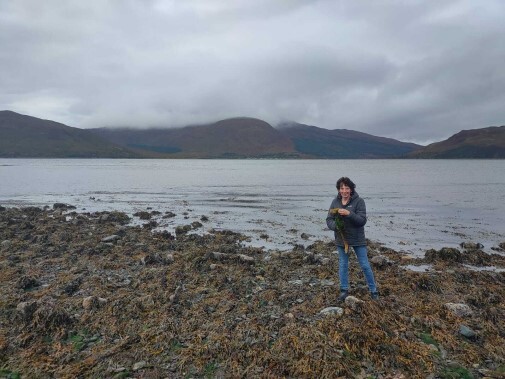
Karen Hardy, (pictured above) Professor of Prehistoric Archaeology at the University of Glasgow and Principal Investigator of the Powerful Plants project, said: “Today, seaweed and freshwater aquatic plants are virtually absent from traditional, western diets and their marginalisation as they gradually changed from food to famine resources and animal fodder, probably occurred over a long period of time, as has also been detected elsewhere with some plants.
“Our study also highlights the potential for rediscovery of alternative, local, sustainable food resources that may contribute to addressing the negative health and environmental effects of over-dependence on a small number of mass-produced agricultural products that is a dominant feature of much of today’s western diet, and indeed the global long-distance food supply more generally.”
“It is very exciting to be able to show definitively that seaweeds and other local freshwater plants were eaten across a long period in our European past.”
Far East
Co author on the paper, Dr Stephen Buckley, from the Department of Archaeology at the University of York, said “The biomolecular evidence in this study is over three thousand years earlier than historical evidence in the Far East.
“Not only does this new evidence show that seaweed was being consumed in Europe during the Mesolithic Period around 8,000 years ago when marine resources were known to have been exploited, but that it continued into the Neolithic when it is usually assumed that the introduction of farming led to the abandonment of marine dietary resources.
“This strongly suggests that the nutritional benefits of seaweed were sufficiently well understood by these ancient populations that they maintained their dietary link with the sea.”