Some species of fish are getting smaller, but more research is needed to determine why
Posted on Friday 8 September 2023
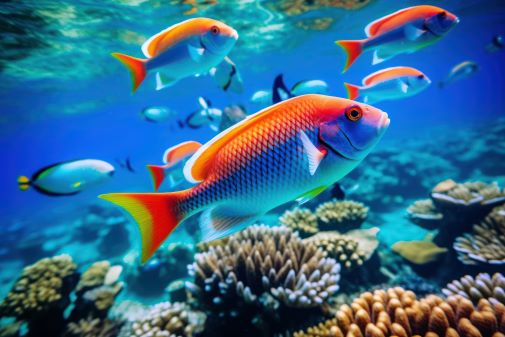
Shrinking was most common among fish, but among other groups of organisms – such as plants and invertebrates - changes were more varied, the study published in Science revealed.
Complex changes
By looking across groups of species, researchers were able to identify some complex changes taking place, with some organisms becoming bigger, particularly bottom-dwelling fish, while others shrink.
The study was carried out by an international team of scientists from 17 universities including the University of York, as part of a working group funded by the German Centre for Integrative Biodiversity Research (iDiv).
Threatened species
The research looked at data from across the world over the last 60 years and from many types of animals and plants.
Previous research showed that the size of trophy fish in fishing competitions has decreased and that many of the most threatened species are large.
The new study joins the dots and shows change in body size is coming from both individuals within species becoming smaller, but also larger species being replaced with smaller ones.
Habitats
Lead author Dr Inês Martins, from the Leverhulme Centre for Anthropocene Biodiversity (LCAB) at the University of York, said: "In some locations, for example, smaller and smaller individuals of thorny skate fish are being observed, while smaller-bodied species like mackerel are increasing in abundance.
“Whether it's because of what humans prefer to eat, or their habitats getting warmer, big fish just can't seem to catch a break."
Resources
Professor Maria Dornelas, University of St Andrews, said: “We think this suggests that, when large organisms disappear, other ones try to take up their place and use up the resources that become available.”
Reflecting on the importance of these results Dr Martins added: "Recognizing and exploring this complexity is imperative if we want to understand the mechanisms involved in how body size is changing through time."
Ecosystems
The study also noted the replacement of a few large organisms with many small ones, while keeping the total amount of life - known as biomass - constant. This surprising result supports the idea that ecosystems tend to compensate for change by keeping overall biomass of the studied species in a particular habitat stable. This stability is attributed to a trade-off between reductions in body size and concurrent increases in abundance among the organisms.
These findings have far-reaching implications for our understanding of how various organisms are adapting to the challenges posed by the Anthropocene era, the scientists say.