Royal “love letters” revealed as evidence of an unwelcome pursuit
Posted on Sunday 7 March 2021
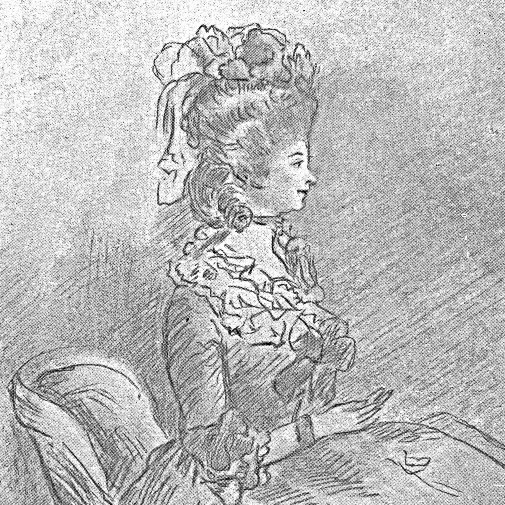
The project - led by the University of York and the University of Manchester - examined content from 240 letters which revealed Mary Hamilton’s views on the “lovelorn” Prince of Wales.
The letters were written during 1779 between the teenage prince and 23-year-old Mary Hamilton. Previous coverage has focused largely on the Prince’s side of the correspondence - “love letters” that reveal a softer side to the future unpopular monarch.
Pursuit
However, the team at the Unlocking the Mary Hamilton Papers project, based at the John Rylands Library at the University of Manchester, have taken a different inference after reconstructing the correspondence which is now fully transcribed and edited for the first time.
The research reveals that Hamilton’s response to the Prince’s attention was decidedly negative. She perceived his pursuit as dangerous, with the potential to damage her reputation.
In an excerpt she said: “I am tortur'd with some uneasy reflections which I cannot stifle… remember Sir my fame is dearer to me than life. for however innocent the motives which influence, the world would naturally… put a cruel construction upon a secret & clandestine correspondence were it ever to transpire.”
Dangerous
Co-investigator, Dr Sophie Coulombeau, from the Department of English and Related Literature at the University of York said: “The letters and diaries show us that Mary Hamilton was acutely aware of how dangerous the Prince’s attentions could be for her.
“Gossip in Georgian high society could be ruthless towards women caught up in scandal, and Mary Hamilton's maintenance of a virtuous reputation was crucial for her marriage prospects and her social standing.”
The governess’s letters reveal the resourceful strategies she adopted while still at Court to keep the Prince at arm’s length, evade his displeasure, and preserve her reputation intact.
Her diaries, taken from the years after she escaped her post, offer evidence that she looked back with very mixed feelings about what she called a “disagreeable situation.”
Insight
Aside from her relationship with Prince George, Mary Hamilton is an important voice in her own right. Her writings, including almost 2,500 letters and 16 diaries, contain a wealth of detail about eighteenth-century life, language and literature.
Professor Hannah Barker, Director of the John Rylands Research Institute and Principal Investigator on the project, said: “The Mary Hamilton papers give us a remarkable insight into life at court and eighteenth-century society. This archive, rarely explored until now, has much more information to reveal.”
The collection of letters is held in the Royal Archives, Windsor.