Fossil fuel use can be cut without detrimental impact on life expectancy, study suggests
Posted on Monday 30 March 2020
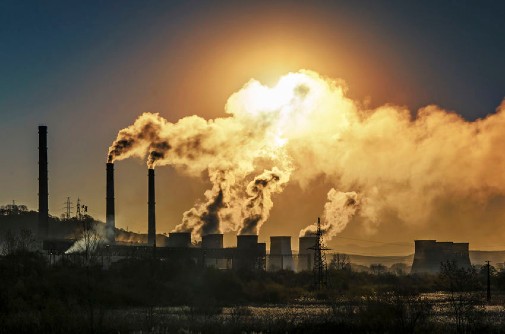
The findings of the study offer reassurance that the use of fossil fuels can be cut to tackle the climate crisis without a detrimental impact on human physical health, the authors of the study say.
Because a country’s fossil fuel use is highly correlated with life expectancy at any single point in time, it has generally been assumed that growth in fossil fuel use is required for increases in life expectancy.
The results, however, reveal an unexpected paradox. While energy and fossil fuel emissions were indeed strongly correlated, over a long period they were not found to be closely linked.
Equality
The study, involving researchers at the University of York, looked at the importance of different development factors to improvements in life expectancy across 70 countries between 1971 and 2014.
The researchers found that while fossil fuel use was tied to 90% of growth in national incomes (GDP), these fossil fuel driven economic improvements were only responsible for 29% of improvements in life expectancy.
However, when GDP is corrected by taking into account the affordability of domestic goods and services, a measure called purchasing power parity (PPP), the indicator was tied to over half the increases in life expectancy over the period of the study.
The researchers found that GDP corrected for purchasing power was markedly more weakly linked to life expectancy. This suggests that an equitable distribution of resources might have an important role in determining life expectancy.
Dual emergency
Co-author of the study, Dr Marco Sakai, from the Department of Environment and Geography at the University of York, said: “We have to recognise the dual emergency that we face as humanity today. We need to not only stop climate change as soon as possible, but we also need at the same time to bring billions of people out of poverty across the world. Now we have evidence that we don’t need to keep injecting fossil fuels into our economies or pursuing everlasting economic growth to face this challenge.
“The links between GDP, when corrected for purchasing power, and life expectancy – an important proxy for physical health and well-being – suggest that eradicating extreme levels of inequality within and across countries is crucial. Solving this challenge does not require adding more stuff to our economies, but prioritising wellbeing and distributing existing resources more equally.”
Lack of causation
The researchers used a new analysis method called Functional Dynamic Composition to understand how fossil fuel use, the economy and life expectancy influence each other over time.
The statistical method cannot show causality, only association. However, the lack of association between fossil fuel use and life expectancy is evidence of a lack of causation.
The findings suggest that prioritising economic growth and burning increasing amounts of fossil fuels are not going to lead to significant improvements in human lifespan. Instead development efforts should focus directly on wellbeing goals such as satisfying human needs, including healthcare, good nutrition, and safe dwellings powered by clean energy.
Clean energy
Lead author Professor Julia Steinberger, from the University of Leeds, said: “Increased use of fossil fuels and primary energy may have helped make countries richer, but it was not responsible for much improvement in human health.
“Our results directly counter the claims by fossil fuel companies that their products are necessary for well-being. Reducing emissions and primary energy use, while maintaining or enhancing the health of populations, should be possible.”
Co-author Dr William Lamb, from the Mercator Research Institute on Global Commons and Climate Change (MCC), said: “In terms of achieving the Sustainable Development Goals, the challenge is to provide affordable, reliable, and clean energy for all, while ensuring that people enjoy open and equitable opportunities to cover their basic needs, such as nutrition, health care, education, safe water, clean air, among others.”


.jpg)