Declining fire threatens Serengeti ecosystem
Posted on Monday 8 July 2019
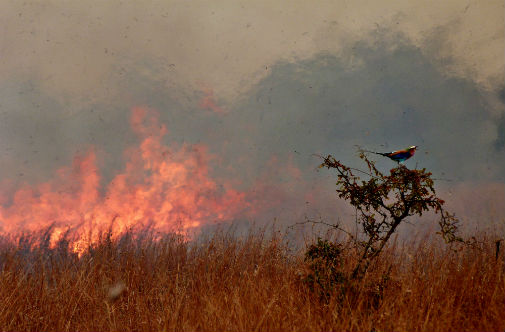
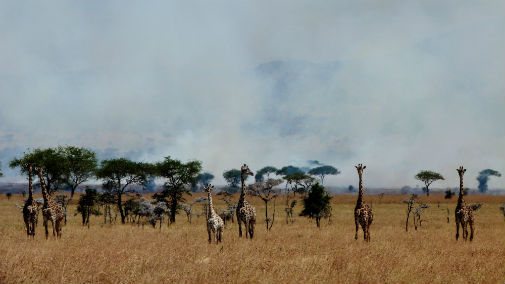
Frequent wildfires are important in the African savannah and help to maintain open grasslands by keeping thorny scrub and trees at bay.
For the study, the research team looked at satellite data from between 2001 and 2014 to produce a comprehensive pattern of fire activity across the region for this period.
Grazing
They found a dramatic reduction of around 40% in both the number of fires and the area of land burnt in and around the protected areas of the Serengeti-Mara ecosystem, and linked these declines to increasing livestock populations.
The researchers showed that the number of bomas – temporary livestock enclosures built by pastoralists in the area - approximately doubled between 2001 and 2014.
Grazing by livestock such as cattle limits the potential for fires by reducing the grass through which fires spread.
Essential process
Senior author of the study Dr Colin Beale, from the Department of Biology at the University of York, said: “Fire is an essential and under-appreciated process that enables savannahs to function properly. The trends we identified across the greater Serengeti ecosystem are of concern for the long-term future of both pastoralism and wildlife in the area.
“Our results add to a growing picture of human impact across this iconic ecosystem, but also show that with appropriate management we can optimise human use of fire as an essential management tool.”
One of the most iconic areas in Africa, the Serengeti-Mara ecosystem in Southern Kenya and Northern Tanzania is one of Africa's largest trans-boundary protected area complexes and the site of the iconic wildebeest migration.
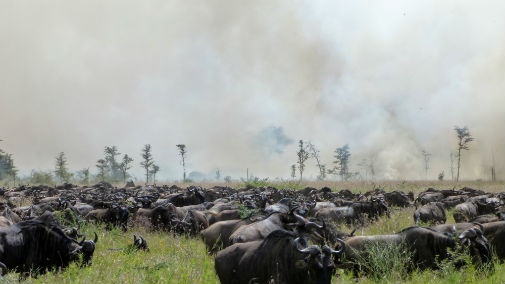
Lead author of the study, Dr James Probert from the University of Liverpool, said: “Intensifying human land uses are leading to rapid changes in the ecology of the Serengeti-Mara, with the potential for negative consequences for both local communities and wildlife. Fire is an important feature of the region and without it the open grasslands which the Serengeti-Mara is famous for would likely disappear and be replaced by thorny scrub and trees.
“Our research found that heavy livestock grazing in this area is having an impact on the number of fires, the area burning and their intensity, which is likely to have severe consequences for the way the ecosystem functions.
“This research contributes to our understanding of fire across African savannahs and therefore our ability to manage those ecosystems.”