Africa’s elephant poaching rates in decline, but scientists warn iconic animal is still under threat
Posted on Tuesday 28 May 2019
However, the team say the continent’s elephant population remains threatened without continuing action to tackle poverty, reduce corruption and decrease demand of ivory.
The research, which included scientists from the universities of Freiburg, York and the Convention for the International Trade in Endangered Species (CITES), reveals a decline in annual poaching mortality rate from an estimated peak of over 10 % in 2011 to less than 4 % in 2017.
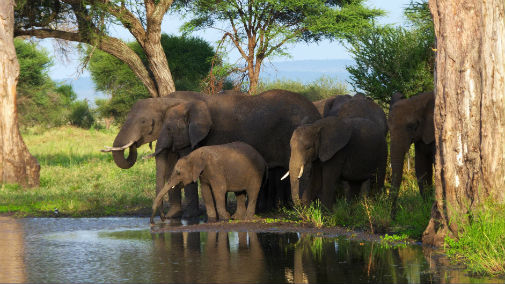
It is estimated there are around 350,000 elephants left in Africa, but approximately 10-15,000 are killed each year by poachers.
Wiped out
At current poaching rates, elephants are in danger of being virtually wiped from the continent, surviving only in small, heavily protected pockets.
One of the authors of the study, Dr Colin Beale, from the University of York’s Department of Biology said: “We are seeing a downturn in poaching, which is obviously positive news, but it is still above what we think is sustainable so the elephant populations are declining.”
“The poaching rates seem to respond primarily to ivory prices in South- East Asia and we can’t hope to succeed without tackling demand in that region.”
China impact
The research team say it is impossible to say if the ivory trade ban introduced in China 2017 is having an impact on the figures as ivory prices started to fall before the ban and may reflect a wider downturn in the Chinese economy.
“We need to reduce demand in Asia and improve the livelihoods of people who are living with elephants in Africa; these are the two biggest targets to ensure the long-term survival of elephants”, Dr Beale added.
“While we can’t forget about anti-poaching and law enforcement, improving this alone will not solve the poaching problem,” Dr Beale added.
Forest ecosystems
The scientists looked at data from the MIKE (Monitoring the Illegal Killing of Elephants) programme, which records carcass data provided by park rangers at 53 protected sites across Africa.
Dr Beale added: “Elephants are the very definition of charismatic megafauna, but they are also important engineers of African savannah and forest ecosystems and play a vital role in attracting ecotourism so their conservation is a real concern.”
Lisa Rolls Hagelberg, Head of Wildlife Communication & Ambassador Relations, UN Environment, said: “Ensuring a future with wild elephants, and myriad other species, will require stronger laws and enforcement efforts and genuine community engagement; however, as long as demand exists supply will find a way to quench it.
“Only about 6% of the current funding going towards tackling illegal trade in wildlife is directed to communication.
Intervention
For long-term success, governments need to prioritize comprehensive social and behavioural change interventions to both prevent and reduce demand. We have the know how, now we need to invest to truly influence environmental consciousness."
Severin Hauenstein, from the University of Freiburg, added: “This is a positive trend, but we should not see this as an end to the poaching crisis.
“After some changes in the political environment, the total number of illegally killed elephants in Africa seems to be falling, but to assess possible protection measures, we need to understand the local and global processes driving illegal elephant hunting.”