
From neutron stars to medical physics: New forms of matter and quantum connections
Merchant Adventurers' Hall, Fossgate (Map)
Event details
Merchant Adventurers' Science Discovery Lecture
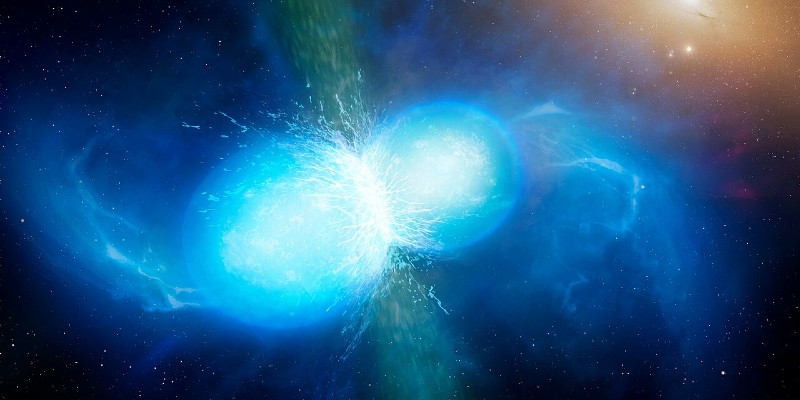
Neutron stars are the remnants formed after supernovae explosions. They are typically about the size of York but contain more mass than our sun. One teaspoon of neutron star matter would weigh around 1 billion tonnes on earth, they have the strongest magnetic fields known in the universe and they can rotate so fast that the surface moves at significant fraction of the speed of light. With the rise of gravitational-wave astronomy, neutron stars have become cosmic laboratories, where observations of stellar collisions now help us uncover the properties of matter at densities impossible to recreate on Earth.
However, there is no current consensus about what they are made of – and despite the name it is not just neutrons! Daniel will outline York-led research which is making in-roads into this fundamental question – using measurements at international particle accelerators at the frontiers of intensity. The possible role of exotic particles (hexaquarks) and the mysteries surrounding strange-quark matter in neutron stars will be discussed.
Our fundamental science requires advances in experimental equipment, theory and simulation. The discussion will then move from the astrophysical to the quantum world, focusing on quantum entanglement, one of the most intriguing phenomena in modern physics. Entanglement links particles in ways that defy classical intuition and is rapidly becoming a practical resource in emerging technologies. Dan will describe how our new quantum-concepts are finding applications in areas such as medical-imaging and next-generation radiotherapy.
Venue details
Wheelchair accessible