
When and where was Britain’s radical tradition?
This event has now finished.
Room K/133, King's Manor, Exhibition Square (Map)
Event details
Book Launch event
How does our current political, economic and ecological crisis change the way we understand the history of Britain? From the seventeenth century Levellers to the nineteenth century Tolpuddle Martyrs to the 1945 Labour government, radical politics has a familiar cast of characters. These stories, though thrilling, are often provincial and in desperate need of renewal. What if we instead viewed Britain’s radical tradition from the imperial and international networks in which the country was embedded — from the eyes of anti-colonial activists, the ships of striking Black sailors, the writings of militant anarchist school teachers, and the itinerant networks of transnational socialists in exile? How can we draw lessons for the present from this global multitude, a multi-racial cast of women and men seeped in political imagination?
Join us for a discussion and joint launch event for two recent books by historians at the University of York: Laura Forster’s The Paris Commune in Britain and Sam Wetherell’s Liverpool and the Un-Making of Britain.
The Paris Commune in Britain follows the political refugees who came to Britain following the defeat of the Paris Commune in 1871. Considering the intellectual impact of these revolutionary refugees and the longer cultural and political afterlives of the Paris Commune in Britain, the book reconstructs a transnational intellectual history alive to the intimate, embodied, spatial, active, and emotional contexts in which these political ideas were produced and exchanged. It argues that the Paris Commune mattered in Britain. Its diffuse legacies operated across differing scales - from intimate friendships that prompted individual political conversions, to the production of international symbols able to galvanise a nationwide socialist movement - and these legacies waned and waxed in the decades long after the Communard refugees left Britain.
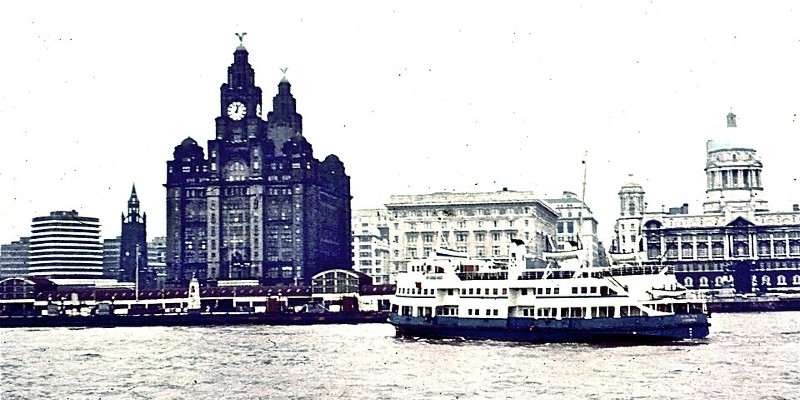
Liverpool and the Un-Making of Britain is the history of Liverpool since the Second World War. It is a story of vast docklands shrinking and eventually vanishing when corporations discovered they could shift goods in containers and dispense with human workers, of industries like car manufacturing mushrooming and disappearing, of huge new suburbs being built and neglected. Liverpool also becomes a prism through which recent British history is brought into a new focus. It is also a warning of what the future may hold for many more communities.
Together, both books look to understand British radical political culture as it has been shaped by outsiders, and in doing so challenge some of the pervasive myths of British political exceptionalism. Both contain stories of failure, conflict, and betrayal, as well as stories of hope and emancipation. They seek to understand how these stories might still be generative for us today.
Please note that this venue is not wheelchair accessible.
Image credit: Licensed under the Creative Commons Attribution-Share Alike 3.0 Unported license.
Venue details
Not wheelchair accessible
Hearing loop