
Why our finance research sits next to the soil scientists
Posted on Tuesday 23 June 2026
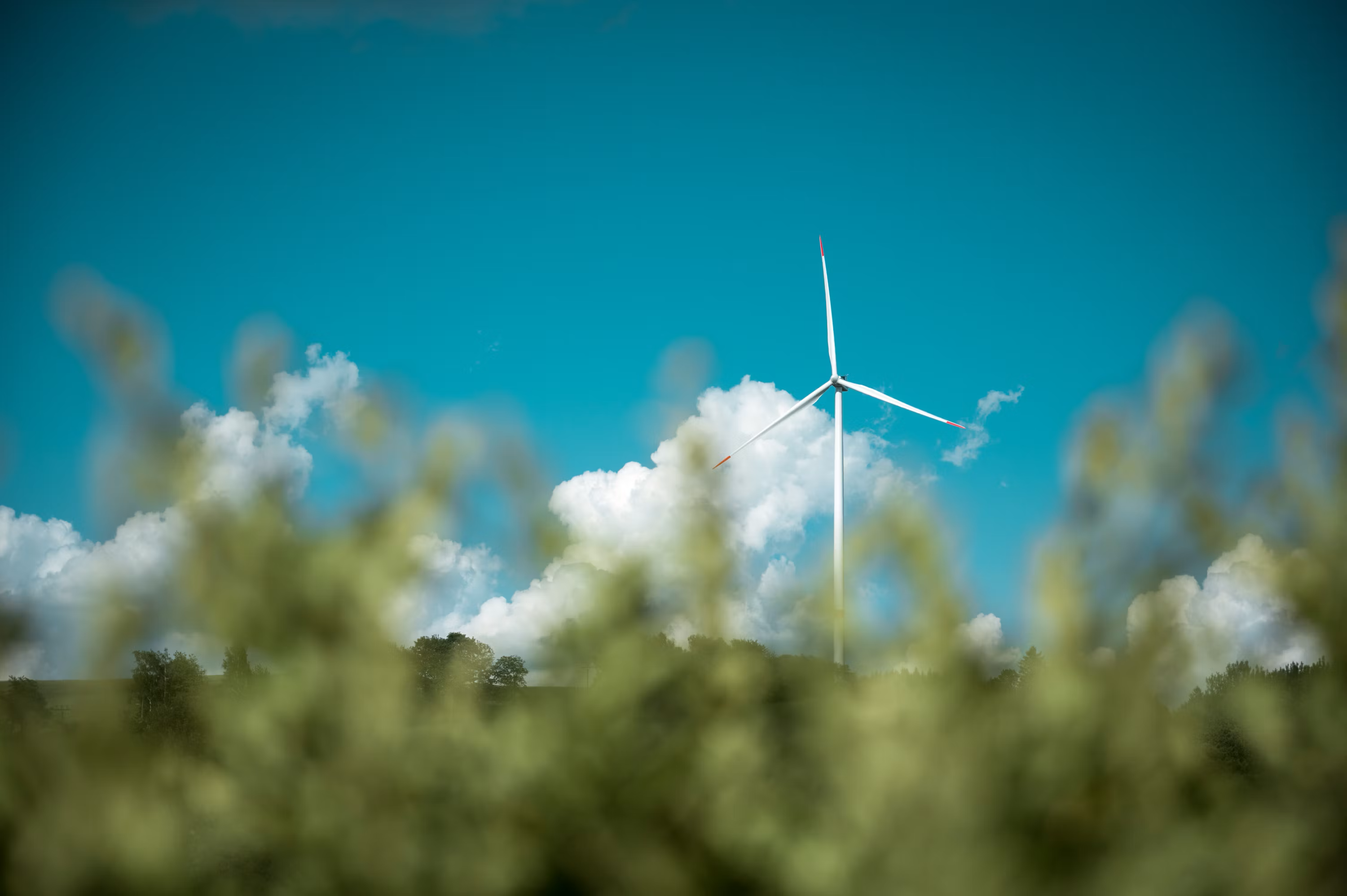
Photo by Jan Kopřiva on Unsplash
Finance now dominates how we talk about climate and sustainability. Net-zero pledges, transition plans, green bonds, carbon markets, ESG disclosures - the language of capital has become the language of the climate conversation. And yet the finance research most likely to shape what happens next isn't being done where you'd expect.
At York, finance research sits inside a Department of Environment and Geography. Not strictly in a business school - nor in a mathematics or economics department. The work happens alongside soil scientists, ecologists, climate modellers, and human geographers - and that location is purposeful. It changes what finance research can be.
Finance studied elsewhere can treat ecosystems, communities, and biophysical limits as externalities to be priced into existing models. Done here, it can't. The science next door keeps asking harder questions: priced against what baseline? Whose system is being sustained? At what ecological cost, and on what timescale? These aren't add-ons to financial analysis. They are the conditions any honest financial analysis has to begin from.
Four strands of work give a sense of the range.
The first is climate risk and corporate sustainability. Research on net-zero pledges, voluntary climate alliances, ESG reporting, and the financial behaviour of high-emitting firms - work that takes the industry conversation seriously while testing whether its instruments actually do what they claim. When the Net-Zero Banking Alliance collapsed, the interesting question wasn't whether stock prices reacted. It was what the muted reaction revealed about how much credibility the pledges ever carried.
The second is valuation and the political economy of pricing nature. Ecological economics, resource and trade economics, and work on how environmental values are constructed, contested, and built into decisions. Whether and how to price nature is a live debate in financial circles; the research here insists that the prior question - what gets counted, by whom, and toward what end - never goes away.
The third is community-scale finance and ecosystem governance. Eco-credit mechanisms in coastal East Africa where loan terms are conditional on ecological stewardship; valuing-voices approaches that take seriously the financial agency of communities that conventional finance overlooks. This is finance studied where it actually meets ecosystems and livelihoods, not at the trading desk.
The fourth is transitions and foresight. Research on the political economy of decarbonisation, on energy and commodity frontiers, and on the methods for asking which futures finance is making possible and which it is foreclosing. The question isn't whether finance can adapt to climate risk. It is whether the financial system as currently constituted is capable of producing the futures we need, and what alternatives look like.
What holds these strands together isn't a shared method or a shared politics. It is a shared condition: finance research done in a department whose default orientation is the environment rather than the market. The work is answerable to soils, ecosystems, communities, and biophysical limits because those are the questions being asked in the rooms next door.
For researchers, industry partners, and students drawn to a different conversation about finance, the question that anchors the work here is straightforward: what does finance look like when it is accountable to ecosystems and societies, not only to markets?
About E&G Research Conversations
This piece grew out of a new series of E&G Research Conversations - an initiative to encourage more research discussion across the Department of Environment and Geography. The sessions are designed to surface topics that cut across our research groups and disciplines, build a better shared awareness of the knowledge, skills and interests of colleagues in the department, and identify possible areas for new proposals and projects.
If you'd like to take part in a future session, as a speaker or simply to join the conversation, or if you're an external partner interested in the research described above, we'd be glad to hear from you. Get in touch with the Department of Environment and Geography, or find out more about our research.