
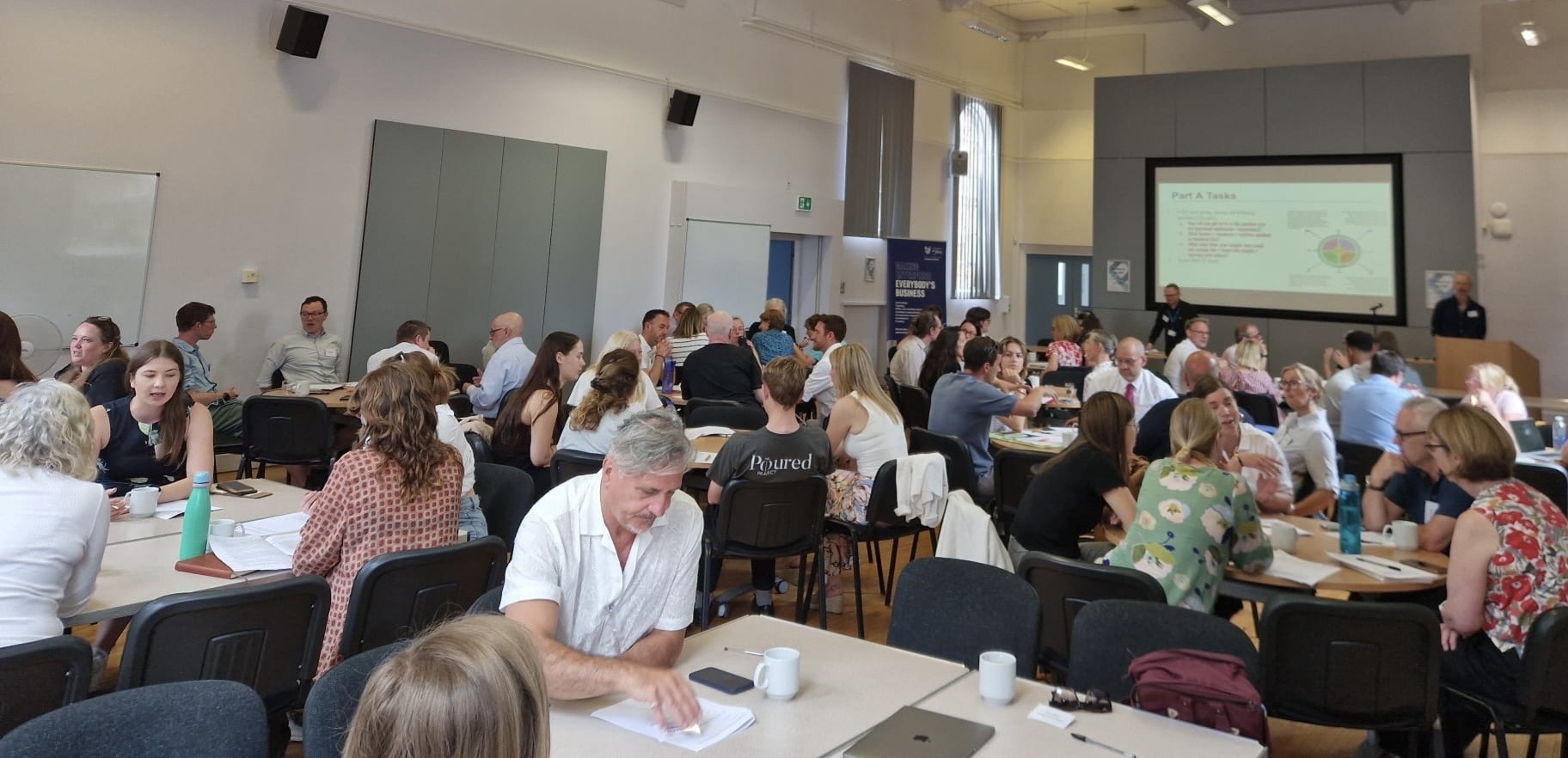
In July 2025, York played host to the Meaningful Business Conference, bringing together entrepreneurs, corporate leaders, thought leaders and changemakers committed to rethinking the role of business. Facilitated by Dr Adrian Madden and Dr Alex Alterskye, the day sparked bold discussions, reframed common assumptions and laid down practical commitments to make ‘meaning’ central to how businesses operate.
What Does It Mean to Be Meaningful?
The term "meaningful business" is still new to many, but it’s rapidly gaining traction. Rather than being limited to environmental, social and governance (ESG) tickboxes or lofty vision statements, meaningful business is grounded in the idea of meaningful work, work that feels significant to both individuals and to communities.
Dr Madden opened the conference with a live Menti poll, asking attendees: What does meaningful business mean to you?
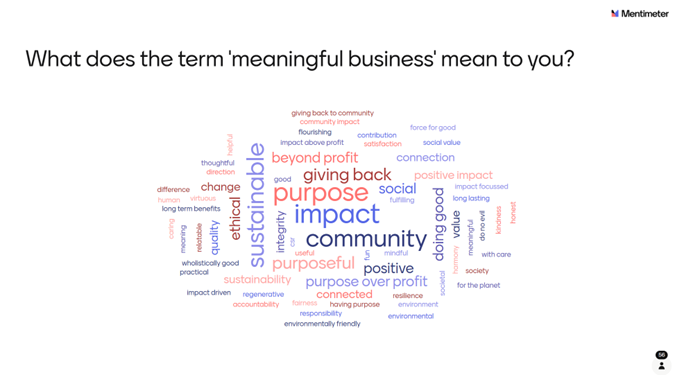
Research shows that meaningful work leads to greater engagement, better performance and deeper fulfilment. The responses reflected this, revealing a collective desire to build companies that matter, beyond commercial metrics, toward something more human, more relatable and more enduring.
The framework guiding this conversation revolved around three existential questions:
- Who are we? (Identity)
- Why are we here? (Purpose)
- So what? (Meaning)
Understanding purpose is important, but ‘meaning’ asks more: What difference are we making and why does it matter?
Meaningful business is not a static destination or a checklist. It is a dynamic, context-sensitive process, evolving within ecosystems of meaning and influenced by local challenges, regional cultures and individual values.
A Local Lens on Impact
York and North Yorkshire serve as a living case study of how meaningful business can evolve in response to local needs. Entrepreneurship here is tightly intertwined with its ecosystem of place, values and people, just as it is in Hull and Liverpool.
One example shared was a CIC (Community Interest Company) in Liverpool created by a group of entrepreneurs to empower women in tech through mentoring and upskilling. There were responding to issues of poverty and a lack of opportunity in their city - a powerful reminder that meaningful business is often born from necessity, in response to social challenges, then powered by collaboration.
Finding Yourself on the Map of Meaning
In an interactive session, attendees used a Your Map of Meaning (PDF  , 177kb) to locate their own businesses within the wider landscape of purpose. Peer conversations prompted reflection on:
- What makes their business meaningful right now?
- What aspects help or hinder meaningful progress?
- How do their values align with those they work with?
Many noted the influence of Quaker principles, the importance of shared values in collaboration and the need for space to regularly revisit the meaning behind their work.
Case Studies That Make Meaning Tangible
Throughout the day, key speakers offered real-world insights into how meaningful business can be embedded into governance, operations and relationships.
Rob Wolfe - Managing Director - Chy Consultancy
Chy was born from a frustration with public sector inefficiencies. As a private company with charitable governance, Chy harnesses public sector levers, like procurement and planning, to drive urban regeneration.
Wolfe’s message was clear: “Profit isn’t a bad thing. But put values first, and profit will follow.”
He offered examples of repurposing dormant music studios for youth during the day and collaborating with Zoopla to share housing data with Crisis UK to influence policy. The takeaway: Value-based decisions have ripple effects.
Anna Barrett - Procurement Sustainability
LNER’s social value strategy, though still evolving, demonstrates how a large business can embed purpose into operations. From deer-deterrent installations (addressing wildlife safety) to requiring social value in all contracts over £100,000, LNER aims to make every decision matter - for employees, communities and the environment.
Anna stressed: “Social value isn’t a checklist. It’s a conversation that evolves. Profit matters, but it’s not everything.”
Sam Maguire - Sustainability & Impact Lead - Clarasys
Clarasys made a compelling case that CSR (corporate, social responsibility) is no longer enough. In the face of environmental and social crises, they said the role of business must fundamentally change in society. As examples, they highlighted purpose-driven companies like:
- Ferrer (Pharma): a pharmaceutical firm balancing profit with environmental and social missions.
- Anglian Water: which measures performance across environmental, social and economic pillars.
- Tony’s Chocolonely: which uses its brand to campaign for industry reform on labour ethics and sustainability in chocolate production, as well as promoting the Better Business Act (its CEO is co-chair of the BBA), which aims to change UK law to make sure every business in the UK puts balancing people, profit and planet at the heart of their purpose and the responsibilities of their directors.
Clarasys also champions ‘holistic performance.’ In this model, business is assessed not just by its financial results, but by its full impact across different dimensions. This could include:
- Environmental impact: How a company affects the planet, its carbon footprint, resource use and sustainability practices.
- Social impact: The business’s contribution to society. This could be diversity and inclusion, employee wellbeing, community support or ethical sourcing.
- Economic or financial health: Profit still matters, but it’s viewed as one part of a wider system, rather than the sole measure of success.
The goal is to understand how these areas interact and influence each other, rather than treating them as separate metrics. A company might be financially successful, but if it's harming the environment or fostering a toxic workplace culture, it's not performing holistically.
Practical Next Steps
In order to keep the momentum going post-conference, the following next steps were suggested:
- Creating a league table to highlight (and hold accountable) businesses based on meaningful impact, while encouraging larger businesses to make positive change by showing them what others are doing.
- Building a closed LinkedIn group to share resources, ask questions and stay connected.
- Launching a Meaningful Business Festival, focused on community, co-creation and visibility.
- Sharing contacts and a collaborative spreadsheet mapping what each business offers and needs, creating a mutual support network.
- Holding each other accountable with a follow-up questionnaire exploring three core questions from the day.
Final Reflections
As the conference drew to a close, one thing was abundantly clear - meaningful business isn’t a trend. It’s a transformative shift in how organisations connect with people, place and purpose. It challenges us to ask harder questions, to embrace complexity and to lead with values, even in the face of competing pressures.
From strategic planning to procurement, employee wellbeing to impact-led innovation, meaning must be nurtured intentionally and shared openly.
It also reminded us that the path to meaningful business isn’t about getting everything right. It’s about showing up, listening and committing to progress.
Resources
Conference Worksheet
Your Map of Meaning (PDF , 177kb)
Slides
Meaningful Business Conference Slides (PDF , 2,511kb)