
A platinum “butterfly effect”: small tweaks turn a cancer drug into a new antibiotic
Posted on Tuesday 19 May 2026
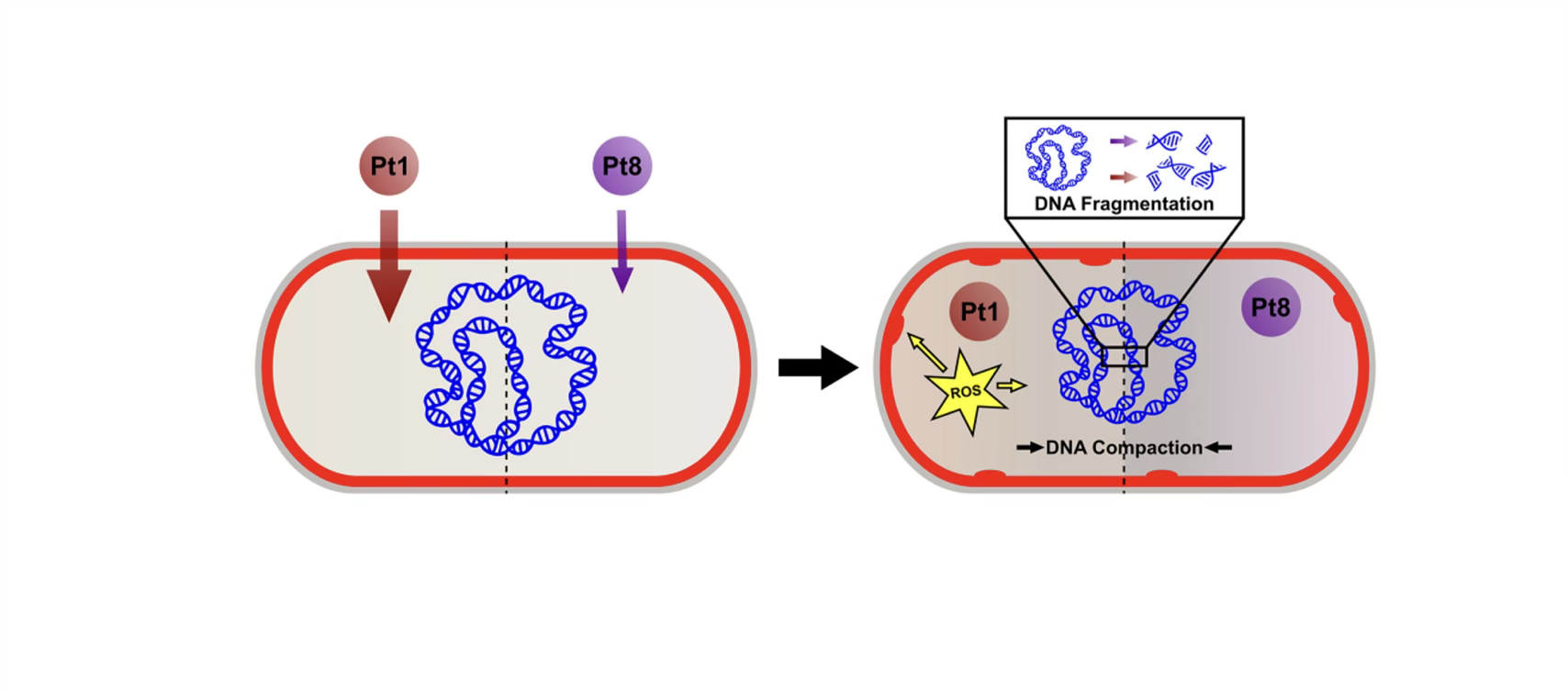
Antimicrobial resistance is forecast to become a leading cause of death worldwide by 2050, yet new antibiotic classes remain rare and none of the small-molecule antibacterials approved between 2013 and 2022 introduced a first-in-class mechanism. In a new paper in npj Antimicrobials and Resistance, an international team co-led by Dr Angelo Frei in the Department of Chemistry shows that platinum complexes, long used as anticancer chemotherapies, can be reshaped into potent, non-toxic antibiotics.
Small changes around the platinum centre convert a cisplatin-like scaffold into lead compound Pt1, which kills MRSA and other Gram-positive pathogens by directly damaging bacterial DNA and generating reactive oxygen species. No high-level resistance emerged over 36 days of bacterial passaging, and Pt1 significantly reduced the bacterial load in a mouse skin infection model.
Dr Frei comments that: “With the rise of antimicrobial resistance we urgently need new classes of antibiotics. This work highlights the versatile nature of metalloantibiotics and by understanding how these compounds work we lay the path towards developing metalloantibiotics towards viable clinical candidates.”
Notes to editors:
This work has been published in npj Antimicrobials and Resistance