
How bacteria changes its skin: York scientists uncover a new route to surface renewal
Posted on Tuesday 8 September 2026
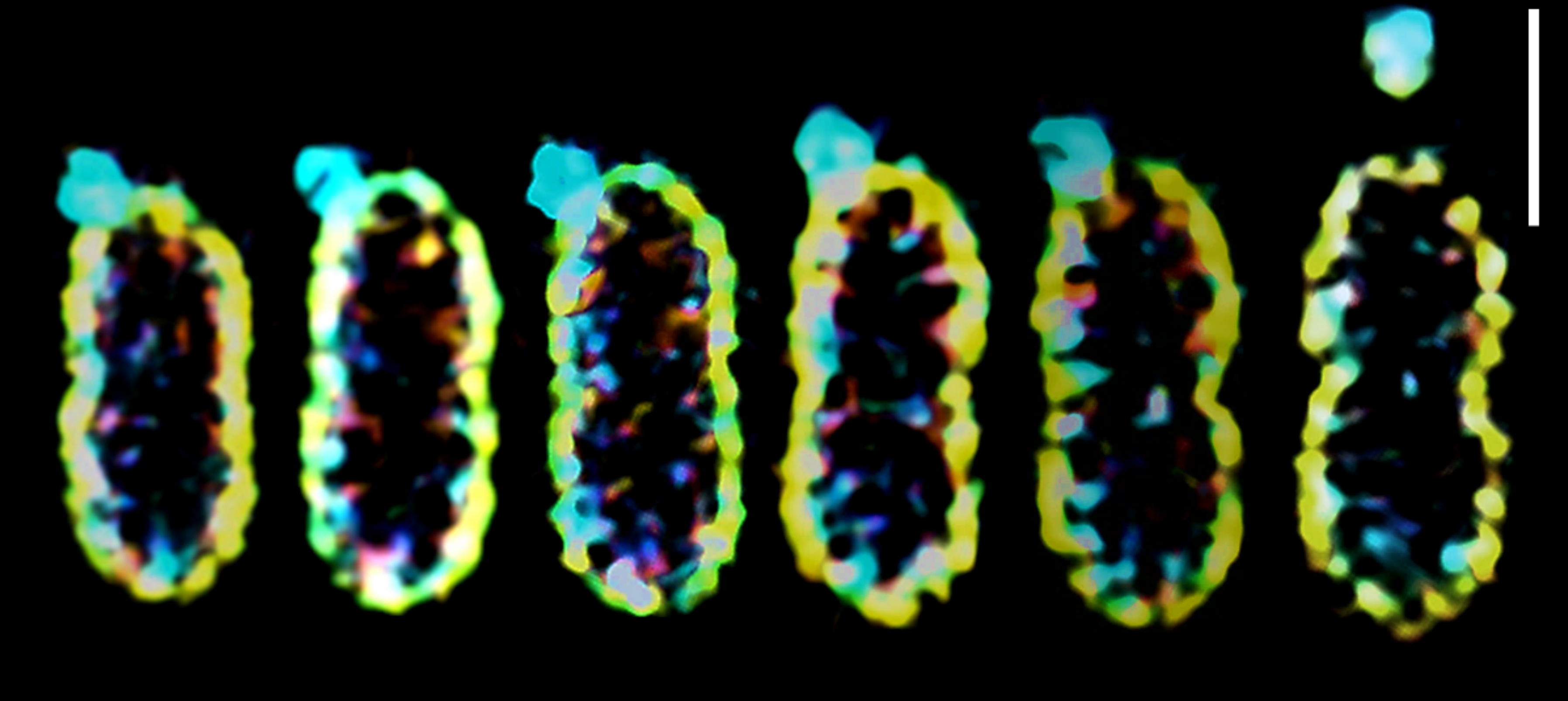
E. coli’s tightly packed, ordered outer membrane acts as a formidable barrier against antibiotics and host immune attack. Bacterial membranes are a key target for antibiotic drugs, and modifying their membranes is one way in which bacteria can evolve resistance to such drugs. One key unsolved problem was to understand whether bacteria can change, adapt and renew this barrier in the absence of cell growth and multiplication.
An interdisciplinary team at the University of York developed chemical labelling methods to colour code lipopolysaccharide, the major membrane component, according to when it was inserted into the outer membrane. Advanced super resolution microscopy revealed new molecules accumulating in persistent patches. Older material was preferentially removed in lipopolysaccharide-rich microspheres referred to as outer membrane vesicles. The team captured these vesicles forming and breaking away from living cells in real time.
Supported by biochemical analysis and mathematical modelling, the findings show how this key surface component can be renewed independently of growth. This challenges models that link membrane replacement principally to cell growth and division.
Published in Nature Communications, the study brings together York researchers across Chemistry, Biology and Mathematics in a multi-disciplinary collaboration. It reveals an unexpected role for vesicles in surface renewal and will inform future antibiotic research and thus help the fight against the growing threat of antibiotic resistance.
Notes to editors:
This paper was published in Nature Communications.
Read the accompanying Behind the Paper Blog.