
Revolutionising Drug Synthesis through Continuous Flow Catalysis
Posted on Monday 11 May 2026
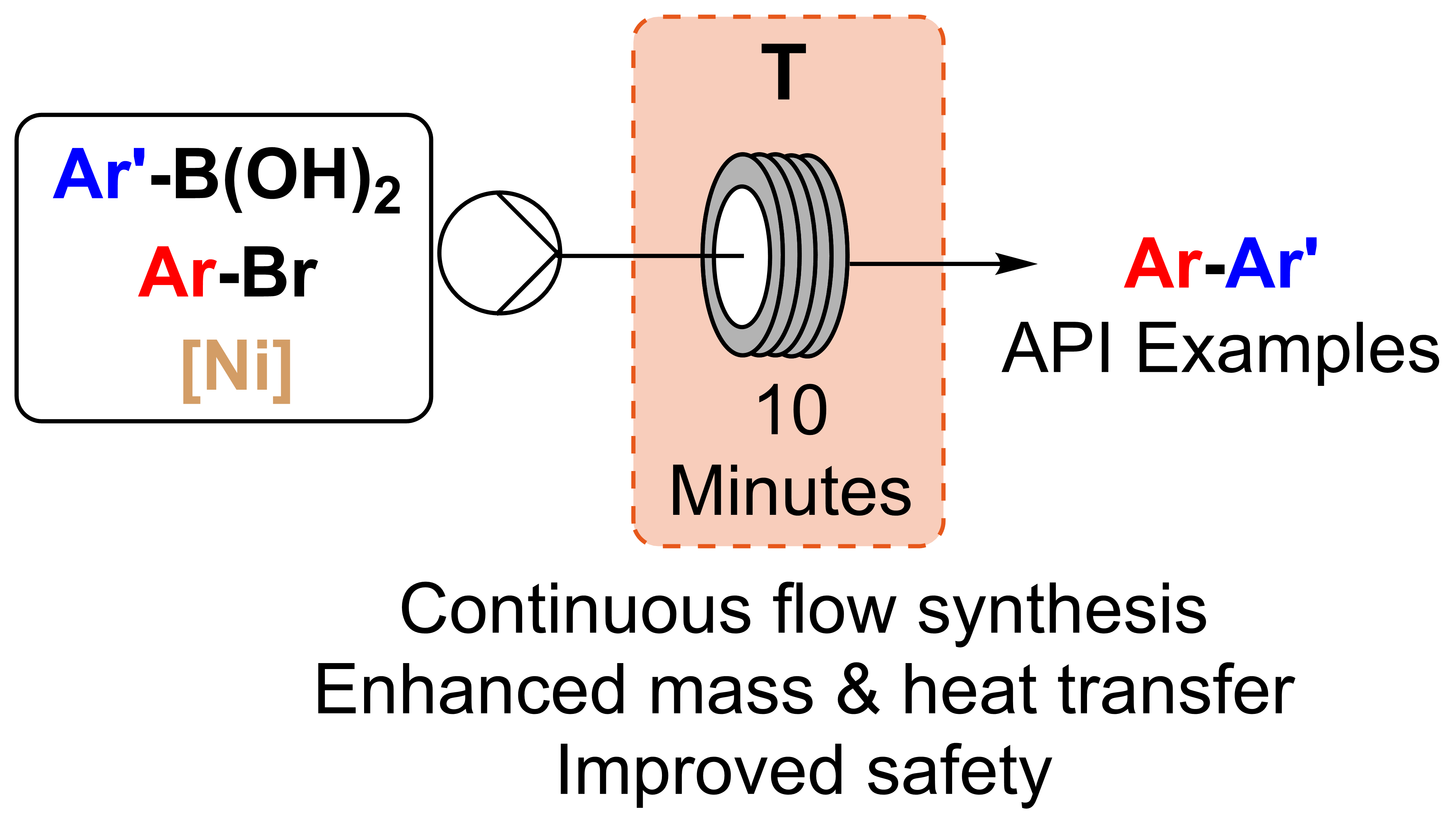
A study published in Catalysis Science & Technology has unveiled a more efficient method for synthesising pharmaceutical compounds. Led by PhD student Megan Bradbury and Dr Charlotte Willans, the research represents a valuable collaboration between the Universities of York and Leeds, and pharmaceutical company AstraZeneca.
By bridging chemistry and engineering, the team successfully transitioned nickel-catalysed Suzuki–Miyaura cross-coupling reactions, one of the most powerful transformations for organic synthesis, from traditional batch processing into continuous flow. This shift is critical as the pharmaceutical industry moves toward flow chemistry to modernise manufacturing.
Continuous flow offers superior heat and mass transfer, enhanced safety and significantly easier scale-up compared to batch methods. The impact of the study was shown by the direct synthesis of active pharmaceutical ingredients (APIs), including the cancer drug savolitinib. This cross-disciplinary achievement is a major step towards faster, more sustainable production of pharmaceutical molecules.
Notes to editors:
The paper has been published in Catalysis Science & Technology.