
Technician-Led, RSC-Funded: A Smarter Approach to Lab Water Use
Posted on Tuesday 28 April 2026
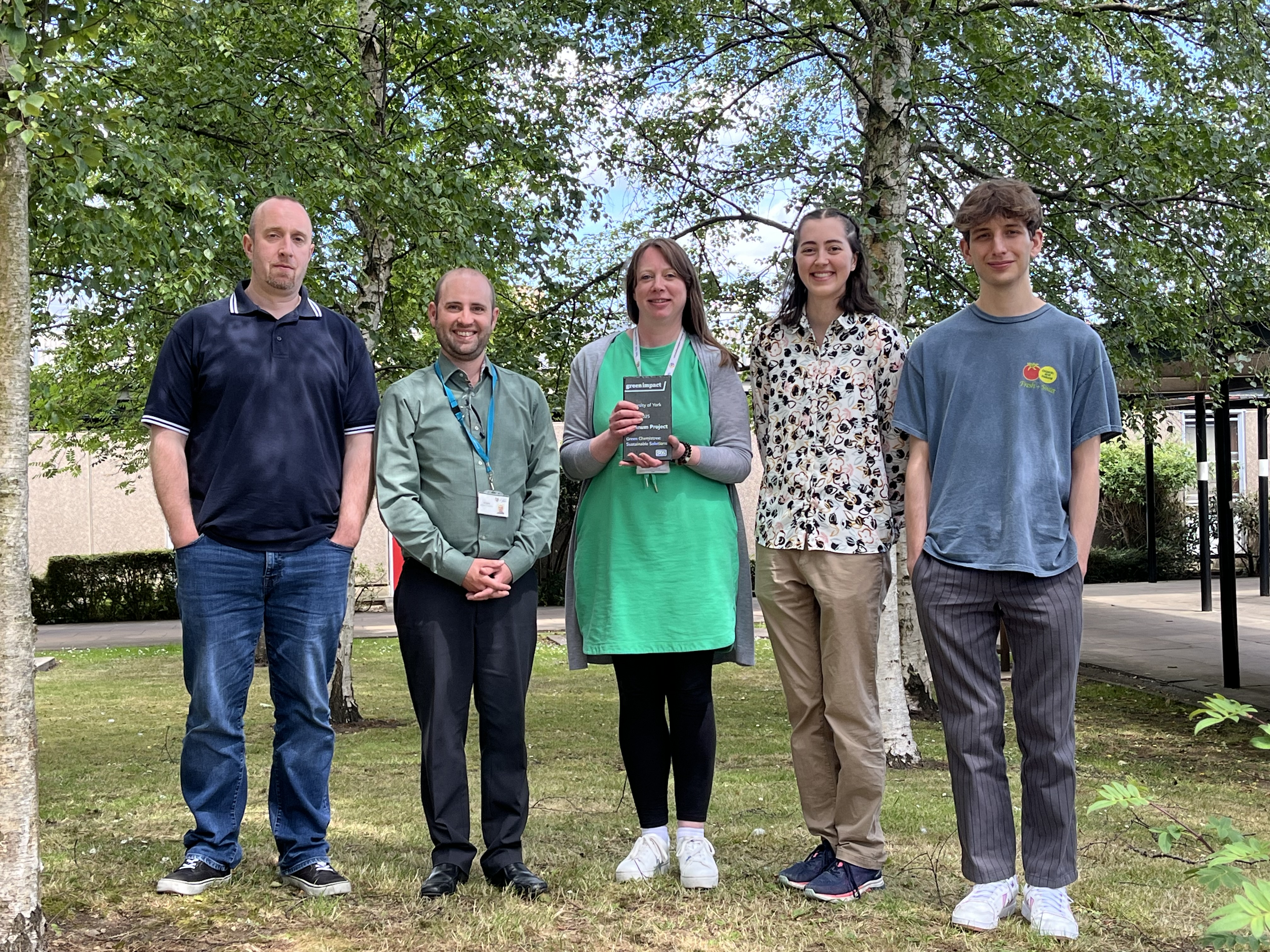
Chemistry is uniquely placed to solve environmental problems by innovating more sustainable processes and products. However, it is important that the research itself is done in the least damaging way possible. The Sustainable Laboratories movement is focussed on ensuring that laboratories have the minimal environmental footprint, and in creating cleaner approaches to chemical innovation.
An innovative project from the University of York Chemistry Technical Team has been exploring the use of water in the Department, with their work being featured by Chemistry World magazine.
Starting in 2024, the project team (Hannah Briers, Lee Duff, Richard Gammons, Megan Goss and Will Heamen) organised a water usage audit across the entire Chemistry Department, with help from many members of the Chemistry Technical Team. In particular, they considered whether using recirculating water chillers would offer a net benefit to the Department, considering the balance between water use and energy usage.
By mapping where water was being used, the project team were able to:
🔍Identify the biggest consumers.
📊 Build a clear baseline of usage.
⚖️ Compare water savings against energy use, costs, and carbon footprint.
🎯 Prioritise interventions where they would have the greatest impact.
One key insight? Surprisingly, the most impactful changes were not in Teaching Labs, in spite of their large size and number of students. It was in research labs running year-round, particularly those focussed on synthetic chemistry, that recirculating chillers could have the greatest positive impact.
Armed with real data, the team could make smarter investment decisions, such as identifying where recirculating chillers would deliver the most benefit, and build a roadmap toward eliminating water cooling entirely.
The project had initial funding from an RSC Sustainable Laboratories Grant and has since received further financial support from the Chemistry Department and the University of York Sustainability team. With this support, from May 2026 the Chemistry D and E block research laboratories will no longer use tap water for cooling purposes for rotary evaporators, potentially saving 15,000 m3 of water per year.
Notes to editors:
This work has been published in the RSC's monthly magazine Chemistry World