
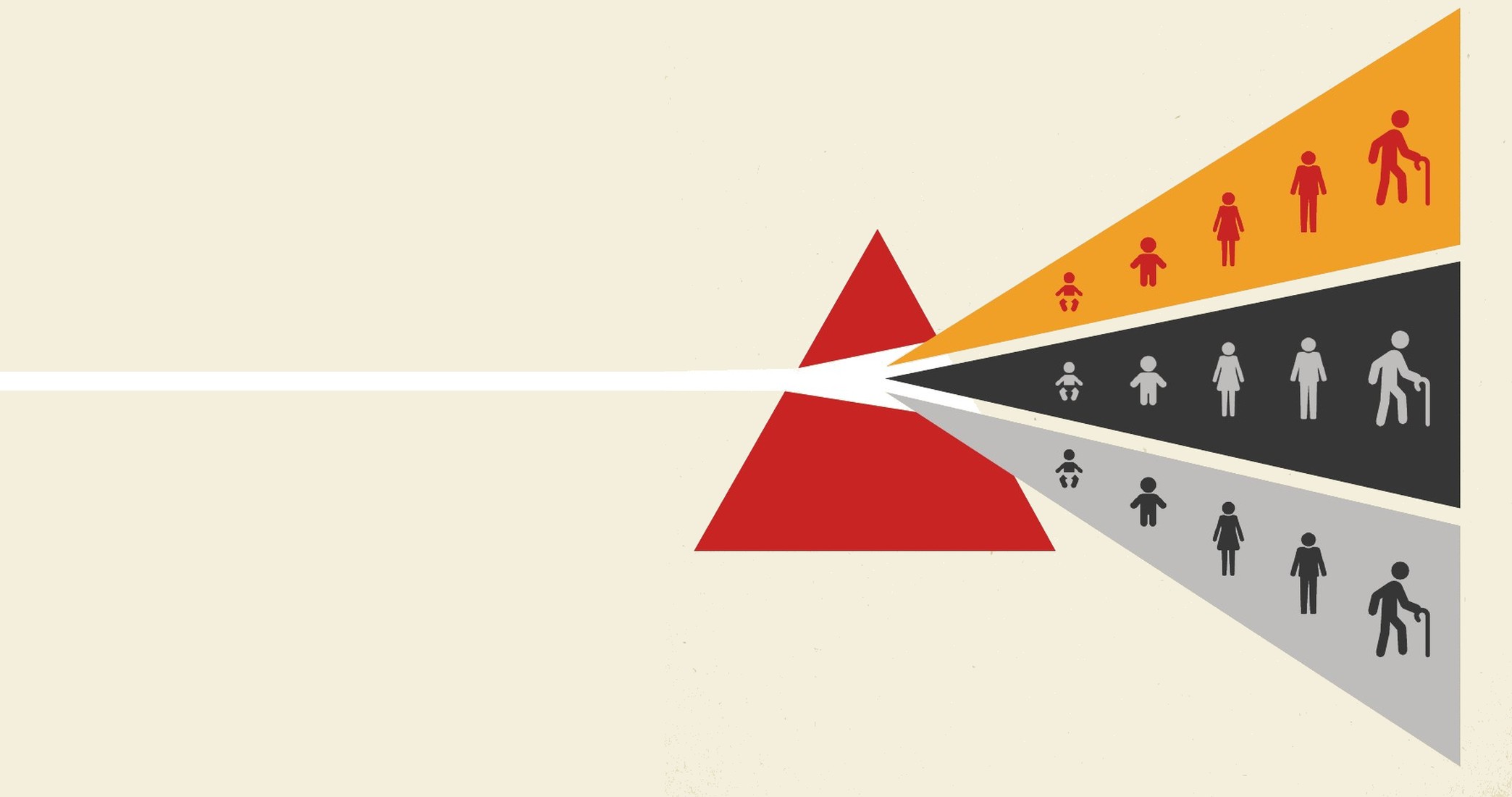
Reducing health inequality
Ethics, Economics and Evidence
Richard Cookson
Oxford University Press | Forthcoming February 2027
About the bookLarge inequalities in health between social groups remain one of the most pressing challenges for public policy. Reducing these inequalities is a widely shared public goal, resonating across political ideologies and social divides. Yet policies that aim to narrow health gaps can sometimes conflict with other important objectives, such as improving overall population health or prioritising effective care for people with severe diseases. How should decision makers balance these competing priorities? Reducing Health Inequality asks what it would take to move from describing health inequality to reducing it. Drawing together ideas from ethics, economics, epidemiology and sociology, it offers a practical framework for navigating fairness trade-offs in societies where people hold different ethical views. It also introduces new kinds of equity-informative evidence now starting to inform public decision making, notably distributional cost-effectiveness analysis and health equity performance indicators. The book argues that the health inequality impacts of public decisions can and should be routinely calculated, compared and considered, that doing so changes which policies look worthwhile, and that new data and analytical methods now offer a game-changing opportunity to make health equity count in decision making. Written for a practically minded interdisciplinary audience, it will interest policy makers and their advisers, as well as students, researchers and professionals in public health, medicine, economics and ethics, and will be useful for graduate courses in health policy and public health. |
Oxford University Press, February 2027 / Population-Level Bioethics series / Hardback and paperback |
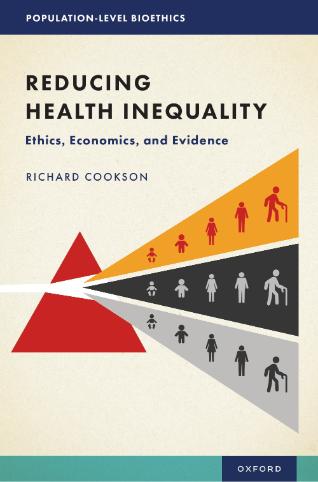
Table of contents
Part One: Background
- Introduction
- Causes of social inequality in health
- Cost-effectiveness and the QALY
Part Two: Ethical Principles
- Logics of fairness
- Foundations of health inequality concern
- Comparing health inequality impacts
Part Three: Economic Trade-offs
- Understanding equity-efficiency trade-offs
- Evaluating equity-efficiency trade-offs
- Equity-equity conflicts
Part Four: Using Evidence
- Distributional cost-effectiveness analysis
- Health equity performance monitoring
- Conclusion
Bibliography · Index
Launch events and talks
|
Spring 2027 |
York book launch Centre for Health Economics (CHE), University of York. Details and registration to follow. |
|
Wednesday 19 May 2027 |
London School of Economics Book lecture and panel discussion, part of LSE Health's 30th anniversary celebrations. Old Theatre, LSE. Chaired by Miqdad Asaria, with discussants Alex Voorhoeve and Julian Le Grand; further panellists to be announced. Details and registration to follow. |
|
2027 |
Harvard University US launch event. Details to follow. |
Speeches, podcasts and media

Speaking against the motion "This House would prioritise NHS patients with healthy lifestyles", Richard argued that the NHS should treat people according to need, not moral desert, because so-called lifestyle diseases track poverty and discrimination. The speech draws on themes explored in the book, including fairness in health care priority setting and the risk that rationing by lifestyle widens.
Read the text of the speech (PDF). (PDF  , 179kb). Watch the full Edinburgh Union debate.
Forthcoming
Royal College of Anaesthetists ethics and law podcast: health economics and the ethics of resource allocation
Resources for readers and teachers
About the author
 |
Richard Cookson is a Professor at the Centre for Health Economics, University of York, and a Visiting Professor at the National University of Singapore. He is recognised internationally for his work on developing methods for analysing the impacts of public policy on social inequality in health, including distributional cost-effectiveness analysis, health equity indicators for quality improvement, and life-course modelling of childhood policy consequences. Richard has worked in the UK Prime Minister's Delivery Unit and served on various National Health Service advisory committees, including National Institute for Health and Care Excellence committees for health technology appraisal and public health, and the advisory committee on resource allocation. He has also advised international organisations and national health agencies on methods for analysing and reducing social inequality in health. |
Press and review copies
To request a review copy, please complete the Oxford University Press review copy request form.
Media enquiries: che-enquiries@york.ac.uk