
Announcing the Research Programme "Towards Universal Access to Cuneiform Heritage" 2026-2029
Posted on Wednesday 25 March 2026
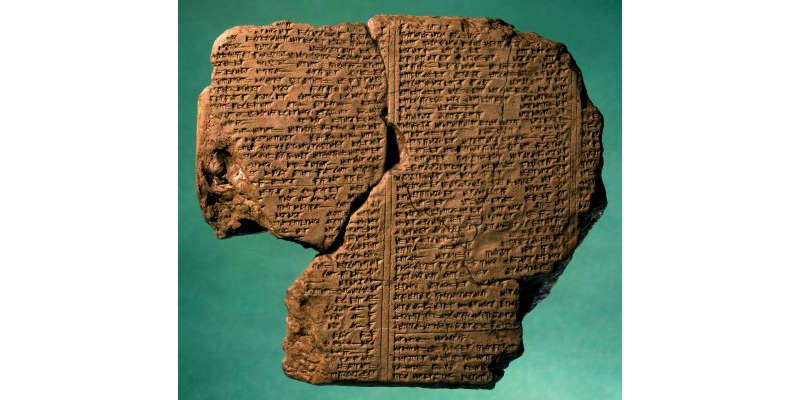
The Cuneiform Digital Library Initiative (CDLI) is a 28-year-strong initiative built by an international group of Assyriologists, museum curators, and historians of science to make publicly available the form and content of cuneiform tablets dating from the emergence of writing, ca. 3350 BCE, to the beginning of the Common Era. Cuneiform inscriptions are found at numerous archaeological sites, extending from the Mediterranean to the Himalayas, with the vast majority of artifacts originating from Iraq. The number of these artifacts currently held in public and private collections exceeds 550,000 exemplars, of which more than 400,000 have now been catalogued digitally by the CDLI. Most of these objects are held in collections outside the Middle East.
Pursuing the systematic documentation and publication of all cuneiform inscriptions, the CDLI digitises, compiles, and curates visual resources, transcriptions, translations, and other resources related to these artifacts, preparing digital surrogates and linguistic resources for free and wide consultation by scholars and the general public alike.
In 2024, the CDLI registered ca. 200,000 unique visitors, generating approximately 2 million page views. Scholars and students around the world use this resource sometimes daily, while an always-growing general public visits the CDLI to learn about ancient artefacts. This general audience has grown tenfold since the deployment of our current interface in 2022. However, only 3% of our visitors are currently located in the Middle East.
TUA-CH is a research programme closely linked to CDLI, focused on access and dissemination of information about cuneiform heritage. Our vision is to support this specific audience and remove barriers to access for Arabic-speaking individuals, providing them with pathways to learn about their own cultural heritage. Beacause the CDLI-ACT project, has deployed the new Arabic interface of CDLI and a set of controlled vocabularies in Arabic, TUA-CH is now better placed to realise this vision.
The TUA-CH research programme will address issues of Universal Access to Cuneiform Heritage through four distinct research projects. The first project will reactualise digital editions from the Electronic Text Corpus of Sumerian Literature (ETCSL) by reviewing two decades of secondary literature and producing new free-flowing translations. The second will focus on translating selected representative texts written in Sumerian and Akkadian into the Arabic language. These translations in English and Sumerian will be prepared in three registers to address different audience needs: line-based and paragraph-based for students and scholars, and an accessible continuous-flow version for general audiences. The third project will develop an alternative interface for CDLI, geared specifically for a general audience, again in Arabic and English. The last project will develop stronger interoperability between CDLI and the Open Richly Annotated Cuneiform Corpus (ORACC), including the electronic Pensylvania Dictionary (ePSD2).
More details about these projects can be found on the TUA-CH project page at the CDLI.
This research programme is only possible because of the generous support of the Meditor Trust and the University of York.