
New oxygen isotope analysis revise theories about Mesolithic shell middens in northern Spain
Posted on Friday 27 March 2026
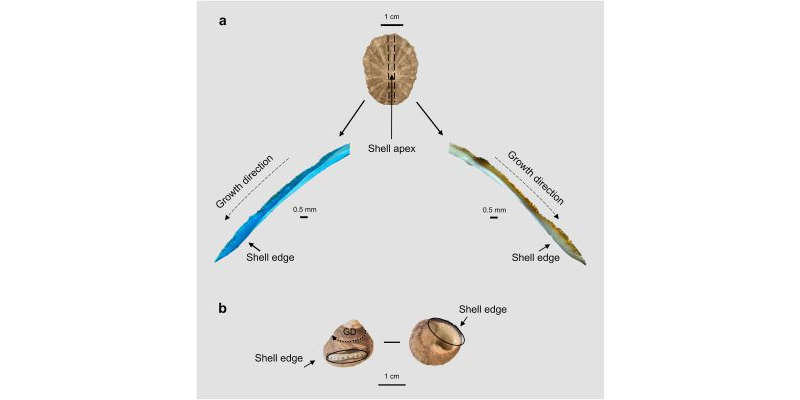
The humble limpet occurs in many prehistoric shell middens, sometimes in great numbers, but has long been regarded as the least palatable of the molluscs, an emergency food of last resort, most famously in the Irish potato famines of the early 19th century, but otherwise of little significance. That idea has carried over into the interpretation of prehistoric coastlines, where limpets and other gastropods often dominate the contents of shell middens on rocky shorelines.
A new paper led by Rosa Arniz-Mateos on seasonality evidence from the Asturian shell middens of northern Spain shows that this idea is no longer tenable. Previous seasonality interpretations have relied on small samples, single mollusc species or single sites. The new analysis brings together representative samples from four sites spanning 4750 years, multiple species including seasonality in vertebrate remains, and a total of 2650 high resolution oxygen isotope measurements on mollusc shell.
The results show that topshells, a small gastropod with a lower meat yield than limpets, were collected only in winter-spring, when the flesh is in best condition. Limpets, with a consistent meat yield throughout the year were collected in all seasons including summer, but with a peak in the winter months. This refutes a long-standing hypothesis that the coastal area was used only in winter by people who dispersed inland in summer.
It also shows that mollusc collection was part of a coordinated economic strategy that targeted the shells during their optimum period of attractiveness. That they were relied on more in the winter when other food supplies are typically in short supply demonstrates their importance as a readily available year-round resource, rather than their marginality.
A large part of the research was carried out by Igor Gutierrez Zugasti while a Visiting Fellow at York working with Geoff Bailey, funded by a Royal Society Newton International Fellowship award. Rosa Arniz-Mateos is now working with York Visiting Research Associate and former Postdoctoral Fellow Dr Niklas Hausmann at the Leibniz Centrum für Archäologie in Mainz on further development of seasonality techniques.