Skip to content Accessibility statement

Green Impact Laboratory Accreditation

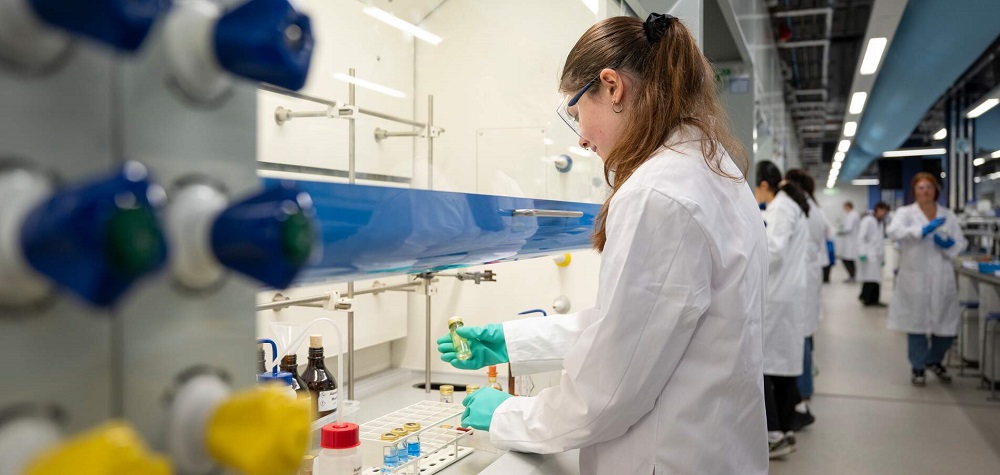
Green Impact Lab Accreditation (or GILA) has been created specifically to support research wet labs to achieve an approved sustainability accreditation in order to apply to certain funding bodies.

Each participating laboratory completes the necessary actions, is audited, then receives a nationally standardised GILA certificate. The certificate demonstrates progress towards embedding sustainability in research.

Key information

After 1st January 2026 researchers that apply for funding through Wellcome Trust or Cancer Research UK (CRUK) must ensure that their laboratories in which the research will be undertaken is certified to an external sustainability laboratory accreditation, and be named on the certification. 

CRUK and Wellcome have confirmed in writing that they will accept the newly created Green Impact Laboratory Accreditation (GILA).

New for 2025/26
Join the 2025/26 GILA introductory webinar on 26 November, 12pm - 12.45pm. The session will cover what GILA is, a run through of the new online toolkit, and what to expect from the year. When you have attended the launch, you can sign in and start your sustainability work for this year. The session will be recorded but we hope to see you live. Fill out this form to receive a link for the 45 minute webinar.

Use the dropdowns below to find out more about GILA, what it involves, who can take part, and the process to achieve accreditation in 2026.

How does it work?
  • GILA provides a nationally standardised certificate for laboratories. Lab groups who achieve the Green Impact Labs Accreditation will be able to demonstrate standardised progress towards embedding sustainability in their research. 
  • When applying for research grants, groups can share this certificate as evidence of their commitment to, and progress towards, environmentally sustainable research. 
  • The programme consists of a list of suggested sustainability actions that can be completed to make direct impacts. It operates through an interactive online workbook, supported by the Sustainability team, providing staff with a framework to complete actions and implement positive changes. 
  • Each activity is clear and simple to implement, with additional guidance provided, and is scored depending on the amount of impact that exercise has on making your work more sustainable.
  • Teams need to complete at least 175 points from actions on the toolkit, including the 7 mandatory actions. 
Who can get involved?
  • GILA is currently only for wet labs, in any department.   
  • The lead grant applicant(s) must be involved in completing the GILA and be a named researcher on the accreditation. It will not be enough for the applicant(s) to say that their building/unit is covered by a wider departmental Green Impact team.
  • Non-wet laboratories, i.e. ones without chemicals / fume cabinets, do not require an accreditation at the moment but need to monitor their most significant environmental impacts of their research, e.g. energy / business travel. They are welcome to join the standard Green Impact programme and work towards a bronze, silver, gold or platinum award. Further guidance for these labs will be provided soon.
  • If you're a student, apply to be a volunteer Green Impact Lab Auditor. Audits will take place in May 2026 and this opportunity will be advertised nearer the time on the Student Sustainability Opportunities Hub.
The process
  • GILA runs on a 12-month cycle, and comments and evidence must be re-uploaded each year. This year, we need to bring the programme in line with the academic year, and to ensure that you do not have a period of time where you are not certified, the toolkit will be relaunched in November 2025. You will have until 13 May to complete this cycle. Then, for each year onwards, the cycle will reflect the academic year.
  • If your team received accreditation in November 2025, you must join the new 2025 Toolkit to ensure there isn’t a gap in your certification. This cycle specifics document explains this in more detail.
  • Express your interest in joining by talking to your lab PI and checking if a team has already been set up.
  • Register with an existing team or create a new one by registering on the University’s GILA Online Toolkit.
  • Work through the interactive online workbook to make positive changes within your lab.  
  • Monitor your progress using the Dashboard and complete at least 175 points from actions on the toolkit, including the mandatory actions (total 39 points available).  
  • Your team has until 13 May 2026 to complete as many actions as you can, and submit your toolkit for your GILA certification. 
  • Trained student volunteer auditors will then check that the workbooks have been completed. Someone from each team must be available for an audit on 20 May 2026.
  • Awards are Pass or Fail, there are no other levels for GILA.
  • All awards in this round will be presented in June 2026.
Guidance and support
How long will the accreditation take?

The accreditation requires a variety of practical and communication actions to be completed. The time taken to complete the required level of actions depend on the current processes in place at the lab and the time able to dedicate to undertaking the actions. It would be expected to take at least a month to have processes in place, but could be several months to implement. There will need to be designated technical or researcher time to focus on it, however groups may like to work together to achieve common goals and reduce time involvement.

Key dates
  • From 1st January 2026 any grant application to CRUK or Wellcome Trust will need to be accompanied with evidence of the laboratory holding a sustainable lab accreditation.
  • The GILA toolkit is open now for you to join.
  • GILA Toolkit submission deadline: Wednesday 13 May 2026. This will allow time to complete the required actions between now and then but also allow time following the assessment to rectify any actions that were not satisfactory.
  • GILA Audits: Wednesday 20 May 2026. A member of your lab must be available in person to speak with the auditors on this day.
  • Certificates awarded for completion of GILA and put onto the website to share with funders in June 2026. Your certificate will last 12 months.
  • Support for teams is available throughout the summer. Check with your department lead for any arranged support drop in sessions or contact greenimpact@york.ac.uk.
  • Contact us if you need accreditation before the end of this cycle (in order to apply for funding) and you may be eligible for a GILA ‘In Progress’ certificate. This demonstrates that your lab is working towards this sustainability accreditation.

Teams and awards

Use the dropdowns below to find the teams who have achieved GILA.

Teams and awards 2025
Team name Principal Investigator (PI) names Certification code
Alphey Lab

Luke Alphey, Joshua X.D. Ang

GILA00208

Biology - A Block

James Chong, Daniela Barilla, Matthew Reilly, Emma Rand

GILA00209

Biology - JBU (M0) & Holding group

Andrew Holding, Simon Baker, Vicki Jennings, Andrew Mason

GILA00210

HYMS/Biology H block Jeremy Mottram, Paul Kaye, Pegine Walrad, Nicola Baker, Mathieu Cayla, Katrien Van Bocxlaer, Marjan Van Der Woude, Elmarie Mybrugh GILA00211
Biology L0 Daniel Jeffares, Alfred Antson, Maria Chechik, Chris Hill, Andrea Harper, David Sherlock, Paul Fogg, Michelle Hawkins, Mark Leake, Jamieson Howard, Sean Meaden GILA00212
Biology L2 Oliver Bayfield, Gideon Grogan, Noemie Hamilton, Betsy Pownall, Seth Davis, James Ronald, Vicki Patterson, Richard Maguire, Andrea Harper, Daphne Ezer GILA00213
Biology M2 Lab Leonardo Gomez, Liz Rylott, Luke Mackinder, Neil Bruce, Federico Sabbadin, Thierry Tonon, Charlotte Walker GILA00214
Biology Q2 groups Dave Boucher, Dimitris Lagos, Nathalie Signoret, James Hewitson, Ioannis Kourtzelis, Damian Perez Mazliah GILA00215
Bioscience Technology Facility Peter O’Toole, Jared Cartwright, Sally James, Andrew Leech, Tony Larson, Alastair Droop GILA00216
BIT lab @ Nanocenter Steve Johnson, Thomas Krauss, Steve Quinn GILA00217
Brackenbury Lab Will Brackenbury, Mihaela Lorger GILA00218
CBL Lab Dani Ungar, Nia Bryant, Paul Genever, Paul Pryor, Bob White, Chris MacDonald GILA00219
Chemistry Analytical Facility (CAF) Hannah Briers, Matthew Davy, Richard Douthwaite, Scott Hicks, Richard Gammons GILA00220
Chemistry D016 Jackie Mosely, Kirsty Penkman GILA00221
Chemistry E214 Lianne Willems, Martin Fascione, Alison Parkin GILA00222
Cleanroom @ Nanocentre Thomas Kraus, Steve Johnson GILA00223
Complex Interface Team & Quinn Lab Stuart Higgins, Steven Quinn GILA00224
Coverley lab Dawn Coverley GILA00225
Environment & Geography Labs Alistair Boxall GILA00226
Graham Lab Ian Graham GILA00227
Green Chemistry Sustainability Team Helen Sneddon, Antoine Buchard, Avtar Matharu, Duncan MacQuarrie, Tom Dugmore, Glenn Hurst, James Sherwood, Richard Gammons, Megan Goss GILA00228
Grey & Chen Labs William Grey, Han-Jou Chen, Zahra Masoumi GILA00229
HYMS/Biology Q0/Q1 Team Adele Fielding, Ian Hitchcock, Allison Green GILA00230
Institute for Safe Autonomy Technical Team James Hilder, Daniel Marfiewicz-Dickinson, Marco Lucamarini, Rupesh Kumar, David Grace, Paul Mitchell, Jihong Zhu GILA00231
Kent Group David Kent, Jillian Barlow GILA00232
Lichman Lab (CNAP) Benjamin Lichman GILA00233
NeuroBioD1 Gareth Evans, Ines Hahn, Sangeeta Chawla, Sean Sweeney, Noémie Hamilton GILA00234
Skin Research Centre Kim Robinson, Clive McKimmie, Miko Yamada GILA00235
Spicer Group D217 Chris Spicer, Duncan Bruce GILA00236
Team Keeping L1 Green Christoph Baumann, Joana Correia Faria, Cecile Crosnier, Gavin Thomas, Emily Flack, Alan Cartmell, Michael Plevin, Gavin Wright GILA00237
WACL Waste Warriors Ally Lewis, Jacqui Hamlition, Lucy Carpenter, David Carslaw, Pete Edwards, Mat Evans, James Lee, Andrew Rickard, Sarah Moller, Terry Dillion GILA00238
York Yeast Lab Chris MacDonald GILA00239
YSBL - K Block Tony Wilkinson, Gideon Davies, Paul Walton, Purba Mukherjee, Marek Brzozowski, Jamie Blaza GILA00240

Conducting your research sustainably

The University is dedicated to sustainability not only in what it undertakes its research on, but how it undertakes its research. That is why we have developed a Code of Practice for Sustainable Research (PDF , 207kb), offering guidance and support to help you conduct research sustainably. This Code and its corresponding guidance is designed to assist all researchers, regardless of their area of expertise or field.

LinkedIn
Instagram
Newsletter