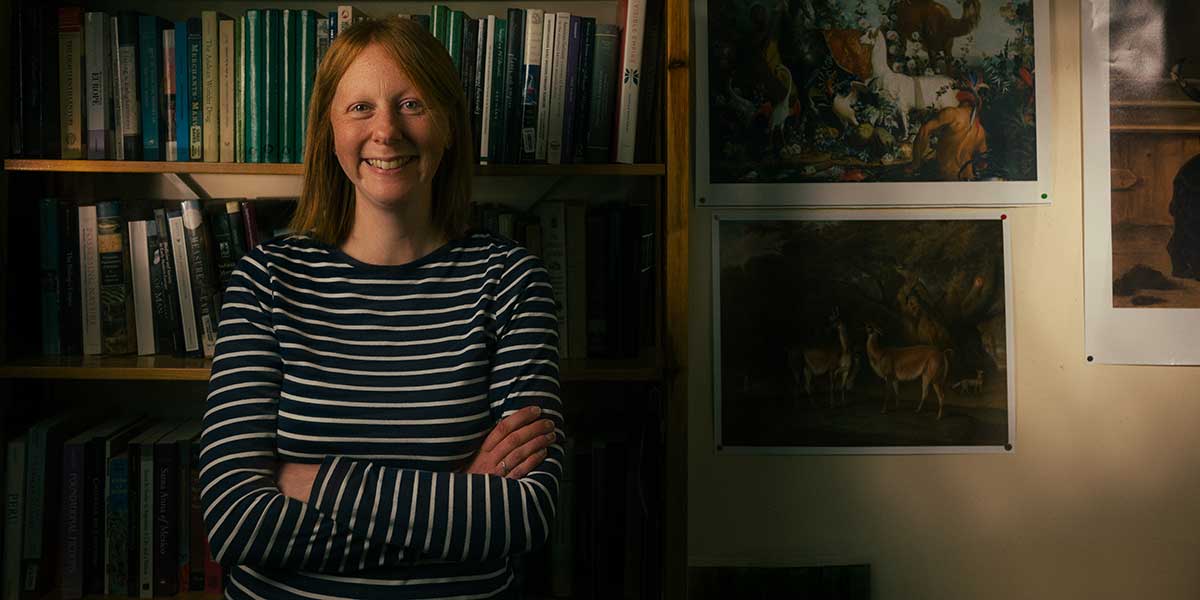
"Once you start searching, the animals are there, in newspaper articles, diaries, letters, photographs, paintings and material culture. Though curated by humans, these written and physical remains give us an insight into how animals lived and died in the past."
Professor Helen Cowie always had an interest in history - as a child she enjoyed visiting museums and castles, and was fascinated by a huge range of historical topics.
Now a Professor of Modern History, she has carved out a unique niche for herself: the history of animals, and human-animal relationships.
As this week's Human of York, she tells us more about her interests, research and discoveries.
“The quality of information we have about animals varies significantly. Pets, for example, tend to generate the most traces because of their close relationship with humans. Zoo animals also leave behind a clearer footprint because of their exoticism, visibility and proximity to humans.
"Domesticated livestock and laboratory animals, however, tend to receive less attention and are more often presented in the form of statistics. So it will probably be easier to write the biography of a famous zoo animal like Jumbo the elephant than to reconstruct the life story of a sheep in Patagonia or a rat in a laboratory.”