

CNAP artemisia research project

Contacts:

CNAP Director,
Professor Ian Graham

CNAP Manager, Dr Caroline Calvert

CNAP, Department of Biology, University of York, Wentworth Way, York YO10 5DD, UK


CNAP - Centre for Novel Agricultural Products

Outreach

CNAP is committed to communicating science to wider non-specialist audiences.  We achieve this objective through a variety of ways such as externally funded science and society projects, publications and press releases, and individual scientists giving lectures and talks to different target audiences. 

Many of the recent projects have focused on schools outreach. 

For further information please contact Caroline Calvert


The Pharma Farmers: can plant genetics bring us more affordable malaria medicine?

  • In-school activity for KS 4/5 students of biology/combined sciences.
  • 1-2 hours long  (tailored to fit the school timetable)
  • Suitable for up to 30 pupils (or as a lecture for larger groups)
  • Completely free of charge
  • No preparation needed by pupils or teacher. 

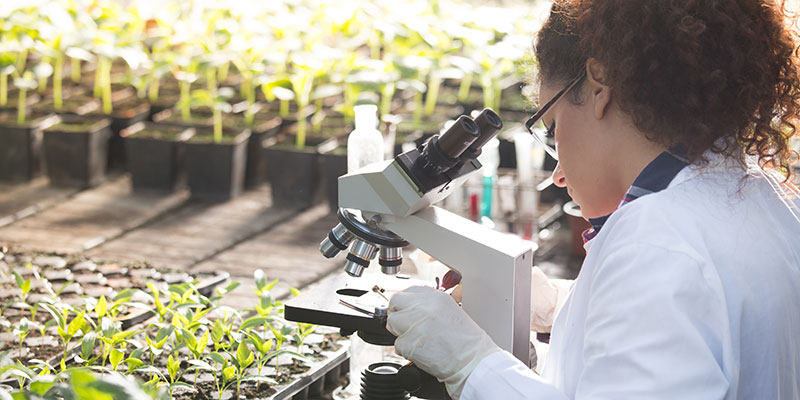
Based on CNAP’s Artemisia Research Project, which is improving supplies of an anti-malarial drug from the medicinal herb Artemisia annua, using the latest genetic and analytical technologies.

Participating schools are visited by a member of CNAP staff (with QTS and full CRB clearance) who will work with pupils to look at the application of science in the ‘real world’ and for public benefit.  Areas covered include infectious diseases, natural variation, genetics and drugs derived from natural substances. The session will also consider the social impact of the project. 
This is achieved through a mixture of presentation, discussion and hands-on activities, including;

  • Examining Artemisia plants,
  • Plant breeding computer game
  • Malaria medicines and counterfeits

If you would like more information or to arrange a visit for your school please contact Nicola Smith


Plant Explorers: how and why plants provide for us
This project is funded by a Royal Society grant to St Aelred’s School in York to enable older pupils to learn more about biological research through interacting with Prof. Dianna Bowles and other scientists from the CNAP. 

The aim of the project is to explore the fascinating world of plants, how they work, what products they make and why they are so important to all of us.  Pupils will explore examples of research in a real world context; such as CNAP’s work on the medicinal plant that provides a cure for malaria.  The aim of the project is to demonstrate to pupils how science can benefit society. 


Hidden Worlds – Secret Lives (HWSL)
HWSL is a highly successful schools and public outreach programme funded by CNAP core funding in addition to a number of external funders (Yorkshire Forward, BBSRC, The Arts Council England and RCUK).  It was established to raise awareness of bioscience and to generate enthusiasm and interest for the subject. 

The schools aspect is aimed at primary school pupils, their teachers and their parents.  The project uses microscopes to introduce pupils to the natural world, allowing them to use and explore for themselves the fascinating structure of a wide range of specimens.  In schools, the programme takes the format of workshops.  CNAP’s Schools Officer leads the science workshop, taking all the necessary equipment to the school to ensure pupils get a ‘hands-on’ experience of science.  A second workshop is led by a local artist to facilitate pupils’ communication of their findings, thus avoiding the need for complex language and making science more accessible.  HWSL also contains an element of continuing professional development (CPD) for teachers.
In addition to the in-school activities, the HWSL programme incorporates public activities such as interactive exhibits at science festivals, agricultural shows and other public places such as libraries, museums and historic buildings.  This ensures the widest possible audience can experience this fun and interactive project. 
The project has been running for over 5 years and to date, 140 schools in the region have been visited, delivering the programme to around 5,000 school children.  External events amount over 100 individual activities reaching out to ~18,000  members of the public. 


Hidden Worlds – Secret Lives: Africa project
This extension project of Hidden Worlds has been developed as a collaborative effort between the CNAP outreach team, Dr Paul Canter of Illovo Sugar and Lattitude Global Volunteering in the UK. 
Schools associated with the Kilombero Sugar Plantation in Tanzania participate in the HWSL activities which are delivered by gap year volunteers as part of their usual teaching activities.  Volunteers receive training from CNAP, and are supplied with all the materials necessary for the HWSL activities in schools.  The equipment remains with the schools in Tanzania. 
The input of the project partners providing contacts and information about the teaching environment has been essential for the development of this project.  This local knowledge has enabled CNAP to develop content and activities appropriate to the schools’ needs. 


Sustainable Solutions: how science solves problems  (2007-08)
Dr Caroline Calvert, Nicola Smith (CNAP) and Martin Braund (Department of Education)

Funded by the AstraZeneca Science Teaching Trust, this project developed new science curriculum materials for Key Stage 3 (KS3).  KS3 is a crucial stage in shaping attitudes to science, studying science and career aspirations, however many students become disaffected by school science during this period. 
Materials arising from this project introduced the concept of science solving real world problems, enabling pupils to see a context for the science they are taught.  This new curriculum material and resources were focused on two CNAP-based research case studies: a medicine for malaria, and biofuels from plants. 

Materials are available to use but a username and password must be obtained from  ns14@york.ac.uk

www.cnapsustainablesolutions.org.uk


The Sheep Trust

The Sheep Trust is a national charity based in CNAP with Professor Dianna Bowles OBE as the founder and current Chair of the Board of Trustees [www.sheeptrust.org]. The charity was formed from Heritage Gene Bank, a science –led response to the Foot and Mouth Disease (FMD) epidemic of 2001. The mission of the charity is to protect and conserve regional native sheep breeds that continue to be commercially farmed and contribute to the environmental and economic sustainability of their local communities.

The charity carries out this mission through undertaking scientific studies on these Heritage Sheep Breeds, ensuring that the public and policy-makers are aware of the importance of the breeds’ genetic resources and providing a robust evidence base for government to use in conservation programmes of Farm Animal Genetic Resources.

The Sheep Trust provides an independent and informed voice on behalf of the Heritage Sheep Breeds to highlight their continued significance to food security and the livestock industry in the UK. Most recently a study was presented to the National Standing Committee to illustrate  the risks facing the breeds from their geographical concentration. If  >95% of a breeds numbers are all located in only a small region of the UK, they are at extreme risk from a disease entering that region. This was illustrated during the FMD outbreak of 2001 – the Herdwicks of the Lake District suffered disproportionately because of their location at the centre of the disease outbreak. The Romney breed in Kent is similarly under extreme threat from Blue Tongue Virus (BTV) arriving from continental Europe. For further information click here.

The Sheep Trust also co-ordinates a large programme investigating heritage Sheep breeds across Europe. www.heritagesheep.eu

Back to the Top