
Turning muck into brass
-
Case study
- Environmental Sustainability and Resilience
Posted on 31 October 2021
Technologists at our Biorenewables Development Centre are exploring ways to convert agricultural and food waste into valuable new products.
The issue
Waste charity WRAP estimates that the UK wastes around 9.5 million tonnes of food every year of which domestic food waste accounts for 70 per cent. Aside from the obvious resource and social implications, the amount of food wasted in the UK annually will generate more than 25 million tonnes of emissions if sent to landfill. The UK government is committed to preventing and reducing food waste generation and eliminating food waste to landfill by 2030. However, there is still a significant amount of inedible food waste, such as fruit and vegetable peels, shells or coffee grounds that require treatment through waste processing systems including recycling, anaerobic digestion and composting.
The research
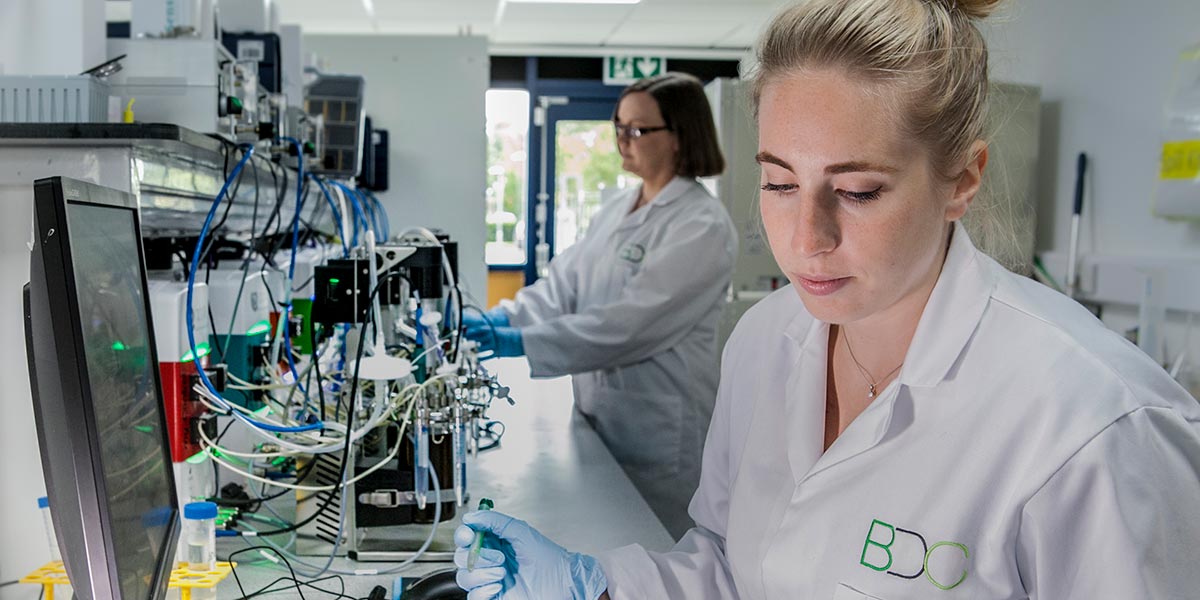
The Biorenewables Development Centre (BDC) is an open-access R&D biorefinery centre, based at the University of York. Our work focuses on helping industry and academic partners convert biowastes such as food waste, plants and microbes into profitable biorenewable products.
Our ongoing research investigates the use of food manufacturing by-products and agricultural waste streams to produce a variety of high-value compounds such as organic acids, pharmaceuticals and biofuels.
A key ingredient in the production of these bio-based compounds is glucose that is converted by microorganisms into new products during a fermentation process. The market price of glucose is highly volatile accounting for a significant cost to industry. Together with our partners, we identified potential new sources of glucose from food manufacturing streams, using starchy by-products as a starting material, eg potato peel, bread crusts or pasta cooking water. Following successful trials at our state-of-the-art scale-up and analytical facilities, we are now exploring significant opportunities to scale these processes up to a commercial level.
The outcome
Our industry partners want to build a more sustainable and economically beneficial supply chain using a biorefinery approach. We estimate around 23,000 tonnes of leftover baked products are available in the UK per year for reprocessing. Finding new uses for biowastes, such as food waste, through biorefining processes generates value, benefits the local economy by creating highly skilled jobs, reduces our reliance on fossil resources and tackles climate change by reducing greenhouse gas emissions.

Alex Jukes
Alex focuses on projects that make the most out of waste, using fermentation and anaerobic digestion. She brings analytical expertise to the team, characterising feedstocks, products and residues.

Rosie Nolan
Rosie specialises in microbial biotechnology and has a passion for working on projects involving the conversion of low-value waste streams into high-value chemicals and proteins using fermentation.