
From rubbish to ready-to-wear
-
Case study
- Environmental Sustainability and Resilience
Posted on 31 October 2021
Our researchers are exploring the use of waste including textiles and rubbish to manufacture more sustainable clothes.
The issue
The fashion Industry is responsible for 10 per cent of global greenhouse gas emissions - more than aviation and shipping combined - and 20 per cent of global wastewater. Most clothes are worn for a short period of time and end up in landfill; only 1 per cent are recycled as clothing. With textile consumption forecast to increase even further, it is essential to develop a more sustainable way to use and produce textiles.
The research
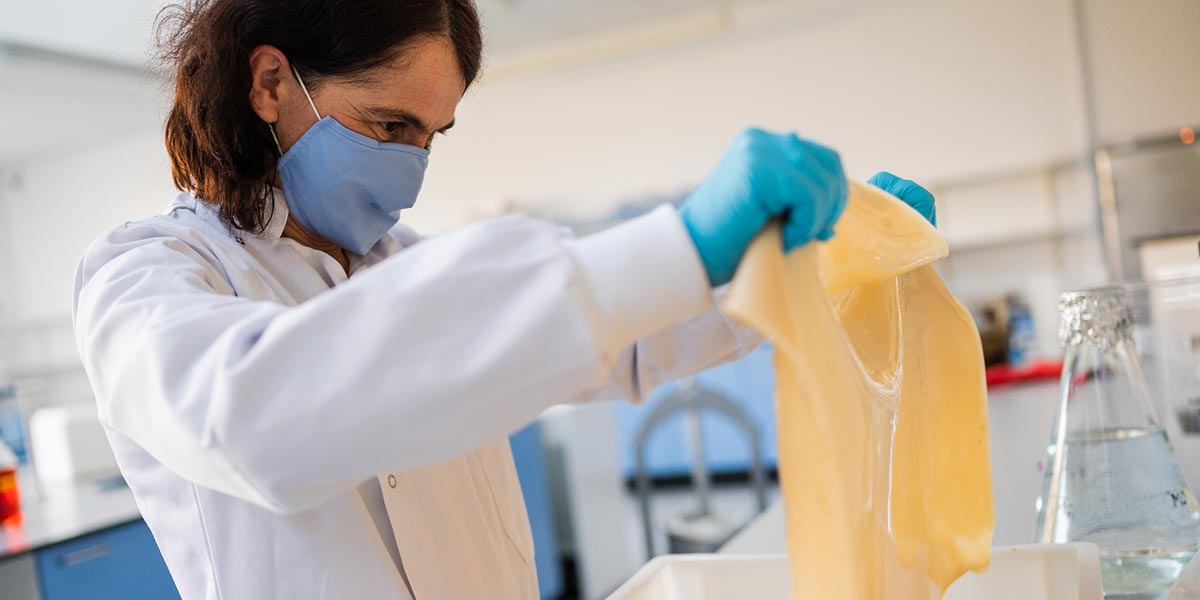
This research focuses on using abundant waste such as straw, post-consumer textiles and organic material from our grey wheelie bins to produce cellulose for use in the fashion industry. These wastes are deconstructed into sugars using protein catalysts developed in our laboratory at York. The sugars are then fermented into clean virgin cellulose. Cellulose is found in trees, but also cotton, paper and semi-synthetic textiles. Our virgin cellulose material will be used to make novel textiles using innovative and sustainable processes; similar to the way viscose, rayon or tencel are produced from trees.
The outcome
We want to manufacture innovative clothes that are sustainable and made of fabric that can be repeatedly re-processed to create new garments. The research aims to lower the impact of the fashion industry on the environment, reduce wastes going to landfill and generate business and jobs.

Simon McQueen-Mason
Professor McQueen-Mason's research encompasses various aspects of lignocellulosic biorefining and biofuels.

Alexandra Lanot
Dr Lanot is a scientist interested in using plants to make more sustainable materials.