
Drilling into the pingo puzzle
-
Case study
- Environmental Sustainability and Resilience
Posted on 31 October 2021
Our research aims to measure the amount of methane released from Pingos - dome-shaped mounds found in the Arctic.
The issue
Methane is a globally important greenhouse gas, as highlighted in a recent IPCC report. There are differences in what are known ‘sources’ of methane and ‘sinks’ that absorb the gas, making it difficult to estimate future amounts of methane in the atmosphere. Permafrost ecosystems, including those found in the Arctic, are thought to play a limited role as a global source of methane (around 0.2 per cent). But this overlooks the role of pingos - cone-shaped mounds of earth formed when Arctic groundwater freezes and forces the soil above it out of the way.
Pingos can be tens of meters high. Flowing groundwater within the structure carries methane from deep under the permafrost to the surface allowing the potent greenhouse gas to reach the atmosphere. Pingo springs break through in summer, and periodically in winter, releasing methane from saturated waters rapidly to the atmosphere. Methane-rich air also bubbles directly from springs.
The research
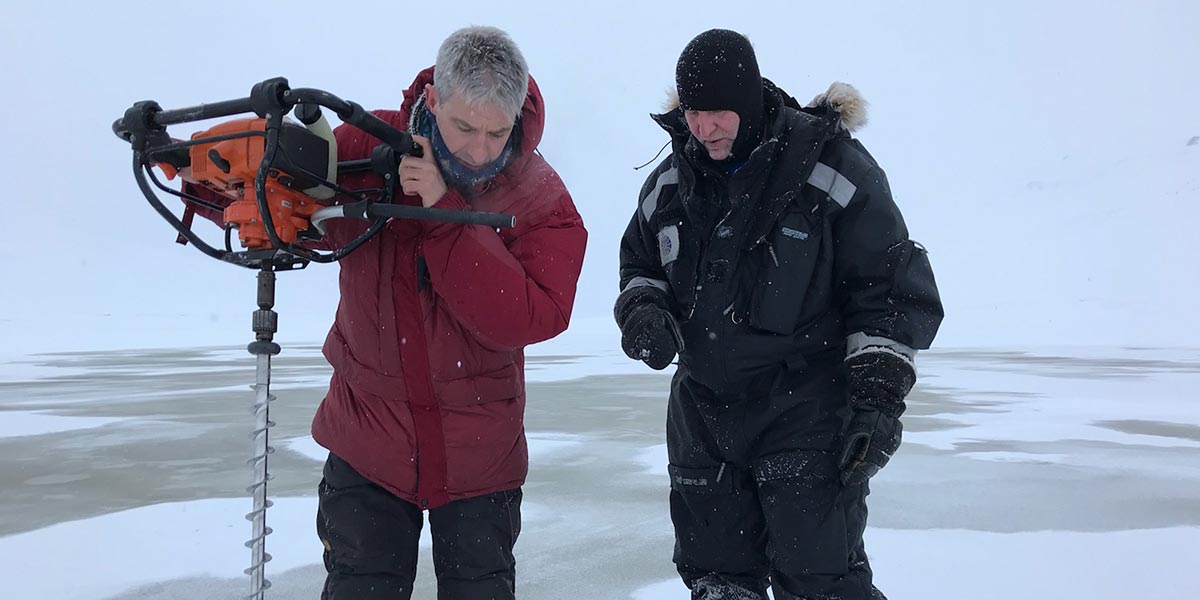
We are currently quantifying the rate of methane release from pingo springs. We are using two approaches, based on the type of methane release: ebullition and diffusion. To study ebullition (bubbles) we use upside-down funnels to trap air as it moves from the bottom of the spring to the surface. To measure diffusion we employ standard static chamber techniques on open pingo springs, and by drilling into the frozen cap of pingos to sample and measure methane levels in the spring waters below.
The outcome
Our work shows that although pingos cover less than 0.01 per cent of the Arctic surface they release far more methane than regional permafrost - as much as 1 to 3 per cent of global methane. This methane is not included in current climate/atmospheric models and may have implications for successful strategies for climate mitigation.
Additional project images

Kelly Redeker
Dr Redeker's areas of expertise include volatile metabolites, biological impacts of climate change and land-use change effects on ecosystem function.