
TYPE co-host Labour Conference event on child poverty and inequality
Posted on Tuesday 30 September 2025
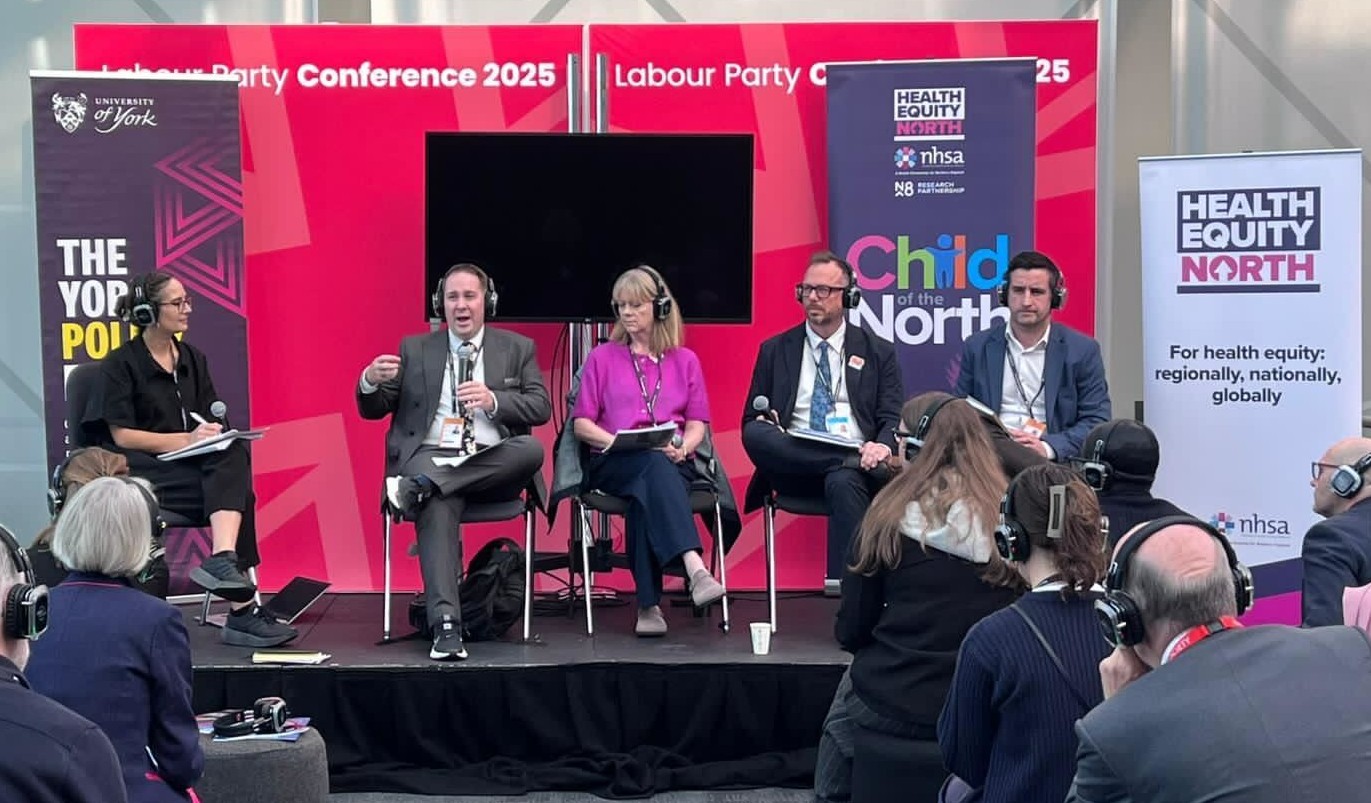
The session titled: 'Addressing child health and social inequalities through poverty reduction', examined poverty, health and inequality among children and young people in the UK.
The event explored how national policy, and local strategies can work hand-in-hand to reduce child poverty and close the health and opportunity gap experienced by children across the UK, particularly those in the North of England.
Speakers at the event included:
- Chair, Kate Proctor, UK News Lead for Save the Children and child poverty spokesperson.
- Sam Rushworth, Member of Parliament for Bishop Auckland and member of the Child of the North All Party Parliamentary Group.
- Professor Kate Pickett, Academic Co-Director at Health Equity North, and Professor of Epidemiology, University of York.
- Professor David Taylor-Robinson, Academic Co-Director at Health Equity North, and Professor of Public Health and Policy at the University of Liverpool.
- Graham Whitham, CEO and Founder, Resolve Poverty.
Discussions centred around the main obstacles faced by children and young people today and the current barriers to action on child poverty.
Examining the challenges and possible solutions at both a local and national level, the panel discussed what local areas could do to tackle child poverty and how local authorities could deliver cost-effective interventions that reduce poverty and health inequalities.
At the national scale the panel focused on Labour’s mission to break down barriers to opportunity for children and young people and explored what a successful strategy to reduce child health inequalities would look like.
The event drew on evidence from Child of the North, the Born in Bradford Centre for Social Change at York and Resolve Poverty’s joint endeavour with the University of York’s LOCALE project.
Prof Kate Pickett, Director at Born in Bradford Centre for Social Change at York, said “There are now 900,000 more children in poverty than in 2010/11 and 4.5m children in poverty in England overall, so we know that inequalities continue to widen.
“We also know that growing up in poverty not only affects the wellbeing of children and their opportunities during childhood but also throughout their lives. This has a strong regional dimension with a child in the north of England having a 27% chance of living in poverty compared to 20% in the rest of England.
“To redress this regional imbalance and to continue to work towards eradicating child poverty, our research makes the case to government and policy makers that we need substantive investments in youth services and increased mental health support provision.
“Youth policy needs to address many interconnected issues with long-term, comprehensive, joined-up approaches, and place-sensitive interventions. We're hoping our discussion at this year's Labour party conference event provides some clarity on the solutions required to tackle this most urgent of issues.”
Professor David Taylor-Robinson, Academic Co-Director of Health Equity North, and Professor of Public Health and Policy at the University of Liverpool, said: "The Child of the North reports highlight the structural disadvantages experienced by children in the North of England. They expose the deep-seated inequalities children face, including in overall health, economic prospects and educational attainment. These disparities are not confined to childhood but persist throughout the life course, with long-term consequences that are both inequitable and unacceptable.
"Events such as the Labour Party Conference provide a vital platform to draw attention to these urgent issues, bringing them directly to the people who can make a difference. Our reports set out a series of evidence-based recommendations to address these inequalities, and we continue to urge policymakers and leaders to take meaningful action to reverse these entrenched disparities.
"We look forward to seeing the outcome of the Child Poverty task force, and hope that the Government are serious about addressing child poverty by lifting the two child cap - which our evidence has shown is absolutely crucial to improving child health."
Graham Whitham, CEO and founder, Resolve Poverty: "There’s so much more that needs to be done to tackle poverty, and we’re clear that the main levers for poverty reduction lie with central government. But localities and regions, along with their partners have a key role to play. If empowered through resourcing and devolution to move away from crisis responses to taking a proactive approach, localities and regions can work in collaboration with national government in a whole-system approach to tackling poverty."

Panelists and lived experience young participants at the 'Addressing child health and social inequalities through poverty reduction' event
You can read the full reports here:
Born in Bradford Centre for Social Change at York (BiB CSC): ‘Addressing Youth Inequalities Through Poverty Reduction Nationally and Locally.’
Resolve Poverty in collaboration with University of York’s LOCALE project: ‘Mission Critical, The role of English regions and localities in a whole-system approach to tackling poverty’ and ‘Empower our places: how can further devolution support the national mission to end child poverty?
Child of the North reports:
Hungry for Change: Tackling Obesity and Food Insecurity in the North of England
Children in Care in the North of England: a report prepared for the Child of the North APPG
Addressing Education and Health Inequity: Perspectives from the North of England
Child poverty and the Cost of Living Crisis