Scientists uncover hidden ‘winter memory’ inside plants
Posted on Monday 19 January 2026
Many plants only flower in spring after experiencing a long spell of cold - they know the cold is ending and it is time for growth.
But until now, researchers have struggled to see how this winter memory forms, because the key molecules are buried several layers deep inside living tissues.
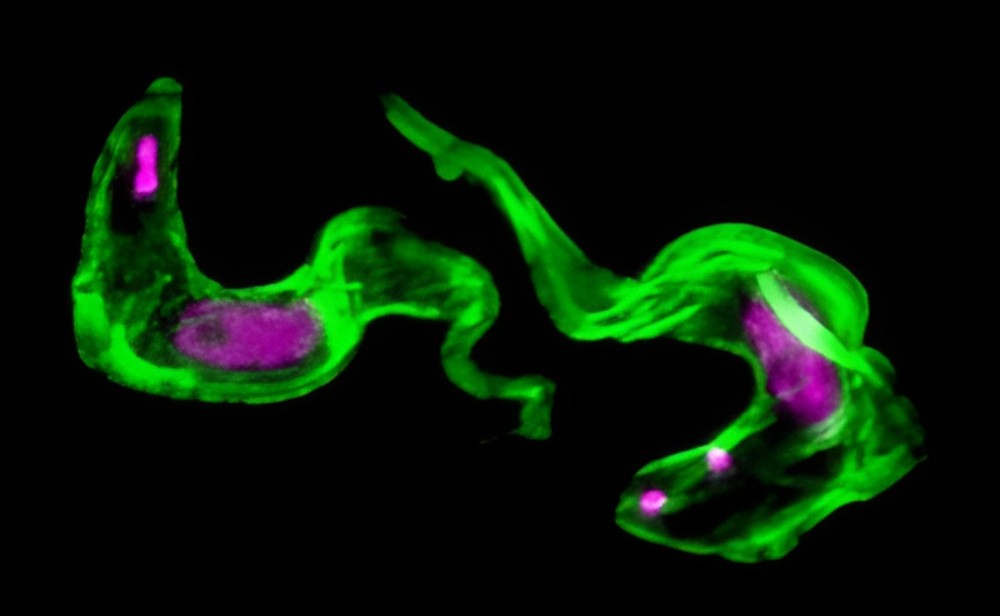
A team at the University of York has created a technique called SlimVar, which acts like an ultra-sensitive camera in a microscopic world. It can track single molecules moving around up to 30 micrometres inside plant roots — far deeper than traditional microscopes can manage, where light normally becomes too scattered to form a clear image.
'Switch off'
By adjusting the angle of the light and using advanced computer processing, the new technique can cut through the ‘blur’ and reveal the movements of individual molecules in real time.
Professor Mark Leake, from the University of York’s Department of Biology and the School of Physics, Engineering and Technology, said: “Using the technique, we followed two proteins, VIN3 and VRN5, which help plants switch off a gene that prevents flowering. During cold conditions, these proteins gather into tiny clusters inside the nucleus of plant cells.
“We found that these clusters doubled in size during the cold. Some formed around a gene linked to flowering, and many remained in place even after the plant warmed up again. We believe these long-lasting clusters act like miniature “memory hubs”, helping the plant remember it has been through winter and it's now time to start new growth.”
Changing climates
The discovery, published in the journal, Nature Communications, offers a clearer picture of how plants use epigenetics - natural, reversible changes that affect gene activity - to sense and react to their environment.
Until now, examining these processes inside thick plant tissues has been nearly impossible. SlimVar could open the door to studying how plants respond to stress, grow, and adapt to changing climates.