School smartphone ban results in better sleep and improved mood
Posted on Wednesday 11 December 2024
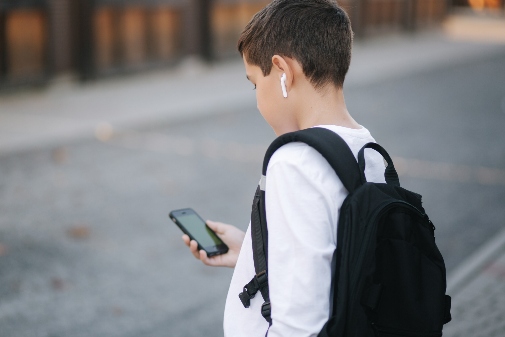
Swiped: The School that Banned Smartphones, hosted by Matt and Emma Willis, is based at The Stanway School in Colchester, and challenged a group of Year 8 pupils to give up their smartphones completely for 21 days.
The experiment, led by Professor Lisa Henderson and Dr Emma Sullivan from the University, saw pupils undergo a series of tests, with experts monitoring their behavioural changes throughout the period, and repeating the tests at the end of the three weeks to conclude what effects giving up your phone really does have on your brain including sleep, wellbeing and cognition.
They found that students in the phone ban group experienced notable improvements in their sleep. On average, they were falling asleep 20 minutes faster than before the ban, and reported getting a full hour of extra rest each night.
Mood boost
Children in the phone ban group also went to bed on average, 50 minutes earlier during the phone ban weeks compared to the week before the phone ban, for example, bedtime was 10:12 pm one-week post ban, and 11:02 pm the week before the ban. These changes, which were self-reported, were also verified with sleep-tracking devices.
Better sleep also appeared to coincide with a boost in mood. Pupils in the phone ban group reported a 17% reduction in feelings related to depression and an 18% reduction in feelings related to anxiety, feeling generally less upset and nervous. Pupils who slept better even showed changes in their heart rate that signalled improved well being.
Positive impact
Professor Lisa Henderson, from the University’s Department of Psychology, said: “This experiment incorporated a much longer abstinence period than previous studies, allowing us to see how a smartphone ban in school could impact on sleep, wellbeing, cognitive abilities, and alertness.
“The results showed that a smartphone ban in children under the age of 14 could have a positive impact on sleep, and connected to improved sleep, a boost in overall mood.”
Interestingly, the research didn’t show significant improvements in cognitive ability; the phone ban group showed a modest 3% boost in working memory, and there were no improvements in sustained attention. Researchers suggest that these results might mean that changes in cognitive ability could take longer than the study period of 21 days to materialise.
Policy decisions
Dr Emma Sullivan, from the University’s Department of Psychology, said: “Our results come at an important time when government ministers in the UK are thinking about the impact of smartphones on young people, and when other parts of the world, such as Australia, are introducing a social media ban for under 16s.
“Evidence gathering is crucial to make these big decisions that impact on the lives of young people, and whilst more work is needed on this, these first sets of results are an interesting start to begin to have these better informed conversations.”
Swiped: The School that Banned Smartphones starts at 8pm, Wednesday, 11 December, on Channel 4.