York scientists develop new mathematical model of Alzheimer’s disease
Posted on Wednesday 2 November 2022
The researchers, from the University of York’s School of Physics, Engineering and Technology, say the discovery could have important implications for future treatments.
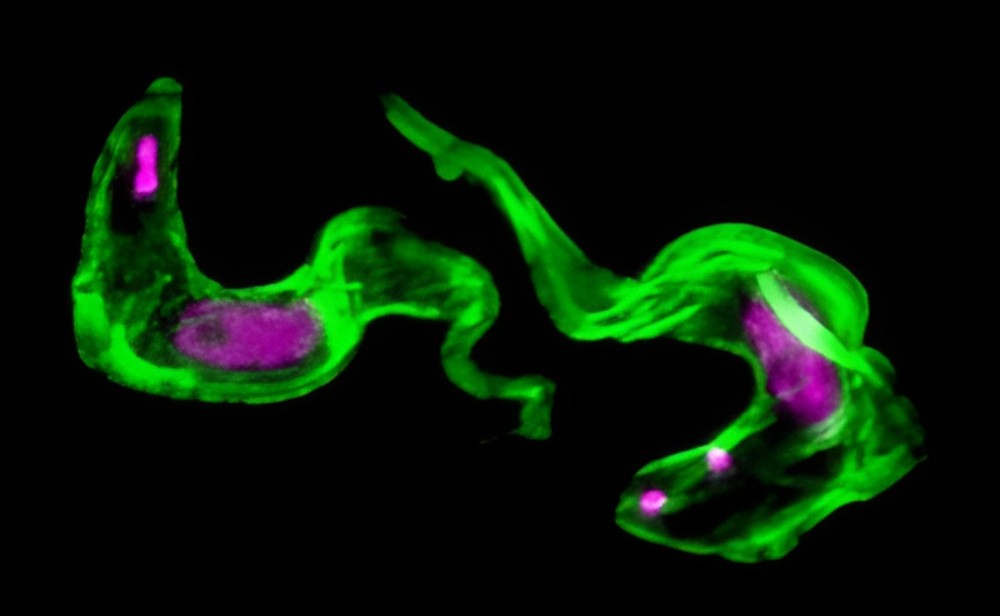
The study revealed that a major class of proteins implicated in Alzheimer’s disease – so called amyloids - condense into objects that resemble liquid droplets, before forming clusters that impact normal brain activity.
Alzheimer’s disease is the most common form of dementia. Over 50 million people worldwide have the disease, and that number is expected to triple by 2050.
Targeted
On the nanoscale, toxic amyloid proteins inside the brain cluster together around 10-15 years before the first symptoms arise, but the precise way in which they do so has remained unclear. By understanding precisely how the protein clusters form, scientists may be in a far better position to develop targeted drug treatments to block them.
Dr Steve Quinn, an Alzheimer’s Research UK Fellow and Lecturer in Biophysics at the University of York, said: “Understanding the precise molecular-level ways through which amyloid clusters form may help us to design better anti-cluster drugs that combat Alzheimer’s disease at the earliest possible stage.
“We realised that the same methodologies that have been used previously to understand the growth of silk produced in spiders could also be applied to our understanding of amyloid. Our work now provides theoretical support for the so-called Amyloid Hypothesis, and helps to explain the conditions under which clusters form.”
Clusters
For the study, the scientists looked at two variations of the amyloid protein, both of which are found extensively in disease. The researchers found that the proteins may initially form droplets – so called liquid liquid phase separation condensates – before forming clusters enriched with the longer, more toxic, version of the protein.
Amyloid proteins are believed to be an important part of the immune system, but when they abnormally change shape, they can cluster together into potent biological structures. These structures can interfere with normal brain activities, for example by punching holes within cells, or by influencing the behaviour of vitally important biomolecules.
Early stage
Dr Charley Schaefer, Research Associate and lead author of the study, said: “The properties of large pre-formed clusters have been studied in extensive detail, but until now, the molecular level details of their early-stage assembly have been difficult to assess.”
Dr Quinn and Dr Schaefer of the Physics of Life team apply experimental and theoretical tools to try and learn more about important interactions implicated in human life and disease.
Dr Schaefer added, “We hope that our approaches could also be applied to understand the building blocks of many other forms of dementia, including Parkinson’s and Huntington’s. The idea that proteins form liquid-like droplets prior to assembling into clusters may not be unique to Alzheimer’s disease, and perhaps more common than once thought.”