Poorest citizens ‘worn down’ as financial inclusion remains distant dream for the UK
Posted on Monday 5 December 2022
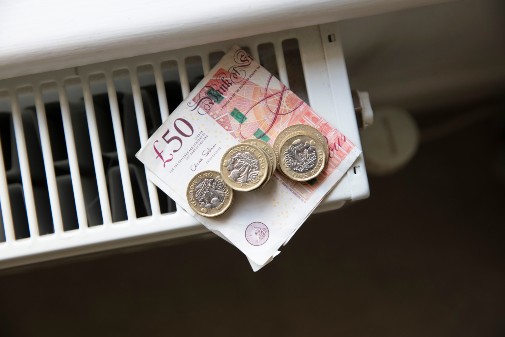
Whilst unemployment is the lowest it has been since the mid-1970s, both real earnings and access to secure work have declined in recent years, with a growing number of people placed on zero hours contracts over the last decade.
Crisis
Unemployed individuals have seen their income from social security fall significantly over the last 10 years. With an individual’s level and security of income a key driver of financial inclusion, those on the lowest incomes are left with no capacity to withstand the current cost-of-living crisis.
Led by the University of Birmingham’s Centre on Household Assets and Savings Management (CHASM) in collaboration with the University of York and the University of Lincoln, the report demonstrates how little progress has been made towards a truly financially inclusive society.
Data in the report illustrates significant challenges to household finances including:
- Inflation is now four times as high as when CHASM began monitoring financial inclusion ten years ago;
- Latest data (from 2021) on the number of Individual Voluntary Arrangements for insolvency show them reaching a record high at over 80,000;
- In October 2022, a new survey found that two out of five people are either just about getting by or finding things difficult - a larger proportion than at any time over the last 10 years; and
- 62% of people have cut back on heating in the last 12 months to save on gas, electricity or oil, and 54% have cut back on using lights and appliances to save electricity.
The consequences of these increasing challenges on people’s health and relationships are stark. Latest data from October this year found that more than one in three of the population say that they have experienced financial difficulties over the past year, with 81% of these people saying it has affected their mental and/or physical health, and more than half saying it has affected their relationships.
The report reveals some progress in relation to financial inclusion over the last decade, with fewer people lacking access to bank accounts and more people having access to private pensions.
However, the authors – Professor Karen Rowlingson, University of York, Professor Adele Atkinson, University of Birmingham, and Professor Stephen McKay, University of Lincoln – note that those who remain unbanked face problems in an increasingly cashless economy, and that access to private pensions will not contribute to financial security whilst so many people pay little or nothing into their funds.
Regulation
A spokesperson from Friends Provident Foundation in York and Barrow Cadbury Trust, supporters of the monitor for the last 10 years, said: “Financial inclusion and reducing vulnerability to financial shocks has never been more relevant to millions of people now facing a cost-of-living crisis.
The team at CHASM and academic partners have been analysing the data and the policy for ten years, providing a sound evidence base for policy, regulation and action. Friends Provident Foundation and Barrow Cadbury Trust are proud to have supported this work to maintain a focus on financial inclusion."
Prof Karen Rowlingson, Dean of the Faculty of the Social Sciences at the University of York, said: “The key message from this 10-year study is to reaffirm the important point that the level and security of someone’s income is key, and simply giving people access to financial services solves nothing if they lack the financial ability to make good use of them.
“Access to financial products for their own sake is not the end goal. Given all that we now know, it is clearly time to focus on financial security, resilience and wellbeing.”
Prof Adele Atkinson, University of Birmingham said: “We have compiled and synthesised vast quantities of data on the current economic situation for households, as well as the trends over the last 10 years, the findings of which make for bleak reading in our report.
“With the current cost-of-living crisis, too many people in the UK are unable to manage day-to-day, meet one-off expenses and avoid problem debt. Household income is being stretched in all directions, and given the challenges faced in recent years, people are simply worn down by uncertainty. It is our hope that policymakers will use our findings to drive through changes that will support vulnerable people today, and rebuild their resilience for a more positive future.”
Support
Birmingham alumnus Andrew Fisher, a financial supporter of CHASM, said: “When costs rise so much faster than incomes, people cannot make ends meet, which can plunge them into a vicious spiral of debt. CHASM has exposed the depth of the financial challenge, backing up what millions of people are saying with hard proof. Now we need to get change made, influencing policy and financial support to help the millions facing financial difficulties not of their own making.”