Experts highlight fifteen urgent issues facing ocean biodiversity over next decade
Posted on Thursday 7 July 2022
A team of international experts, including researchers at the University of York and the University of Cambridge, worked together to produce a list of 15 issues they believe are likely to have a significant impact on marine and coastal biodiversity over the next five to ten years.
They focused on identifying issues that are not currently receiving widespread attention, but are likely to become important over the next decade. The aim of the work is to raise awareness and encourage investment into full assessment of these issues, and potentially drive policy change, before the issues have a major impact on biodiversity.
The issues include the impacts of wildfires on coastal ecosystems, the effects of new biodegradable materials on the marine environment, and an ‘empty’ zone at the equator as species move away from this warming region of the ocean.
Renewable energy
Dr Bryce Stewart, from the University of York’s Department of Environment and Geography, said: "It is well known that the ocean is facing a climate change and biodiversity crisis, but in this study we revealed the finer details of emerging coastal and marine conservation issues that need to be addressed over the next decade.
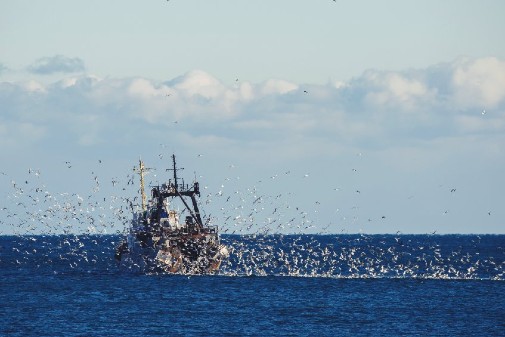
“These include the potential overfishing of mesopelagic fish species at depths between 200 and 1000m, and the fact that ocean acidification, due to greenhouse gases, is making metal pollution more toxic. We also need to balance the expansion of offshore renewable energy such as windfarms with the needs of conservation and other uses such as fisheries and aquaculture.
“The goal of highlighting these issues is to stimulate further research and improved policy and management so that they are tackled to mitigate impacts and encourage recovery of marine ecosystems."
Ocean resources
The ‘horizon scan’ involved 30 experts in marine and coastal systems from 11 countries in the global north and south, from a variety of backgrounds including scientists and policy-makers.
Several of the issues identified are linked to exploitation of ocean resources. Deep sea ‘brine pools’, for example, are unique marine environments home to a diversity of life - and have high concentrations of salts containing lithium. The authors warn that rising demand for lithium for electric vehicle batteries may put these environments at risk. They call for rules to ensure biodiversity is assessed before deep-sea brine pools are exploited.
Dr James Herbert-Read, from the University of Cambridge’s Department of Zoology, said: “Marine and coastal ecosystems face a wide range of emerging issues that are poorly recognised or understood, each having the potential to impact biodiversity. By highlighting future issues, we’re pointing to where changes must be made today - both in monitoring and policy - to protect our marine and coastal environments.”
Climate change
The authors also warn that the nutritional content of fish is declining as a consequence of climate change. Essential fatty acids tend to be produced by cold-water fish species, so as climate change raises ocean temperatures, the production of these nutritious molecules is reduced. Such changes may have impacts on both marine life and human health.
Not all of the predicted impacts are negative, however; the development of new technologies, such as soft robotics and better underwater tracking systems, will enable scientists to learn more about marine species and their distribution. This will guide the development of more effective marine protected areas. Researchers stressed, however, that impacts of these technologies on biodiversity must be assessed before they are deployed at scale.